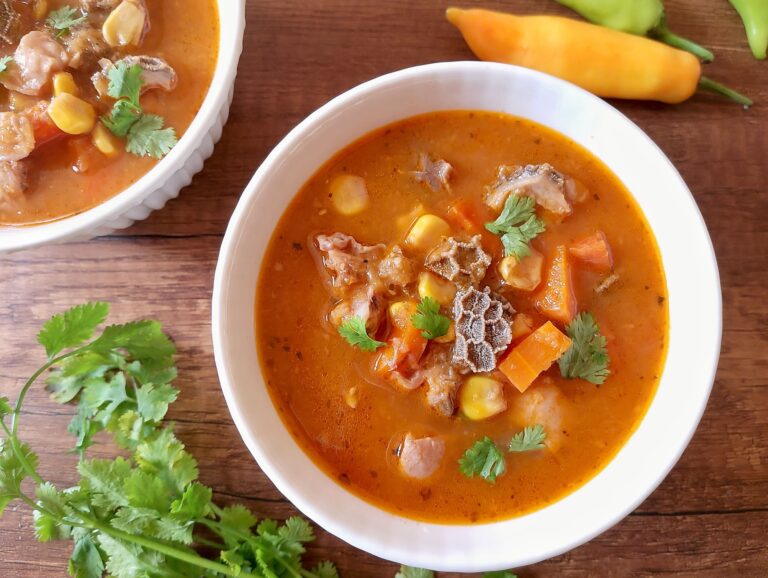
How to Make Lamb Bone Broth (Rich, Gelatinous & Easy to Make)
I live in a sheep-farming region where lamb is the most readily available red meat. Once a year, we buy a whole lamb, and when we butcher it, we usually cut all the meat into boneless cubes because that’s what I prefer to cook with. This leaves us with plenty of bones, which are perfect for making lamb bone broth.
Making lamb bone broth allows me to use every part of the animal and turn those leftover bones into a flavorful, gelatin-rich broth. I use it in soups, stews, and even when cooking rice. It’s incredibly versatile and can be used in any recipe that calls for beef broth.
In this post, I’ll show you how to make lamb bone broth on the stovetop, in a slow cooker, or in the Instant Pot, so you can enjoy rich, delicious homemade broth that will become a staple in your kitchen.
Why You’ll Love This Recipe
- Very little hands-on work. It takes just a few minutes of active prep to make homemade lamb bone broth.
- Makes the most of leftover bones. You can turn the bones from a lamb roast into a nourishing, flavorful broth instead of letting them go to waste.
- Three cooking methods. Make lamb bone broth slowly on the stovetop or in a slow cooker, or use the Instant Pot to speed things up.
- So versatile. Use this rich, flavorful broth as a base for soups, stews, and sauces, or cook rice in it for extra flavor.
Ingredients
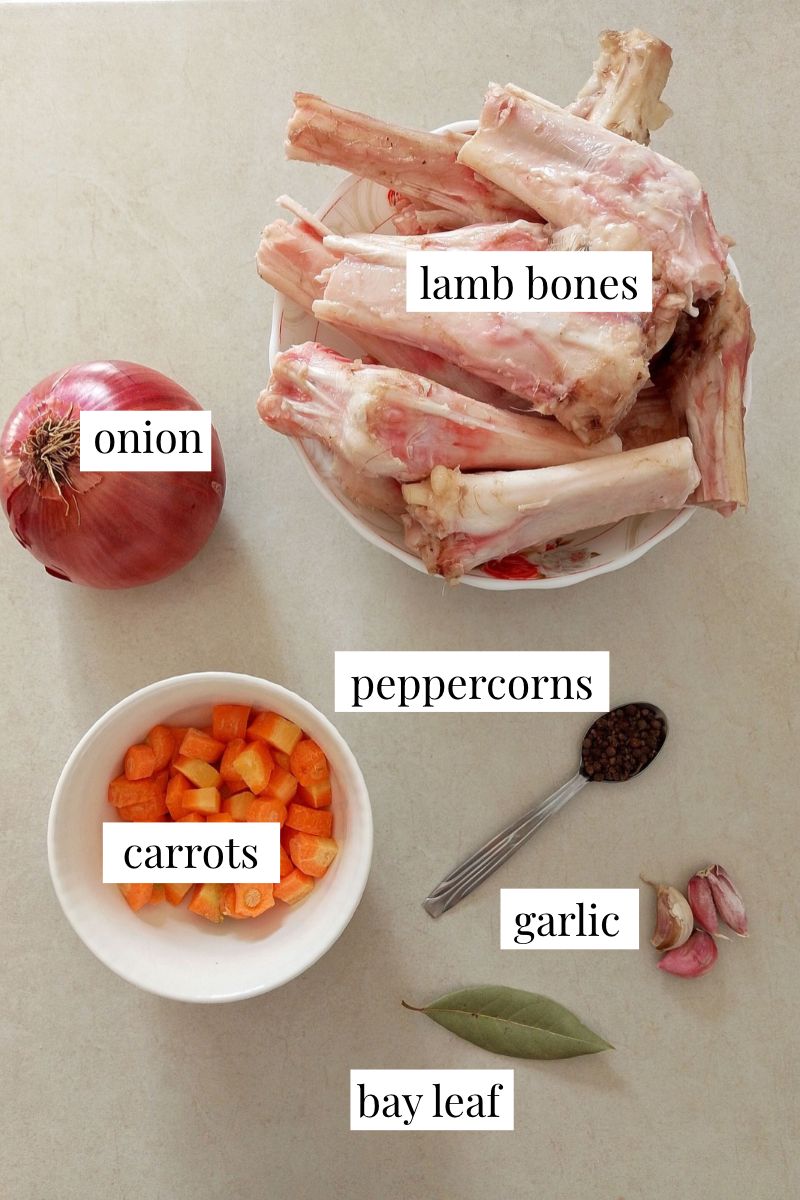
- Lamb bones: I use lamb feet here, but you can use any lamb bones you have available. Cooked bones from lamb roast or stew can also be used for broth. For a deeper, richer flavor and a darker broth, you can roast the raw bones in the oven before cooking. I usually skip this extra step to keep things simple.
- Aromatics: I use onion, garlic, carrot, bay leaf, and black peppercorns to add flavor to my lamb bone broth. However, you can also make it with just bones and water if you prefer a plain broth.
- Apple cider vinegar: Adding a little apple cider vinegar helps create an acidic cooking liquid, which may help release minerals from the bones.
- Water: Use enough filtered water to just cover the bones. Too much water can result in a thinner broth, especially if you’re hoping for a rich, gelatinous finish.
How to Make Lamb Bone Broth
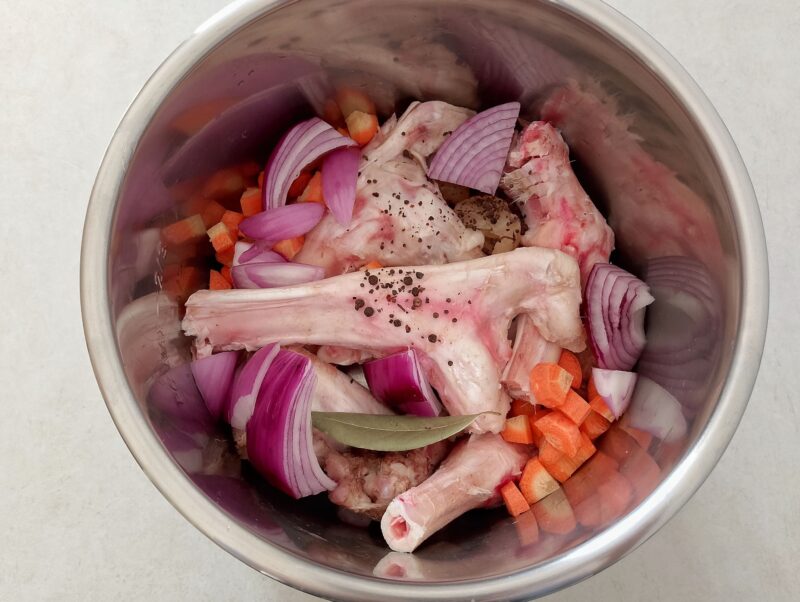
Step 1: Place the lamb bones, vinegar, onion, carrots, garlic, bay leaf, and peppercorns in your pot.
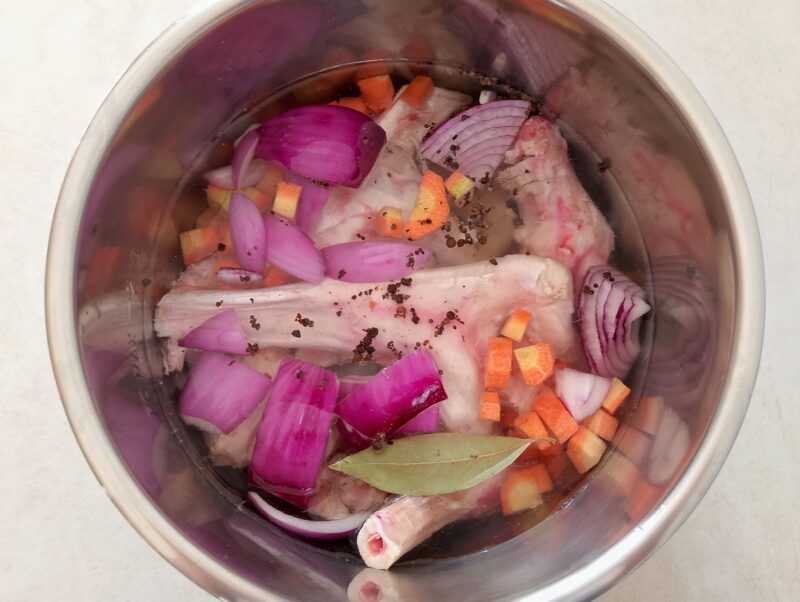
Step 2: Add just enough water to barely cover the bones and aromatics, then cover the pot. Bring to a boil over high heat, then reduce the heat to low and simmer for at least 3 hours (although 6-8 hours is much better if you want nicely gelled broth).
For the slow cooker: Cook on Low for at least 8 hours.
For the Instant Pot: Cook on High Pressure for 3 hours, then allow the pressure to release naturally.
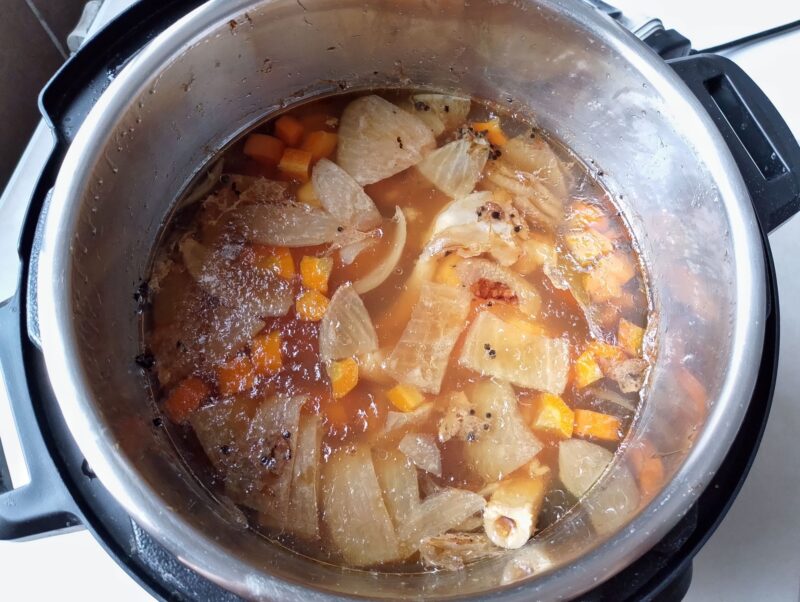
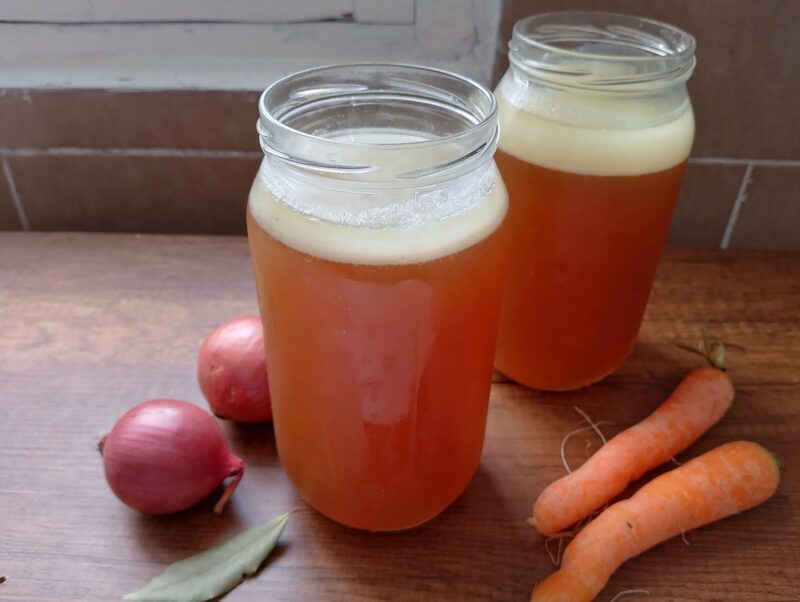
Step 3: Once the cooking time is up, the bones should be softened, with the connective tissue breaking down easily. Lamb bones can release quite a bit of fat, so you’ll likely have a layer of fat on top of the broth.
Let the broth cool until it’s warm but no longer hot, then strain it through a fine-mesh sieve into jars or other containers. If you want a particularly clear broth, you can strain it a second time through cheesecloth, although I don’t usually bother with this extra step.
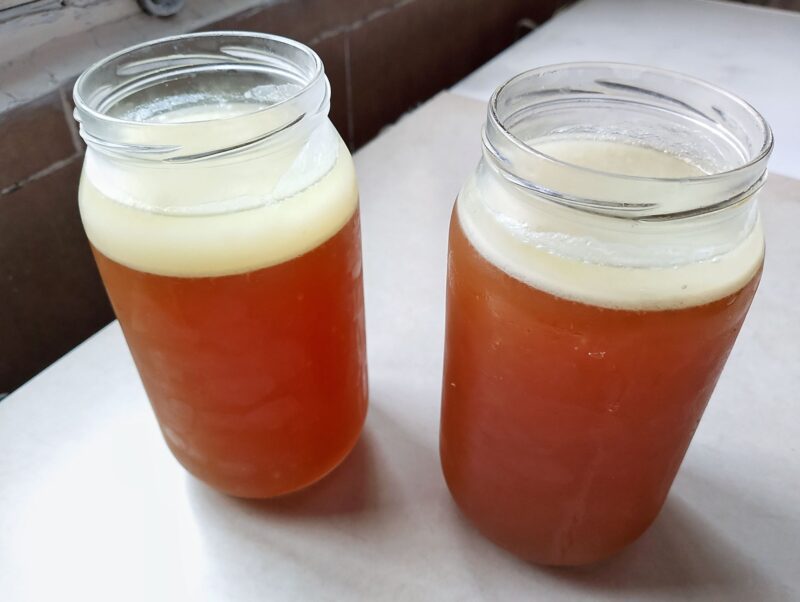
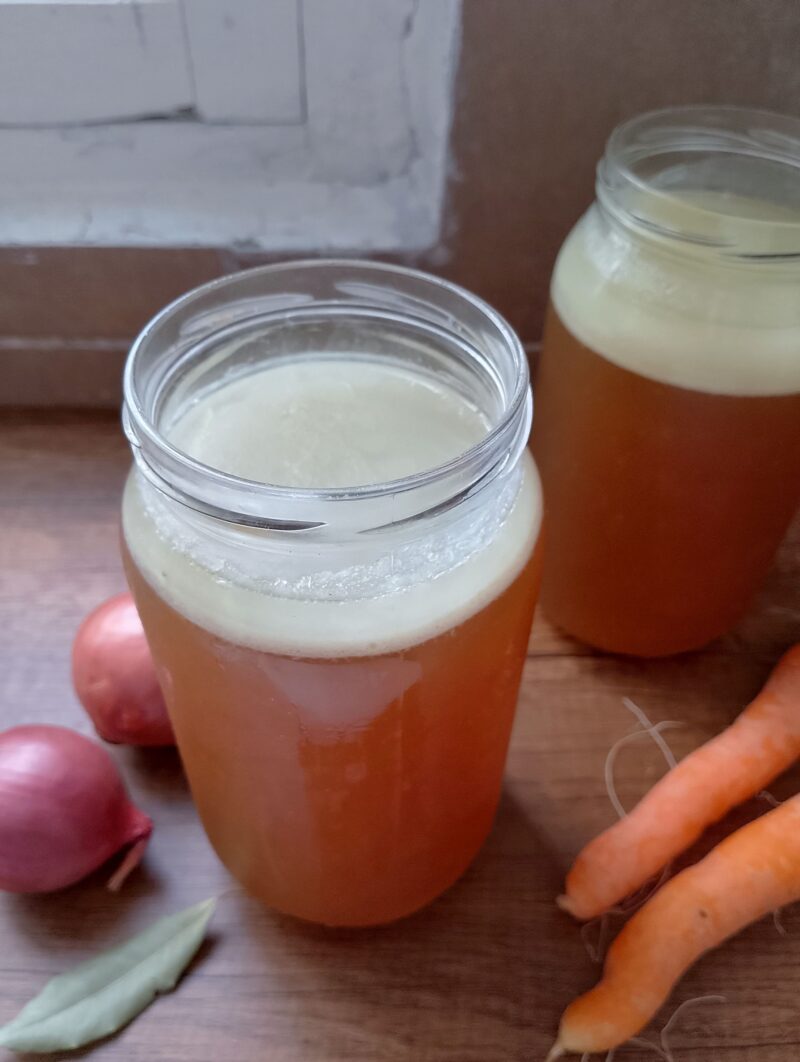
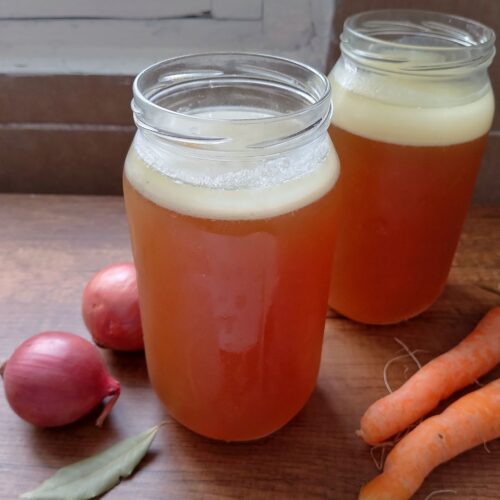
Step 4: Transfer the broth to the refrigerator and let it chill for several hours or overnight. I like to do this before using my lamb bone broth in recipes because it makes it easy to remove some of the solidified fat from the top. Too much lamb fat can make a soup or stew feel greasy, so I usually remove most of it before cooking.
Once the broth has chilled, simply lift off as much of the solidified fat as you like. Don’t throw it away—it works beautifully for sautéing vegetables and adds plenty of flavor.
If you’re not using the broth right away, you can leave the layer of fat on top until you’re ready to use it. The fat helps protect the broth from air and can help it keep a little longer in the refrigerator.
How to Get Your Broth to Gel
Getting your lamb bone broth to gel is actually quite easy when you follow 3 simple rules. I sometimes see people say that broth won’t gel unless you use organic or high-quality bones, but in my experience, that’s not the case. I’ve been making homemade broth for over 15 years (usually with non-organic bones) and have never had trouble getting it to gel.
Here are my tips for making sure your lamb bone broth sets into a beautiful, gelatin-rich broth:
- Use plenty of bones relative to the water. Your pot should contain mostly bones, with very little meat attached, and just enough water to cover them. You can add a few aromatics for flavor, but don’t overdo it or you’ll end up with too much veggies relative to the bones. The gelatin comes from the connective tissues, cartilage, and skin on the bones, not the vegetables.
- Cook the bones long enough. Lamb bones need time to release their gelatin and develop a rich flavor. The exact cooking time depends on your method, but I personally cook lamb broth for 6 hours or more on stovetop, 8 or more in crockpot, or 3 hours on High Pressure in Instant Pot.
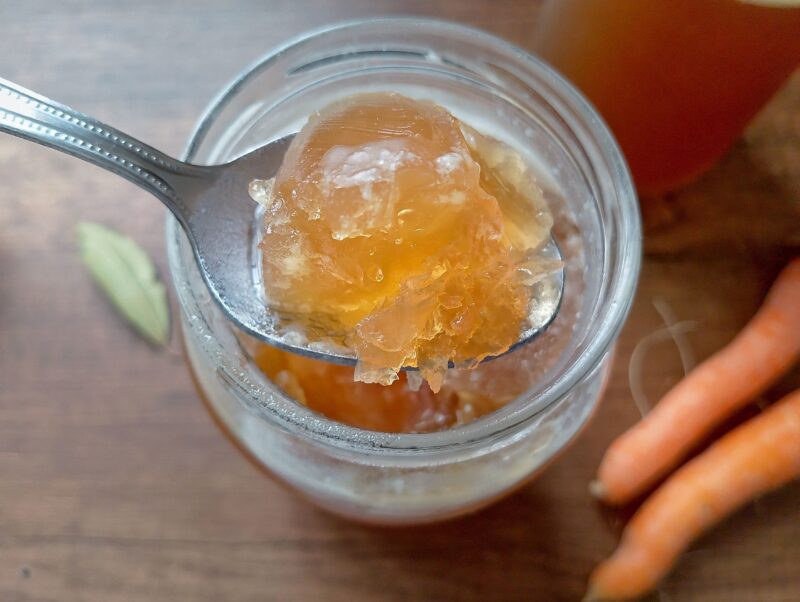
- Chill the broth thoroughly. You won’t know how well your lamb bone broth has gelled while it’s still hot. Once it’s cooked, strain it into containers and refrigerate for several hours or overnight. As it cools, the gelatin will set, turning the liquid into a soft or firm gel, depending on how concentrated your broth is.
Tips for the Best-Tasting Lamb Bone Broth
- Don’t use too much water. The water should just barely cover the bones. Too much water will dilute the flavor and make it harder to get a rich, gelatinous broth.
- Keep the aromatics simple. I usually use onion, garlic, bay leaf, and black peppercorns, sometimes adding carrots or celery. Avoid strong herbs and spices so you end up with a versatile lamb bone broth that works well in all kinds of recipes.
- Roast the bones for a deeper flavor, if you like. Roasting brings out a richer, meatier flavor and gives the broth a darker color. For a lighter, more delicate broth, skip this step and start with raw bones. I hardly ever roast my bones because, honestly, I can’t be bothered! I make so much broth that if I can skip an extra step, I will. It’s much quicker to throw everything into the pot and let it simmer.
- Leave the broth unsalted. Unless you plan to drink it on its own as a hot broth, I recommend leaving it unsalted. That way, you can season each dish to taste without having to account for the salt already in your broth.
Storage Tips
I always make large batches of lamb bone broth, refrigerate what I’ll need over the next few days, and freeze the rest. That way, I have a flavorful base ready to use in soups, stews, and sauces throughout the week.
Refrigerating: Once your broth has cooled enough to handle, strain it into clean containers and refrigerate promptly. Use it within 3–4 days. As it chills, the broth should gel if it contains enough gelatin, which is a good sign that you’ve made a rich, gelatinous broth.
Freezing: You can also freeze lamb bone broth for 3–6 months for the best quality. Freezing it in smaller portions makes it easier to defrost only what you need. If you tend to use just a little broth at a time, silicone molds or ice cube trays work well. I usually use about a quart at a time, so I freeze mine in larger containers.
I avoid storing broth in glass jars in the freezer because I don’t want to clean broken glass out of my chest freezer. Instead, I use airtight plastic containers or old plastic water bottles to freeze broth.
How to Use Lamb Bone Broth
I like to keep my cooking as simple as possible, so I use whatever broth I have on hand in any recipe that calls for broth, bone broth, or stock. Lamb bone broth has a different flavor from beef or chicken broth, of course, but in most soups and stews, you probably won’t notice much of a difference. The flavor of the finished dish usually comes from the meat, vegetables, and seasonings you use.
If you prefer a milder flavor, you can skim off the fat once the broth has cooled and the fat has solidified on top. Lamb fat has a more pronounced flavor than chicken fat, so removing some of it can make the broth taste milder.
The only recipes where I probably wouldn’t use lamb bone broth are those where the broth itself is the star of the show, such as a simple chicken noodle soup. For those, I’d stick with chicken broth. Otherwise, lamb bone broth is wonderfully versatile and works well in:
- Soups and stews: Use lamb bone broth as a base for dishes like beef stew, lamb curry, or barley soup.
- Sauces and gravies: Add it for extra flavor and richness.
- Cooking rice: Simply replace the water with lamb bone broth for more flavorful rice.
- A hot drink: Warm up a mug of broth and add a little sea salt for a simple, savory drink.
Recipe FAQ
Final Thoughts
I hope you enjoy making this lamb bone broth and that it becomes one of your most-used kitchen staples. I make some kind of bone broth every week, whether it’s chicken, beef, or lamb, depending on which bones I have on hand. It’s also a good habit to collect bones from roast chicken, lamb roast, or any other dish where you use meat on the bone. They can go into a large bag in the freezer until you have enough to fill a pot and make broth. Bone broth is a very affordable way to add gelatin and collagen to your family’s diet, and it makes any dish you use it in more flavorful.
If you love traditional cooking and baking, subscribe to my newsletter! I write it in real time every Sunday and fill it with tips, recipes, and inspiration for real food moms like you.
Homemade Soups to Make with Lamb Bone Broth
Lamb Bone Broth
Ingredients
- 2-2.5 kg (4.5-5.5lb) lamb bones
- 2-2.5 quarts (liters) filtered water
- 1 Tbsp apple cider vinegar
- 1 onion, quartered
- 1-2 carrots, roughly chopped
- 2-3 garlic cloves, smashed
- 1 bay leaf
- 1 tsp black peppercorns
Instructions
- Place the lamb bones, vinegar, onion, carrots, garlic, bay leaf, and peppercorns in a large pot, slow cooker, or Instant Pot.
- Pour in just enough filtered water to barely cover the bones and aromatics. Avoid adding too much water, as this will dilute the flavor and result in a less gelatinous broth.
- If cooking on stovetop, cover and bring to a boil over high heat. Reduce the heat to low and simmer gently for at least 3 hours. Slow cooker: Cover and cook on Low for at least 8 hours. Instant Pot: Seal and cook on High Pressure for 3 hours, then allow the pressure to release naturally.
- Once the cooking time is up, the bones should be softened and the connective tissue should break down easily. Let the broth cool until it is warm but no longer hot, then strain it through a fine-mesh sieve into jars or freezer-safe containers. For a clearer broth, strain it a second time through cheesecloth.
- Refrigerate the broth for several hours or overnight. As it cools, the gelatin will set and the broth should become thick and gelled.
- Once chilled, remove as much of the solidified fat from the top as you like. You can save the fat for sautéing vegetables. If you’re not using the broth right away, you can leave the fat layer on top until you’re ready to use it.
- Keep the broth refrigerated and use within 3–4 days, or freeze it for longer storage. Use lamb bone broth in soups, stews, sauces, gravies, or simply replace the water with broth when cooking rice.