How to Stock a Real Food Kitchen On a Budget
When I was in my early 20s, I was a firm believer that the best diet was a low-fat, highly vegetarian diet. To make matters worse, I barely knew how to cook anything. The result was that I relied on a lot of “healthy” processed foods for most of my nutrition.
When I discovered ancestral diet principles, I had to completely overhaul the way I shopped for groceries. This also meant stocking my kitchen with very different foods. I was newly married at the time, and we were on a very tight budget. I couldn’t just throw everything away and start again. Instead, I slowly used up the less-than-ideal foods I already had and began shopping differently.
I quickly learned that how to stock a real food kitchen on a budget really comes down to three things: buying food at the right time, learning how to preserve it so nothing goes to waste, and making the most of what you buy when it is available at a good price.
If you’re trying to feed your family real food on a tight budget (and who isn’t these days?), here are the simple things I do to keep my kitchen well stocked without spending a fortune. And most of these strategies should work whether you live in the city, out in the country, or even somewhere like Africa where there are no coupon codes or discount tickets to help you save money (like where I live).
Buy Seasonal Produce in Quantity
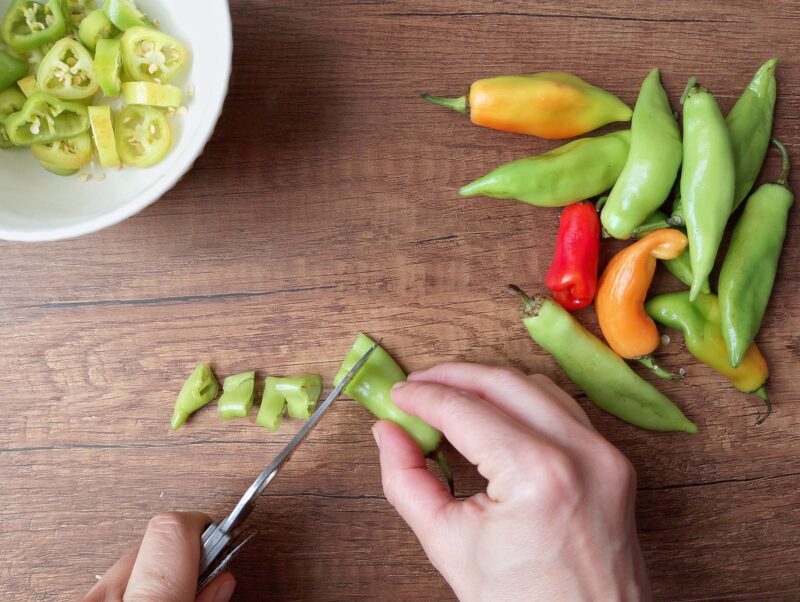
Fresh produce is almost always cheapest when it is in season. For this reason, I don’t buy strawberries in December. I buy them in bulk in June, then freeze them for smoothies or turn them into jam. I only buy pumpkin in the fall, when it is cheap, then make enough pumpkin puree to last me for the rest of the year. When garlic is inexpensive, I buy a whole bag and freeze the cloves. I don’t even peel them—the skins are much easier to remove once the cloves come out of the freezer. When apples are in season, I turn them into applesauce or pie filling.
You can often find imperfect produce at a good price, too. Slightly overripe tomatoes or bruised peaches might not keep well, but they are perfect for sauces, jams, and other preserves. Just make sure you process or freeze discounted produce as soon as you get home. If it is already very ripe, it may not last more than a day in the refrigerator.
Another benefit of buying produce in season, apart from the lower price, is that it simply tastes better. A ripe strawberry picked in season is a very different thing from one that has been grown out of season (under artificial lights) and shipped halfway around the world.
This strategy also works for foods that aren’t seasonal but whose prices fluctuate throughout the year. Where I live, for example, egg prices go up and down. When I see eggs at a really good price, I stock up. I do the same with chicken and beef. Where you live, butter or baking supplies might be especially cheap in early fall when people start preparing for the holidays. That’s the time to buy extra butter and freeze it—it freezes very well in the package it comes in.
This is why I don’t usually cook whatever I happen to feel like cooking. I cook according to what I have available and what I was able to buy at a good price. Learning to work with what you have, rather than constantly buying ingredients for whatever recipe you happen to want to make, is one of the simplest ways to stock a real food kitchen on a budget.
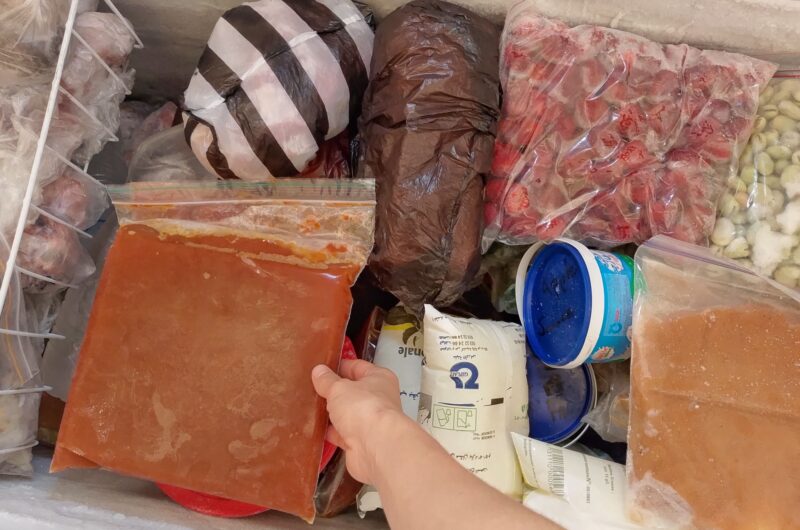
Of course, buying food in quantity means you need somewhere to store it. For me, that means a large freezer and canning equipment. I can lots of seasonal fruit and tomatoes. I also freeze meat and fish whenever I find them at a good price. When kept tidy and well organized, your freezer can be one of your biggest assets for saving money over time.
Buy Staples in Bulk—When It’s Actually Cheaper
I only buy in bulk when it’s actually cheaper per pound. Buying a larger quantity isn’t automatically a good deal, so I always compare the price before stocking up.
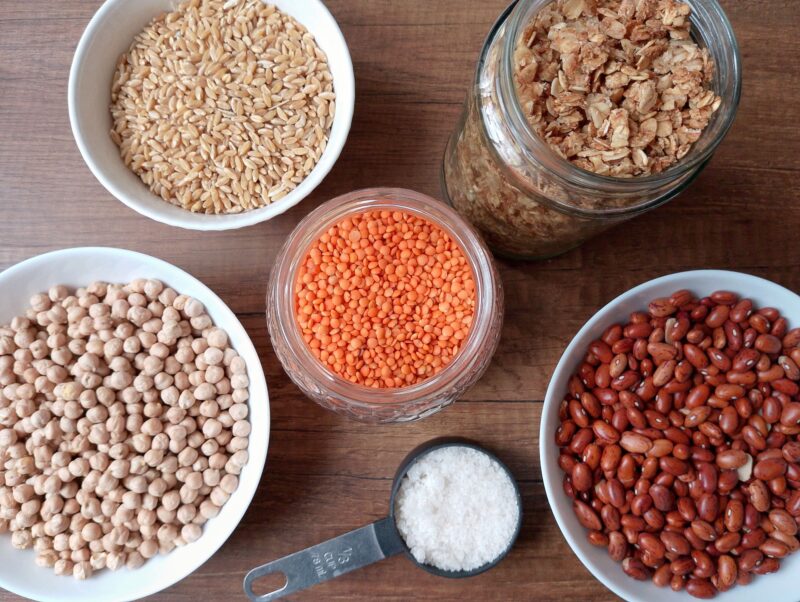
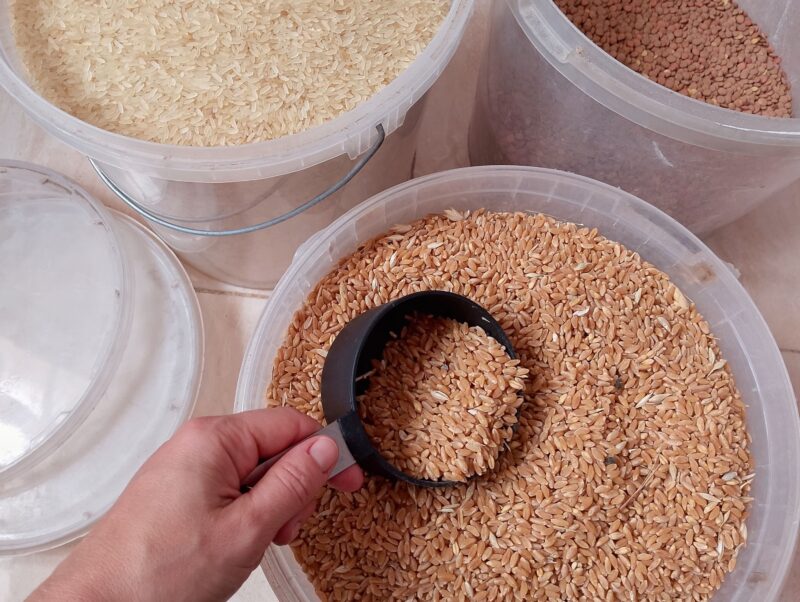
Where I live, it saves me money to buy things like wheat berries, rice, beans, rolled oats, flour, and coconut oil in bulk. I store my dry goods in food-grade buckets with tight-fitting lids. If you live in a hot climate like I do, it’s a good idea to freeze grains before storing them long-term. This kills off any insect eggs that may be hiding in them. I simply put the grains, still in the sack they came in, into my chest freezer for 72 hours before transferring them to a food-grade bucket.
We live in a fairly small apartment, so I don’t have a dedicated pantry. I store most of my bulk foods in buckets in the corner of my living room. Don’t let a lack of space deter you from buying in bulk! For most of our married life, we have lived in small rented apartments. Still I’ve found plenty of places to store dry goods: under the kids’ beds, in a corner of my bedroom, on the lowest shelf of a bookcase… It doesn’t all have to be stored in one place.
As long as your dry goods are kept somewhere cool, dry, and protected from pests, you can find storage space in places you might not have considered.
Stock Up on Foods That Store Well
Some foods can be stored for a surprisingly long time without refrigeration or any special preservation. Potatoes, garlic, and onions will keep for quite a while if you have a cool, dry place to store them. Most dry foods, such as rice, pasta, flour, and beans, will also keep for months or even years. Of course it’s only true when you store them properly and protect from moisture and pests.
One thing to keep in mind is that brown rice doesn’t store as well as white rice. This is because of the natural oils in the bran. It can eventually go rancid. Unless your family eats it regularly, I wouldn’t buy a huge bag just because it’s cheaper per pound.
Some pumpkins and winter squash also store very well, while others don’t. Many of the pumpkins sold in stores aren’t good keepers and will start to spoil from the bottom. If you want to store winter squash for several months, look specifically for varieties known for their good keeping qualities.
If you’re short on time, focus on stocking up on foods that don’t require much work to make them last. With more time on your hands, you can take advantage of good prices on foods like carrots, kale, or fresh fruit. But make sure you have a plan for using or preserving them before they spoil.
Just yesterday, I was blanching a large bunch of carrots that needed to be used up. I had to chop them, blanch them for two minutes in boiling water, pat them dry, then spread them out on trays to freeze before bagging them up. I now have enough frozen carrots for several soups or stews, but the whole process took me about an hour.
That isn’t necessarily a problem. I don’t mind doing it when I have the time. But it’s something you need to factor in when you’re stocking your kitchen. A great price isn’t really a bargain if you don’t have the time or energy to deal with the food before it goes bad.
So when you’re deciding what to stock up on, think about more than just the price. Consider how long the food will keep, how much storage space you have, and how much time it will take to preserve it. The best bargains are the foods you can actually use.
Cook Large Batches Deliberately
If you roast two large chickens at once, shred the meat, and make broth from the bones, you already have the foundation for several meals. While the broth cooks in the Instant Pot, you can cook a large batch of beans on the stove. Suddenly, you have several basic ingredients ready to turn into different meals throughout the week.
Cooking for two or three meals at a time saves my sanity. It gives me back the time and energy that would otherwise be spent cooking every day. You might have enchiladas on the first day, then use the leftover chicken and beans to make tortilla soup the next day. Any leftover soup can be frozen flat in a zip-top bag. You’ll use it for an emergency meal on a really busy day.
Batch cooking is a great strategy when you’re trying to stock a real food kitchen on a budget because it helps you get more meals out of the same ingredients. You use what you buy more efficiently. You have homemade meals in the freezer to keep you from reaching for expensive convenience foods on hectic days. It even helps you to reduce the amount of energy you use for cooking.
For example, it takes less energy to roast two chickens at once than to heat up the oven and roast them on separate days. And when I’m making beans or broth in my Instant Pot, I might as well cook as much as I reasonably can rather than running the pot again a few days later for another small batch.
The key is to cook large batches deliberately. You’re not just making more food for the sake of having more food. You’re preparing basic ingredients that can be turned into several different meals, while making the most of your time, your ingredients, and your energy.
Use Cheaper Cuts of Meat
Whole chicken is generally cheaper than chicken breast, and stewing beef is usually much cheaper than steak. And honestly, the more expensive cuts don’t necessarily taste better! In my opinion, slow-roasted chicken legs are far more delicious than chicken breast, which can be dry and bland. Pressure-cooked or slowly braised stewing beef is delicious, too.
Don’t overlook bones, either. Collect leftover chicken or meat bones in a freezer bag and use them to make broth. You’re getting one more useful food out of something you might otherwise throw away. Many butchers will also give you raw bones for next to nothing because they can’t easily sell them.
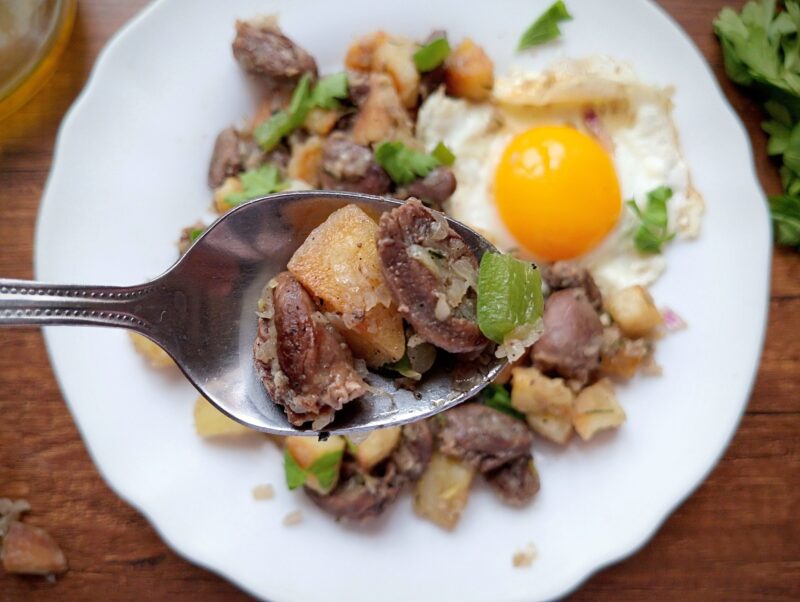
And if you want to boost your family’s nutrition on a budget, there are few better bargains than organ meats. A lot of people are squeamish about eating them, which is one reason you can often buy them very cheaply. (This isn’t necessarily true everywhere, though. Where I live in Africa, liver and hearts are still prized, so they can actually be quite expensive.)
When cooked properly, beef tongue, chicken hearts, tripe, and gizzards are delicious. They can be turned into all kinds of dishes, from stews and soups to sandwiches. They also freeze well, just like other cuts of meat.
You may have heard recommendations to take cod liver oil or other supplements to boost your intake of certain nutrients. However, once you calculate the cost of buying enough for a family of six, the price can really add up. Organ meats are an inexpensive, traditional way to add a wide range of nutrients to your family’s diet.
I also regularly use inexpensive sources of protein to stretch my grocery budget, especially beans, lentils, and chickpeas. Rather than using them instead of meat, I usually use them to make the meat go further. For example, I’ll add both ground beef and beans to enchiladas, or combine chicken and lentils in a stew. You still get the meat your family enjoys, but a smaller amount goes much further.
Save the Leftovers
Using up leftovers in ways that are yummy and appealing to kids is a skill. What do you do when you have one portion of soup, a few leftover pancakes, or half a cup of cooked chicken? Some people like to freeze these odds and ends and turn them into emergency meals later. I hardly ever freeze leftovers because I tend to lose them in the depths of my freezer. Instead, we generally eat leftovers for lunch.
Often, I’ll eat the leftover soup, each kid will get a pancake, and I’ll make a few sandwiches with the leftover chicken. I haven’t really had to make lunch at all—I just reheated what was already there. The food gets eaten, the refrigerator gets cleared out, and I don’t have to cook another meal.
I keep all our leftovers in jars on one shelf in the refrigerator. This way they are clearly visible and don’t get forgotten. There are only a few leftovers that I regularly freeze: bones and vegetable scraps for broth, overripe fruit, and stale bread.
I collect bones, carrot tops, onion ends, and other suitable vegetable scraps in a freezer bag until it’s full, then use them to make a batch of broth. Overripe fruit gets saved for smoothies once I have enough. And I freeze stale bread, cubed, until I have a full bag, then use it for bread pudding or baked French toast.
Using up leftovers is an important part of stocking a real food kitchen on a budget because you’re getting the full value from what you’ve already bought instead of throwing away little bits of this and that and then having to buy more food. Those small amounts might not seem like much individually, but over the course of a year, they add up.
I also like teaching my kids to use up leftovers. It helps them to appreciate food and be good stewards of what we have. Food is valuable, and I want my children to grow up understanding that we don’t waste it simply because there’s only a little bit left.
Make Cheaper Food Taste Good
As someone who used to be afraid of over-salting my food (and consequently never salted it enough), I can tell you that simply adding enough good-quality salt can dramatically improve the taste of the dishes you cook.
Fresh onion and garlic sautéed in butter can make almost any soup or stew taste ten times better. Starting with good-quality ingredients and learning how to cook them properly makes a huge difference, too.
A pot of lentil soup can be incredibly cheap, but who wants to eat bland lentils? Make your lentil soup with collagen-rich homemade broth. Start by sautéing some onion, fresh garlic, and ginger, then season it with coriander, cumin, and turmeric. Serve it with some good buttered sourdough bread, and suddenly you’ve turned a very inexpensive meal into something delicious.
Inexpensive staples can be yummy when you know how to cook them. That of course gets easier the more you cook. The only reason I’m a reasonably good cook and regularly hear “Mom, that’s so good!” from my kids is because I’ve been cooking almost every day for the last 15 years, always trying to improve and find better ways to do things.
You just have to put in the reps.
Check Pantry, Fridge, and Freezer Regularly
Not checking your pantry regularly can lead to forgotten foods sitting around until they go bad. This is especially true of the refrigerator, but even your chest freezer needs to be organized and rotated regularly. Who wants to eat kale that has been sitting in the freezer for two years and is now covered in ice?
I try to reserve my chest freezer for larger quantities of things like meat, milk, and butter. The small freezer over my refrigerator is for smaller items such as yeast, frozen cilantro, and pumpkin puree. This makes it easier to find what I need without having to dig through a mountain of frozen food every time I open the freezer.
I also have a simple system in my refrigerator. One shelf is for leftovers, so they are easy to see and use up before they go bad. Another is for ferments and yogurt, and another is for milk and cream. Keeping similar foods together makes it much easier to see what I have and what needs to be used.
I try (not always successfully!) to clean and organize the refrigerator once a week, mostly to prevent food from getting forgotten and wasted. You don’t need a perfectly organized pantry or freezer. You just need a system that makes it easy to see what you have and use it before you buy more.
Make Your Own Convenience Foods
When you buy things like breadcrumbs, yogurt, or pancake mix, you’re paying extra for someone else to prepare them for you. When you have the time, making these simple convenience foods yourself can save a surprising amount of money.
For example, collect leftover breadcrumbs whenever you slice bread and store them in an airtight container in the freezer, ready to use whenever a recipe calls for them (you can use them straight from frozen). Make a large batch of yogurt in your Instant Pot or even in a large thermos. Make broth from the bones left over from a roast chicken, adding carrot tops, celery leaves, and other suitable scraps for practically nothing.
I also keep the basic ingredients for muffins and pancakes on hand. I can then make them whenever I need them, without having to make a special trip to the store.
Homemade convenience foods don’t have to mean hours of extra work. Sometimes they take almost no effort at all—how long does it take to throw some bones in a pot and cover them with water? Making these simple staples yourself can save serious money, reduce food waste, and mean fewer trips to the grocery store.
Keep a Running Mental Price List
I’m not actually the grocery-shopping person in my house—my husband is. He knows which butcher has the best quality meat at a good price, which store has the best deals on bulk foods like wheat berries and rolled oats, and what the usual price is for things like garlic and onions. That means he can recognize a genuine bargain when he sees one.
You don’t need to turn this into a big project with Excel spreadsheets (unless you enjoy tracking things like that!). You simply need to have a general idea of what “cheap” means for the foods you regularly buy. You’ll develop this sense naturally with a little practice.
You also don’t need to watch prices for everything all the time. For example, I know that I can usually find the best pumpkins at the best prices in September and October. That’s when we keep an eye out for a good deal. If we’re running low on rolled oats, my husband starts checking the bulk stores to see where he can find them at a good price.
This does take a little more time than buying everything from one store. However, the savings can be significant, especially when you’re feeding a larger-than-average family like ours. Once you know your usual prices, you don’t have to obsess over every grocery bill—you just start recognizing a good deal when you see one.
The Work Behind a Real Food Kitchen
Now, after reading all of this, you may be thinking: All this stuff takes quite a lot of work.
And it does!
It’s always your time or your money, isn’t it? When you’re buying bread, crackers, boneless chicken breast, or salad dressing, you’re paying someone else to do the work of making those things for you.
That’s something people sometimes miss when they look at a family where Dad works and Mom stays home and think, “That’s one whole income gone.” They forget that a big chunk of that second income would also go toward paying for things you no longer have the time to make yourself. When both parents work outside the home, some of that money inevitably goes toward convenience foods, eating out, childcare, cleaning services, and other things that save time because someone else is doing the work for you.
My mom and dad both worked full-time when I was growing up. My mom still cooked dinner from scratch every single day. But she didn’t bake bread or make broth from scratch, and any treats we had were either baked by my grandmother or bought at the store.
There are only so many hours in a day, and your energy is usually even more limited than your time.
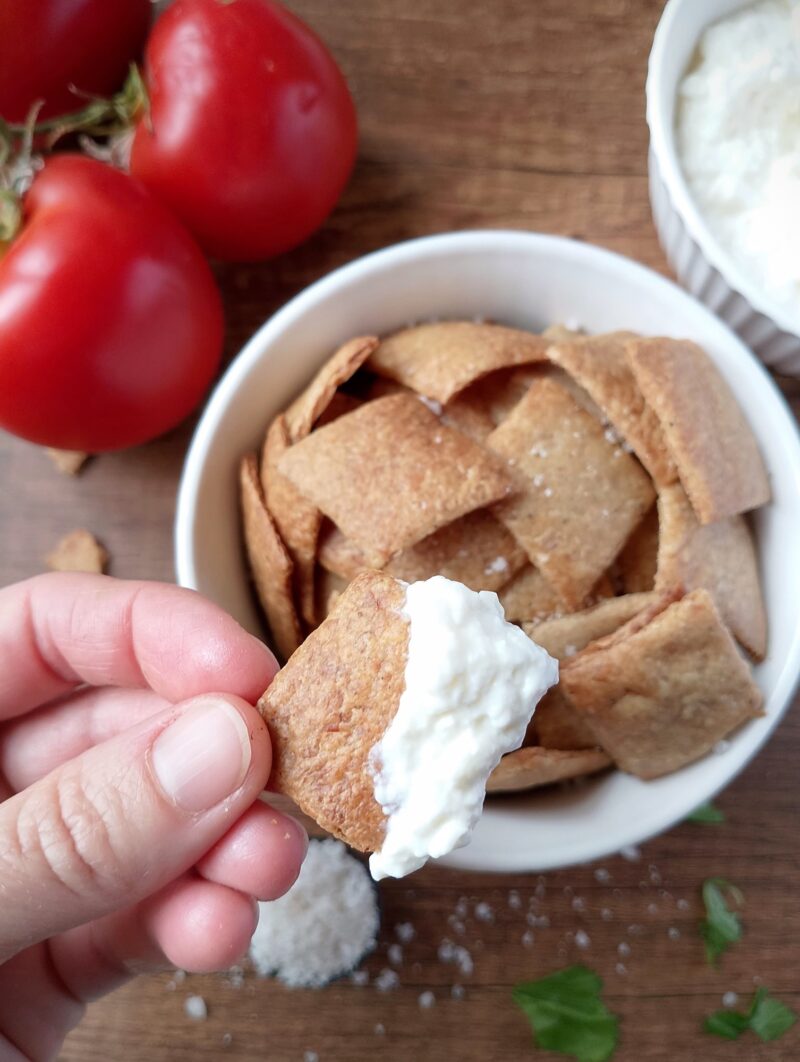
Because I don’t have a job outside the home, I have the time and energy to do some of these things myself. I can buy a crate of tomatoes when they’re cheap and can my own pizza sauce and tomato soup. Or buy garlic in bulk when it’s in season and make garlic powder for a fraction of what I’d pay for it in the store. I can also bake bread, make tortillas, burger buns, and crackers. We eat real food every day because I have the time and energy to make it.
And while all of this work takes time, it also saves us a lot of money. It allows me to make the most of seasonal bargains, preserve food when it’s abundant, and turn inexpensive ingredients into foods we would otherwise have to buy.
It also means that I’m building skills and knowledge that make our household more self-reliant. I don’t have to depend on a store for every loaf of bread, jar of sauce, or box of crackers. I know how to make these things myself.
If you want to stock a real food kitchen on a budget, you need to think of yourself as the manager and inventory person for the whole operation. You need to know what you have, what you need, when foods are cheapest, what needs to be preserved, and what needs to be used up.
This is real, important work. It has a huge impact on your family’s food, your budget, and the way your household runs.
You’re building a well-stocked kitchen that can nourish your family for years to come. Keep that long-term goal in mind.