Red Cabbage Sauerkraut with Cloves and Orange Marmalade
Bright and tangy, this red cabbage sauerkraut with orange and cloves is a delicious twist on a traditional ferment. Ground cloves add a warm, spiced depth, while a few spoonful of orange marmalade brings a gentle sweetness and citrusy lift that pairs beautifully with the earthy cabbage. It’s an easy, small-batch recipe that brings color and bold flavor to your plate—perfect alongside roasted meats, holiday leftovers, or a simple slice of buttered sourdough.
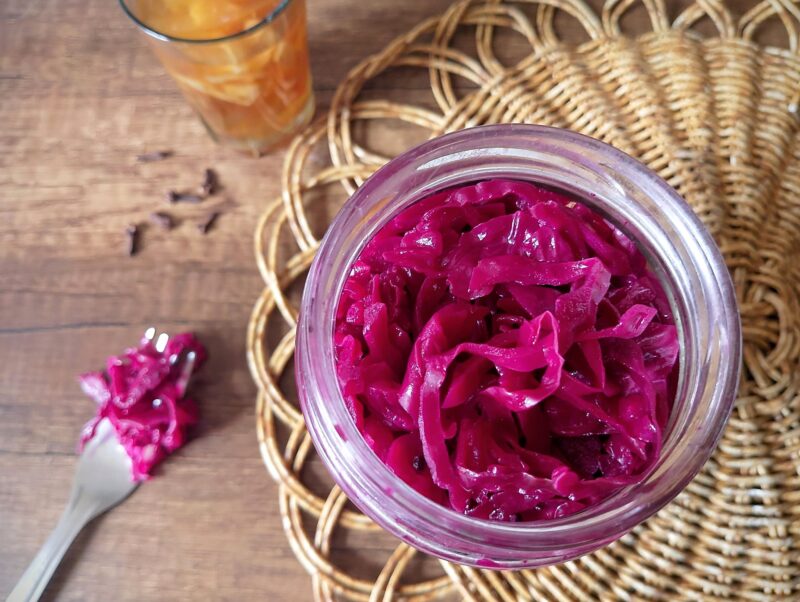
Why You’ll Love This Red Kraut Recipe
- It makes a beautiful change from traditional white cabbage sauerkraut. The deep purple-red color makes it especially pretty served as a side dish for special occasions.
- It has a delicious sweet-and-sour flavor. The tangy cabbage, warm cloves, and hint of orange complement meat and fish dishes beautifully.
- It only needs four ingredients. Not counting the water, this recipe is incredibly simple, yet the finished sauerkraut has plenty of flavor.
- You don’t need any special equipment. There’s no need for fermentation weights or a kraut pounder. All you really need is a couple of clean canning jars with lids.
Tips for the Best Kraut:
- Use unrefined salt. I recommend using a simple, unrefined salt such as sea salt or Himalayan pink salt. Avoid regular table salt if it contains anti-caking agents or other additives, as some additives may interfere with fermentation.
- Use the right amount of salt. This recipe uses a slightly higher salt concentration than many traditional sauerkraut recipes. The extra salt helps balance the sugar from the orange marmalade while still allowing the cabbage to ferment properly.
- Use filtered water. If possible, use filtered water rather than chlorinated tap water. Chlorine can inhibit the beneficial bacteria responsible for fermentation, so filtered water gives your red cabbage sauerkraut the best chance of fermenting well.
- You don’t need a kraut pounder. If you don’t own one, the flat end of a wooden rolling pin works well for pounding the cabbage. You can also use a sturdy wooden spoon or potato masher. I wouldn’t personally use a pestle from a pestle and mortar set, though—one wrong move and you could end up with a smashed jar!
- Keep everything below the brine. Make sure there are no pieces of cabbage floating above the liquid, and tuck your cabbage leaves down firmly so they lie flat beneath the brine. Anything exposed to air is more likely to develop mold, and that’s the last thing we want!
- Don’t burp your jars. There is no need to regularly open your jars during fermentation to release gas. Opening the jars breaks the seal and introduces fresh air. The one-piece European-style lids I use, as well as standard two-piece canning lids, can allow excess fermentation gases to escape without needing to be opened. Your jars do not need to be burped to ferment safely.
Ingredients
- 1 medium head red cabbage, about 1 kg (2.2 lbs) once shredded
- ¾ teaspoon ground cloves
- 4 tablespoons orange marmalade
- Fine sea salt or rock salt, calculated at 2% of the weight of your shredded cabbage (For example for 1000 g of shredded cabbage, you will need 20 g salt.)
This recipe will make two 750ml (24 oz) jars of sauerkraut.
How to Make Red Cabbage Sauerkraut Step By Step
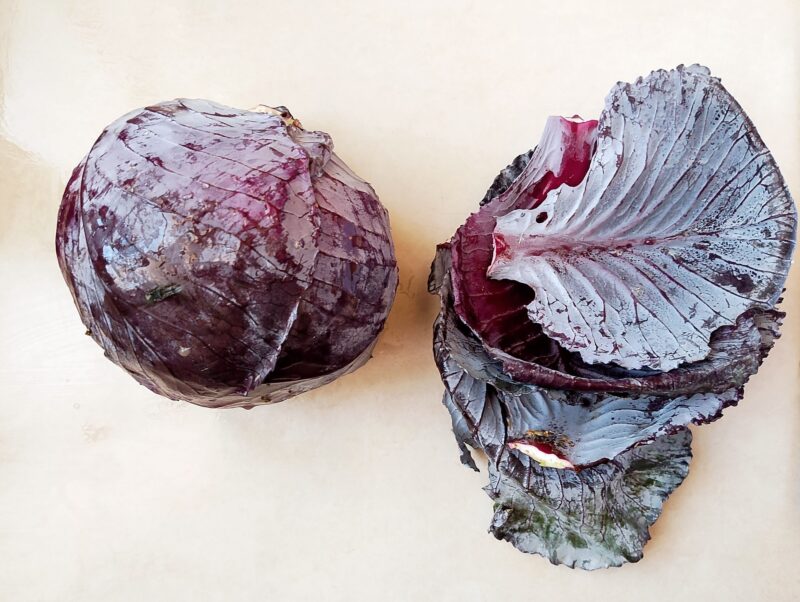
Step 1: To prepare the cabbage, remove the tough outer leaves and set aside 1–2 clean leaves. You’ll use these later to cover and hold the sauerkraut below the brine, so you won’t need fermentation weights.
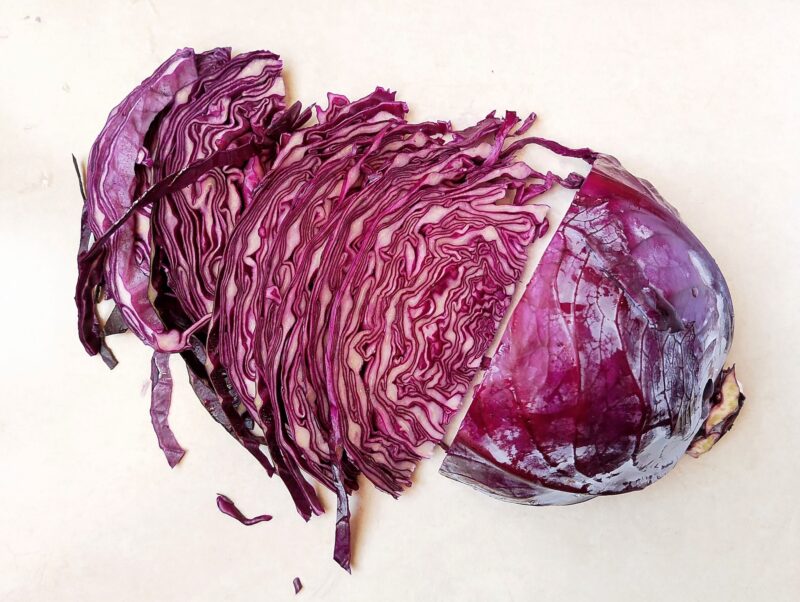
Step 2: Cut the cabbage into quarters. Using a sharp knife, finely shred each quarter, stopping when you reach the tough core. Discard or compost the core.
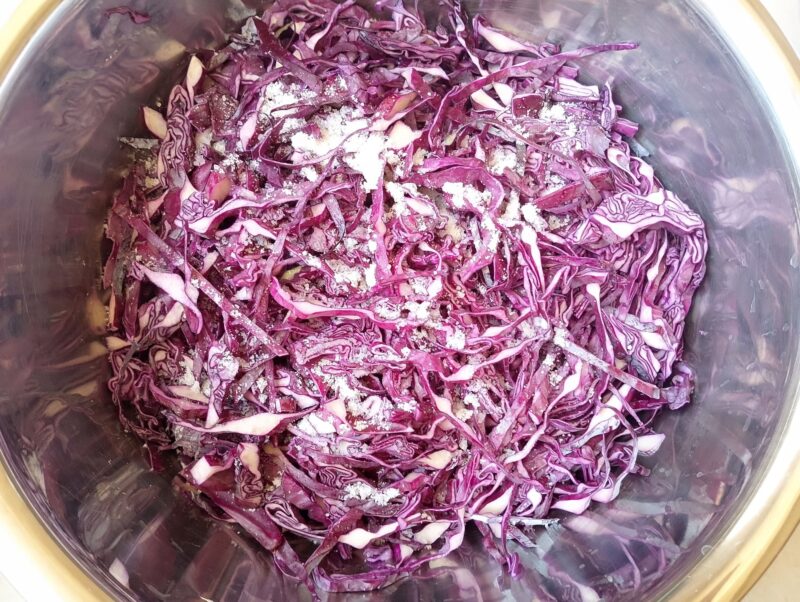
Step 3: Weigh your shredded cabbage in grams and multiply the weight by 0.02 to calculate the amount of salt you need. For example, if your cabbage weighs 900 grams, you’ll need 18 grams of salt (900 × 0.02 = 18).
Place the shredded cabbage in a large mixing bowl or pot and sprinkle the salt evenly over the top. Massage the salt into the cabbage with clean hands for 5–10 minutes, until the cabbage softens and releases plenty of juice.
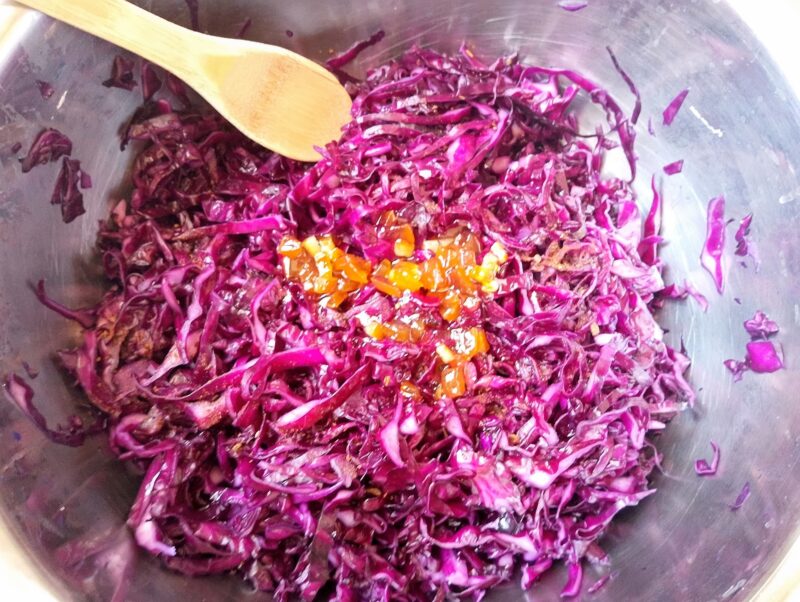
Step 4: Add the marmalade and ground cloves to the cabbage. If your marmalade contains large pieces of peel, chop them into smaller pieces first. Mix everything together thoroughly using clean hands or a wooden spoon.
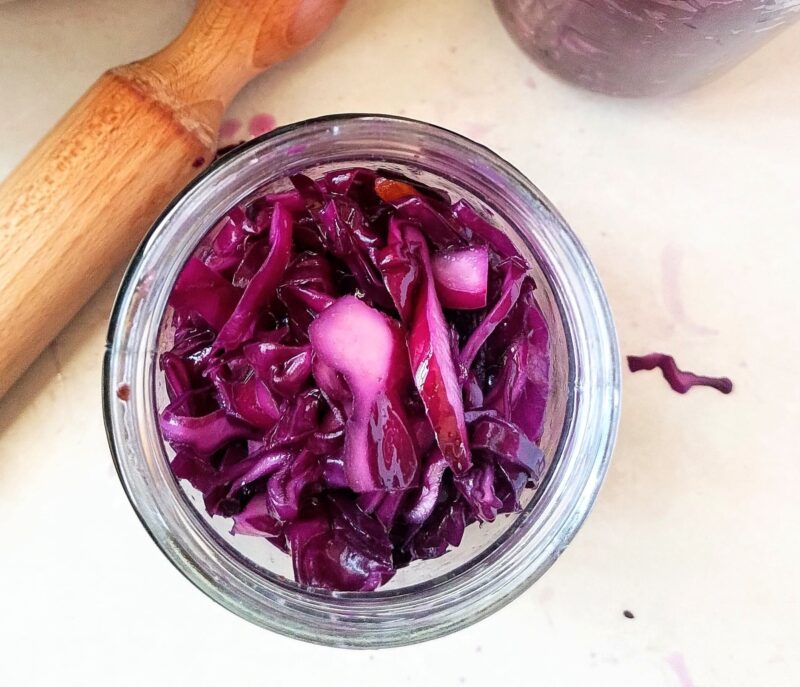
Step 5: Now it’s time to pack the cabbage into the jars. Add a handful of cabbage to a clean jar, then use the end of a rolling pin or similar tool to firmly pound it down. Add another handful and repeat until the jar is filled to about ½ inch below the neck.
It’s important to leave about ½ inch of headspace. You’ll need room to add a cabbage leaf on top to keep the shredded cabbage submerged, and leaving some space also helps prevent the jar from overflowing as the kraut ferments and releases more liquid.
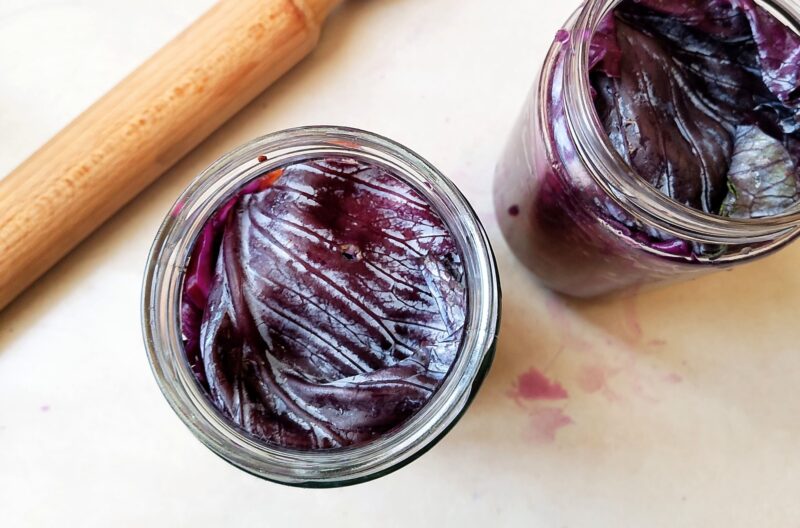
Step 6: Choose one of the outer cabbage leaves you set aside and cut out the thick middle vein. Cut each half of the leaf in half again to create four roughly triangular pieces. Press one piece into each jar, tucking the edges down around the cabbage. The leaf should form a flat seal over the shredded cabbage, keeping it submerged beneath the brine.
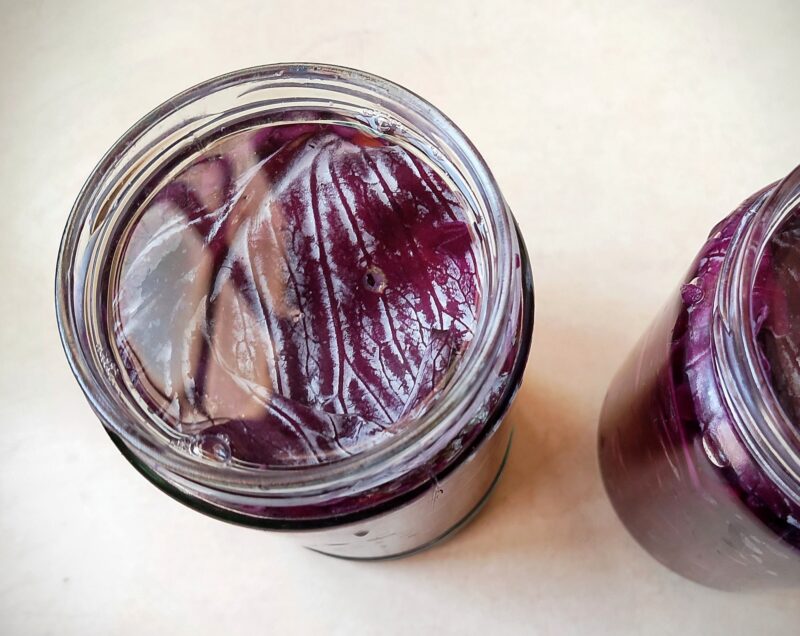
Step 7: The cabbage will usually release enough juice to cover most of the cabbage, but you may need to add a little 2% brine to top off the jars. To make the brine, dissolve 5 grams of salt in 1 cup (240 ml) of water. Add enough brine to bring the liquid up to the lip of the jar.
Screw the lids on tightly, then place the jars somewhere warm and out of direct sunlight. After a day or two, fermentation should begin and the jars may start to hiss and release some liquid. Place the jars in a bowl or tray to catch any overflow. This usually settles down after a few days, and you can remove the tray once the jars stop overflowing.
How Do I Know When My Sauerkraut Is Ready?
It takes about 3 weeks for the red cabbage sauerkraut to ferment. If it is very warm, it may only take 10 days, if your house is cool it may take up to 6 weeks. Start checking after 10 days if it is the middle of the summer and your house is very warm. If it is winter, I wouldn’t bother checking until at least 3 weeks have passed. Set a reminder in your calendar to check on the kraut. When it is ready, the cabbage will be softened and pleasantly sweet and sour. It should not taste salty. If it still tastes a little salty and the cabbage is still hard, tighten the lid back on and let it continue fermenting.
Once the sauerkraut is ready, transfer it to the refrigerator. If you continued keeping it at room temperature it would slowly overferment and get mushy. It wouldn’t spoil per se, but it would not be pleasant to eat. It would only be good for the compost pile.
Serving Ideas
Below are some of our favorite ways to serve this ferment which I hope you and your family will love as much as we do!
- Serve alongside roasted beef, duck, or chicken (such as these slow roasted chicken legs)—its sweet-spiced tang balances rich meats beautifully.
- Tuck it into a sourdough sandwich with sharp cheese or leftover roast for a quick and flavorful lunch.
- Add a spoonful to a bowl of hearty winter stew or bean soup for a pop of brightness.
- Pair with creamy mashed potatoes and sausages for a rustic, comforting supper.
- Add it to cold beetroot salad instead of balsamic vinegar.
- Try it with eggs and toast at breakfast—especially good with fried eggs or a quiche (for example my crustless quiche recipe).
- Add to a seasonal snack board with cured meats, cheeses, and fermented vegetables.
- Use it as a tangy topping on a baked potato with butter and herbs.
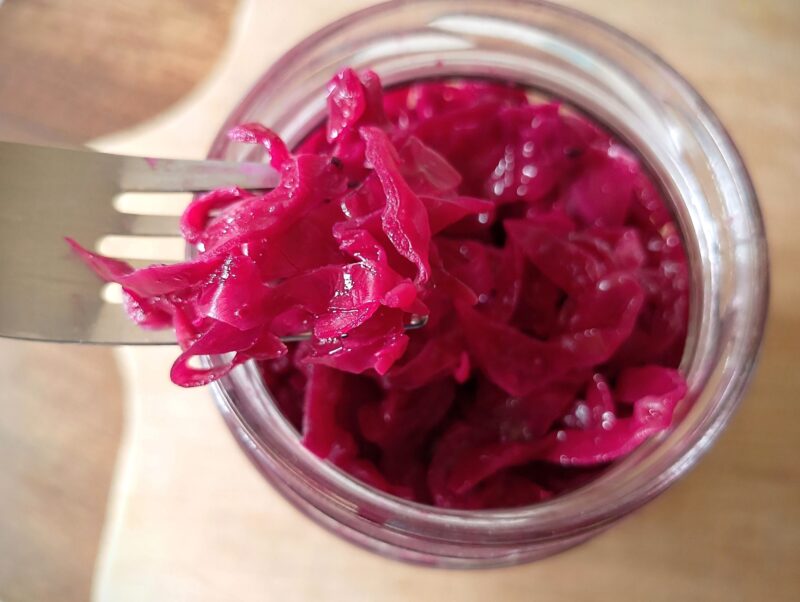
How to Store Red Cabbage Kraut
Once your red cabbage sauerkraut has fermented to the flavor you like, the refrigerator is the best place to store it. Cold temperatures slow fermentation dramatically while preserving the flavor and crunch. If you left it on the counter, it would continue to ferment and slowly lose the crunch and become mushy. In the refrgerator, the flavor will generally continue to develop slowly, but much more slowly than at room temperature.
Always use a clean utensil when taking sauerkraut from the jar. Properly fermented sauerkraut that remains submerged in brine and refrigerated can keep for many months, often 6 months or longer. The quality will slowly decline though so I personally wouldn’t store it for more than 12 months.
Why I Love Making Sauerkraut
I always have sauerkraut in the fridge, usually a few different variations. Some of my kids like plain sauerkraut, while my eldest daughter prefers it spicy, like curtido. Sauerkraut is my go-to vegetable side dish. It helps me make sure we always have some vegetables with our meals, even during the winter months when fresh produce isn’t as readily available.
If you love fermentation, dairy culturing, and other traditional skills, subscribe to my newsletter! I write it every Sunday and fill it with recipes, practical tips, and homemaking inspiration for real food moms like you.
More Family-Friendly Ferments
Curtido (Latin American Sauerkraut)
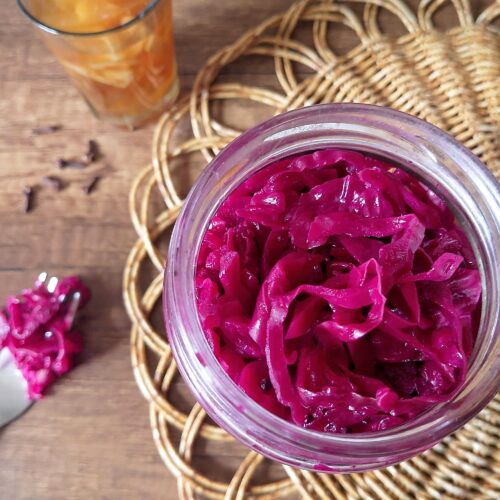
Red Cabbage Sauerkraut with Orange and Cloves
Equipment
- Kraut pounder, rolling pin, or wooden spoon
- 2 x 750ml (24 oz) canning jars with lids
Ingredients
- 1 medium head red cabbage (about 1000 grams once shredded)
- 4 Tablespoons orange marmalade, peel chopped
- ¾ teaspoon ground cloves
- Fine sea salt or rock salt (calculated at 2% of the weight of your shredded cabbage)
Instructions
- Remove the tough outer leaves from the cabbage and set aside 1–2 clean leaves. Cut the cabbage into quarters and finely shred, stopping when you reach the tough core. Discard or compost the core.
- Weigh the shredded cabbage in grams and multiply by 0.02 to calculate the salt needed. For example, 900 g cabbage requires 18 g salt. Place the cabbage in a large bowl, sprinkle with the salt, and massage with clean hands for 5–10 minutes, until softened and juicy.
- Add the marmalade and ground cloves. If the marmalade contains large pieces of peel, chop them smaller. Mix well.
- Add a handful of cabbage to a clean jar and firmly pound it down using the end of a rolling pin or similar tool. Continue adding and pounding cabbage until the jar is filled to about ½ inch below the neck.
- Remove the thick center vein from one reserved cabbage leaf and cut each half into smaller pieces. Press a piece over the shredded cabbage, tucking in the edges to create a flat seal and keep the cabbage submerged.
- If the cabbage juice doesn't completely cover the cabbage, add enough 2% brine to cover it. To make the brine, dissolve 5 g salt in 1 cup (240 ml) water. Leave about ½ inch headspace at the top of the jar.
- Screw the lids on tightly and place the jars somewhere warm and out of direct sunlight. After 1–2 days, fermentation should begin and the jars may hiss and release some liquid. Place them in a bowl or tray to catch any overflow. Once the overflowing stops after a few days, you can remove the tray.
Notes
- Everything should be submerged under the brine – make sure there are no pieces of cabbage floating on top and the leaves on top that you have used as a seal are tucked in and flat.
- There is no need to ‘burp’ the jars. Both the European style one piece lids that I am using and the two piece American lids are made to release the extra gases which form during fermentation. Your jars won’t explode.
- Once the sauerkraut is done fermenting, transfer it to the refrigerator and use within 6-12 months.