Beef Tongue for Beginners: How to Cook, Peel & Use It in Sandwiches
Beef tongue is a traditional, nutrient-dense cut of meat that has long been a staple in home kitchens around the world. I first became curious about it after seeing beef tongue sandwiches mentioned in 19th-century novels—and eventually, curiosity won. I had to try it for myself. I’m so glad I did! The flavor is surprisingly mild (very much like tender, slow-cooked beef), and the meat is wonderfully versatile. It can be easily made into family favorites like sandwiches, tacos, soups, and more, making it simple to add to a regular meal rotation. In this post, I’ll show you exactly how to cook beef tongue in a rich, flavorful broth until it’s perfectly fork-tender, then share my favorite way to enjoy it: in a wholesome, old-fashioned sandwich.
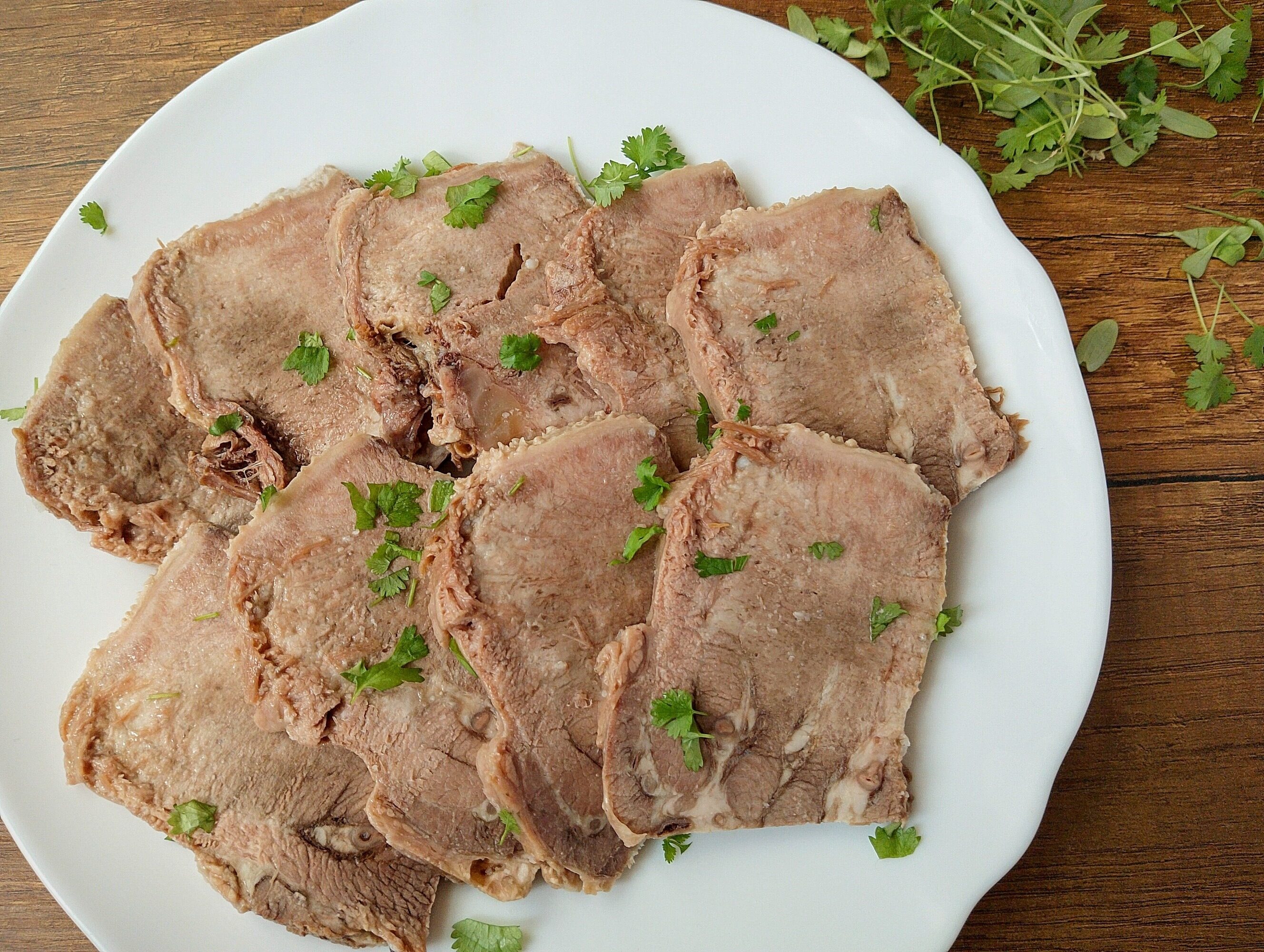
What Is Beef Tongue & Why Cook It?
Organ meats are one of the most overlooked parts of a traditional foods diet. Compared to something familiar like raw dairy or sourdough, they can feel unusual or even intimidating, which makes them harder to work into everyday meals. That’s one reason I’ve made organ meats a cornerstone of this blog. They deserve a regular place on our tables—not only because of their rich history in traditional cooking, but also because they are true nutritional powerhouses. Many people shy away from them due to their appearance or their stronger, less familiar flavors. The good news is that just as you can get used to the taste of raw dairy or the tang of sauerkraut, with exposure you can also learn to like the flavor of organ meats.
Beef tongue is a wonderfully gentle introduction to organ meats. Unlike liver or kidneys, it doesn’t have a strong or distinctive taste. Instead, it’s pleasantly mild—very much like tender, slow-cooked beef. The main difference is in the texture: beef tongue is softer and smoother than a typical roast or steak, especially when you learn how to cook beef tongue properly until it becomes perfectly tender.
One thing to keep in mind is that beef tongue is quite large. For this recipe, I used veal tongue, which was plenty for a hearty lunch for our family of five. Both veal and beef tongue work beautifully here—the method for how to cook beef tongue is the same, but the proportions and cooking time will vary. If you’re using a full beef tongue, simply double the aromatics and stock or water, and allow extra simmering time. While veal tongue becomes fork-tender after about 2 hours, beef tongue typically needs closer to 2½–3½ hours.
Ingredients
To cook the tongue
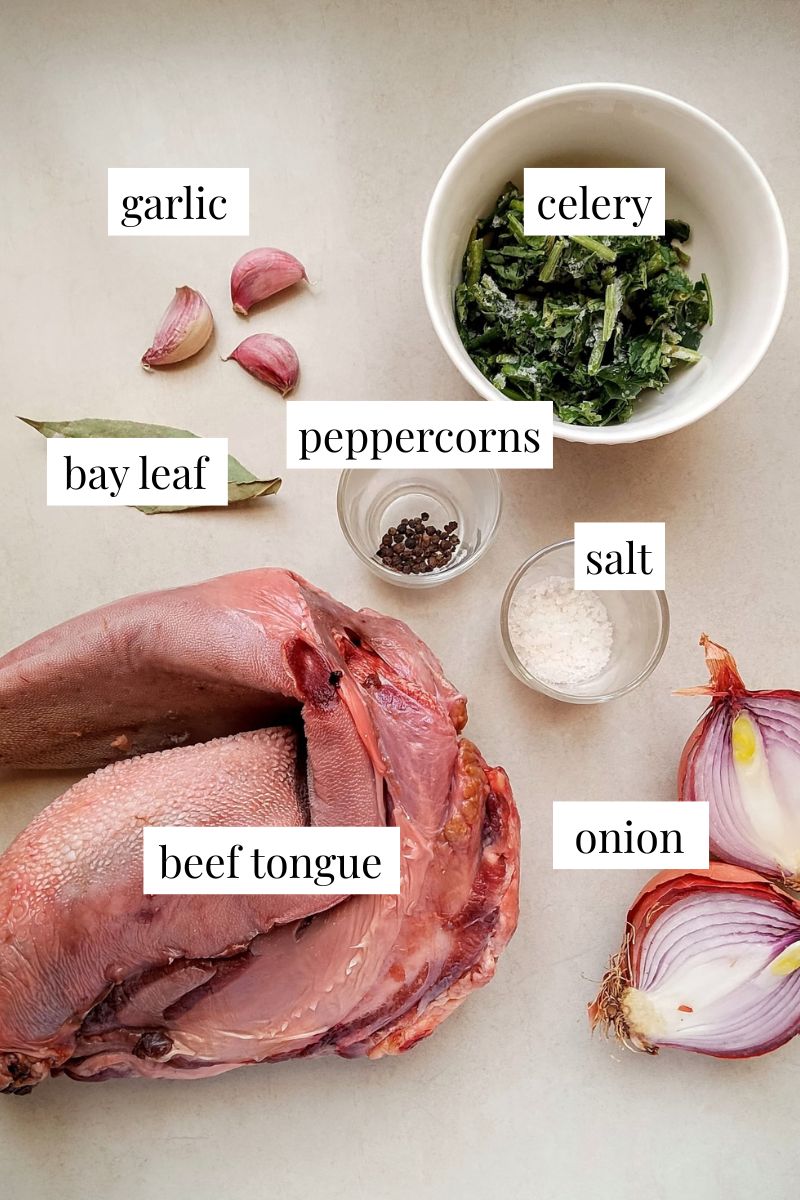
- Beef tongue: I’m cooking half of a veal tongue here. If you’d like to cook a whole tongue instead, simply increase the amount of liquid, aromatics (vegetables and seasonings), and salt accordingly. You can also follow the same method to cook beef tongue—it just requires a longer simmering time.
- Stock or water: For this recipe, I used a mixture of half stock and half water to cook the tongue, which gives the broth a richer, deeper flavor. That said, using water alone works perfectly well too, and your beef tongue will still turn out tender and delicious.
- Aromatics: carrots, garlic, and onion are added to the pot to make both the tongue and the broth more flavorful.
- Seasonings: I use parsley, peppercorns, and sea salt to flavor the broth. Instead of parsley, you could also use a couple of celery stems.
To assemble the sandwiches
Beef tongue makes incredible sandwiches because it’s rich, tender, and deeply savory — but the right supporting ingredients make all the difference. Here are my favorite ingredients that pair beautifully with beef tongue, grouped by flavor role so you can build amazing sandwiches easily.
- Flavor boosters: horseradish, mustard, pickled or caramelized onions, smoked paprika aioli, homemade mayo.
- Crunchy veggies: sauerkraut, dill pickles, thinly sliced onion, pickled carrots, or thinly sliced radishes.
- Best cheeses: aged cheddar (my all-time favorite cheese – it is way more flavorful than mild cheddar), Edam, Swiss cheese, Gruyère, or mozzarella.
- Fresh additions: crispy lettuce, arugula, sliced tomato, sliced cucumber, microgreens.
- Best breads to use: I am using my whole wheat sourdough sandwich loaf here, but other good choices are rye bread, ciabatta, soft rolls, or bagels.
How to Prepare Beef Tongue for Cooking
To prepare beef tongue for cooking, you only need to rinse it thoroughly under running water. If you’ve purchased a whole tongue but only plan to use half for this recipe, wrap the unused portion tightly and freeze it for another meal—it freezes very well and maintains its quality.
How to Cook Beef Tongue (Step by Step)
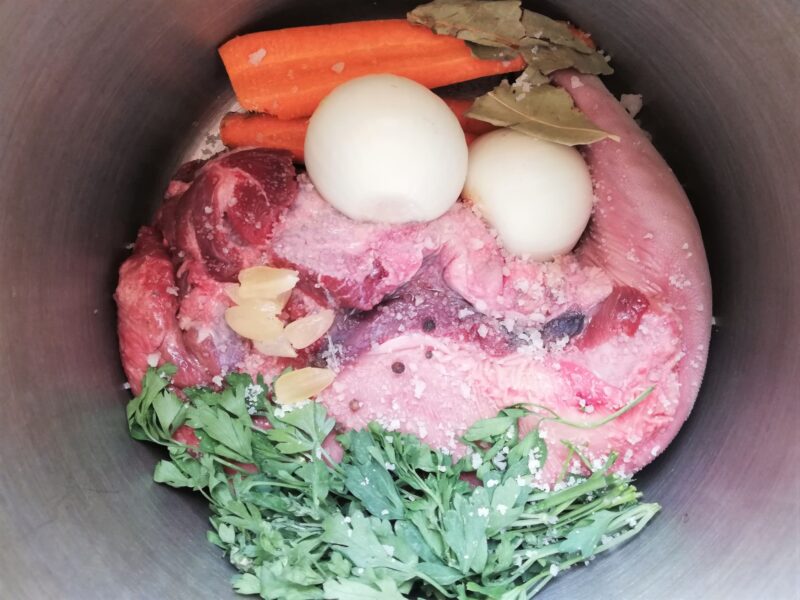
Step 1. Place the tongue, vegetables, and seasonings in a medium stockpot. Add the stock and water (or all water if you prefer). Bring to a boil, skimming off any foam that rises to the surface. Once boiling, reduce the heat to a gentle simmer, cover, and cook for 30 minutes.
At this point, taste the cooking liquid—it should resemble a light, flavorful broth. If it tastes flat, stir in a little more salt. This step is important because the tongue will absorb the flavors from the broth as it continues to cook, ensuring a tender and flavorful result.
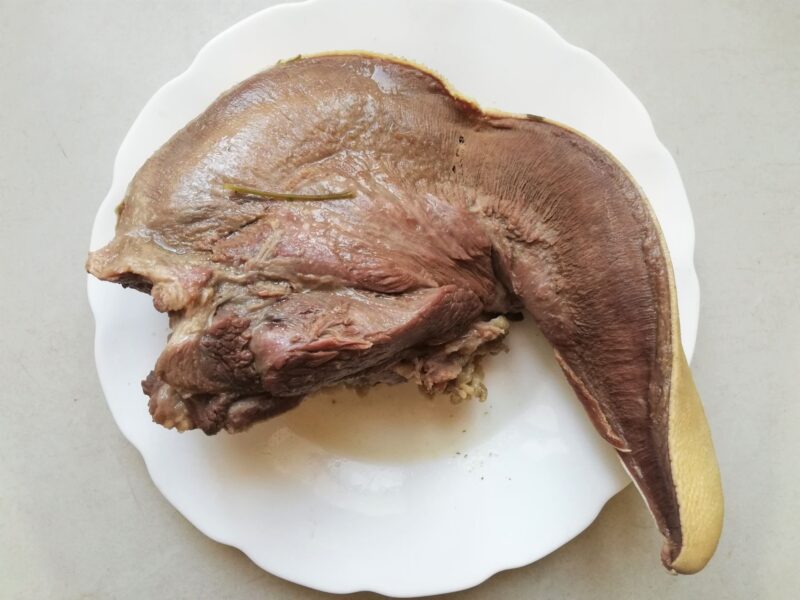
Step 2. After 1½ to 2 hours of simmering, check the tongue for doneness (for beef tongue, aim for the 2-hour mark). It should be fork-tender, with a fork sliding in easily. If it still feels tough, cover the pot and continue cooking for another 30 minutes, then test again.
Once the tongue is perfectly tender, lift it out of the broth and let it rest for a few minutes—just until it’s cool enough to handle but still warm. Don’t discard the cooking liquid! This flavorful broth is a nutrient-rich base you can use for soups, sauces, or stews, adding extra depth to other meals.
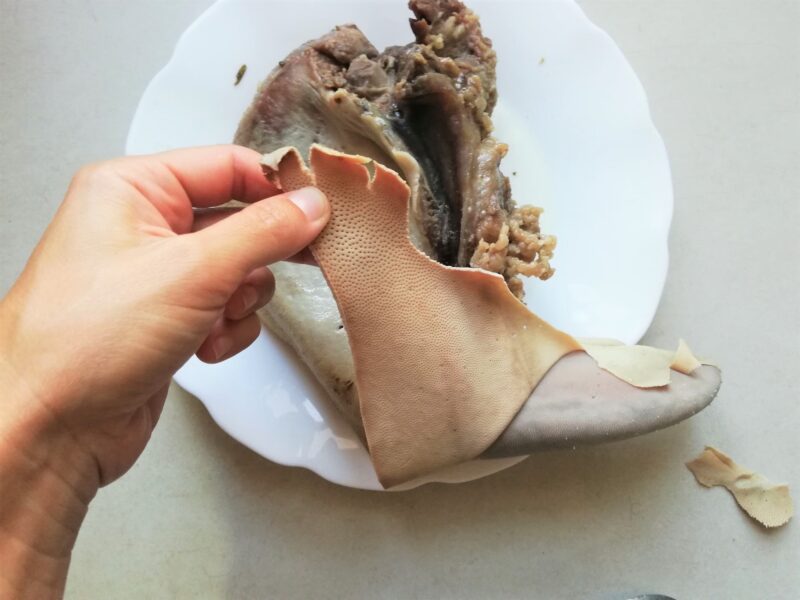
Step 3. Starting at the tip, carefully peel off the outer skin. It should come off easily, often in one piece—almost like removing a glove. Be sure to do this while the tongue is still hot — as it cools completely, the skin tightens and becomes much harder to remove.
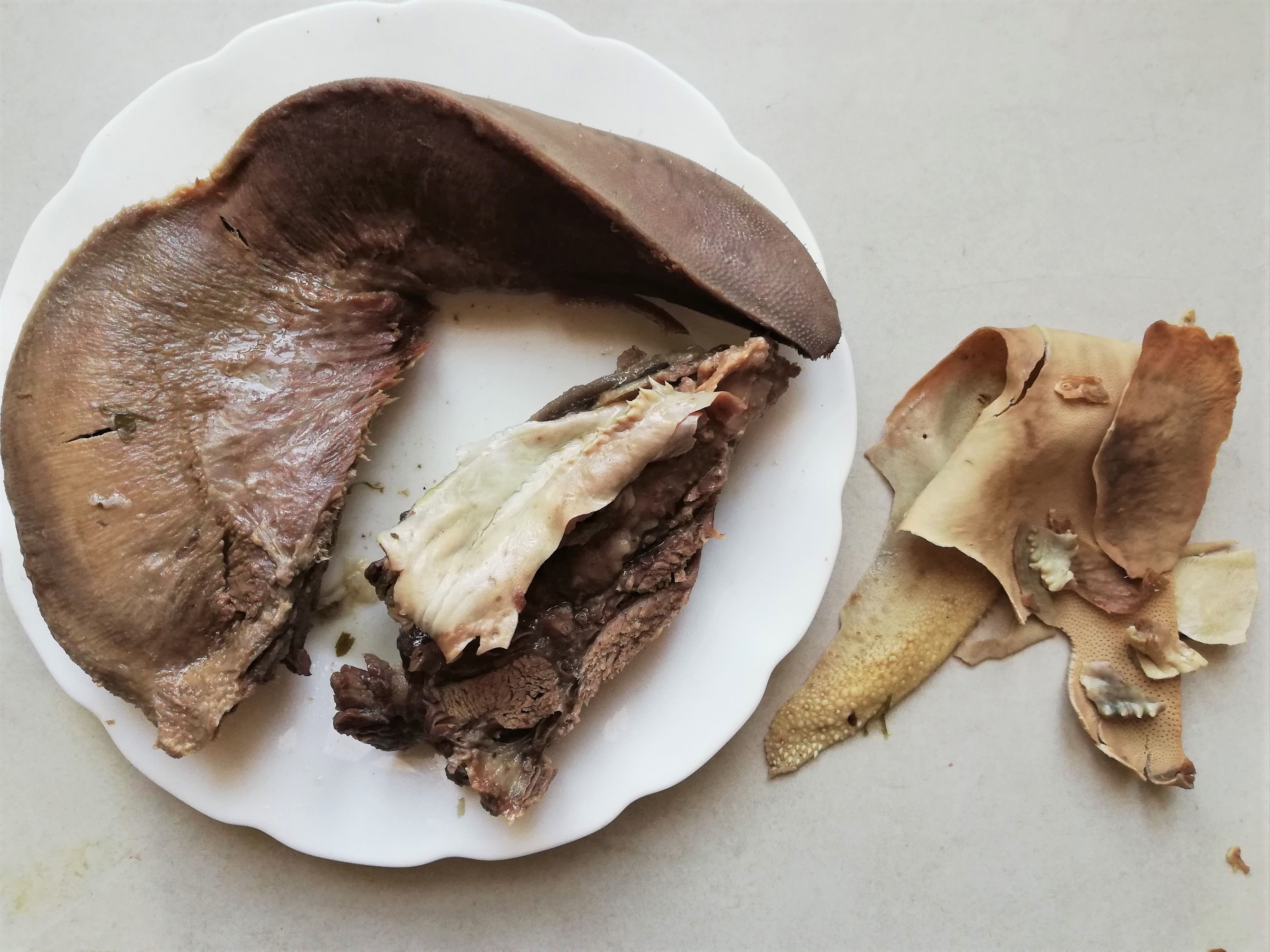
Step 4. Once the skin is removed, trim away the underside of the tongue. While it’s perfectly edible, this part isn’t ideal for sandwiches—you can chop it and use it just like cooked beef in soups, tacos, or other dishes. Place the remaining tongue in a covered container and refrigerate until well chilled. Chilling makes it much easier to slice thinly for sandwiches or other recipes.
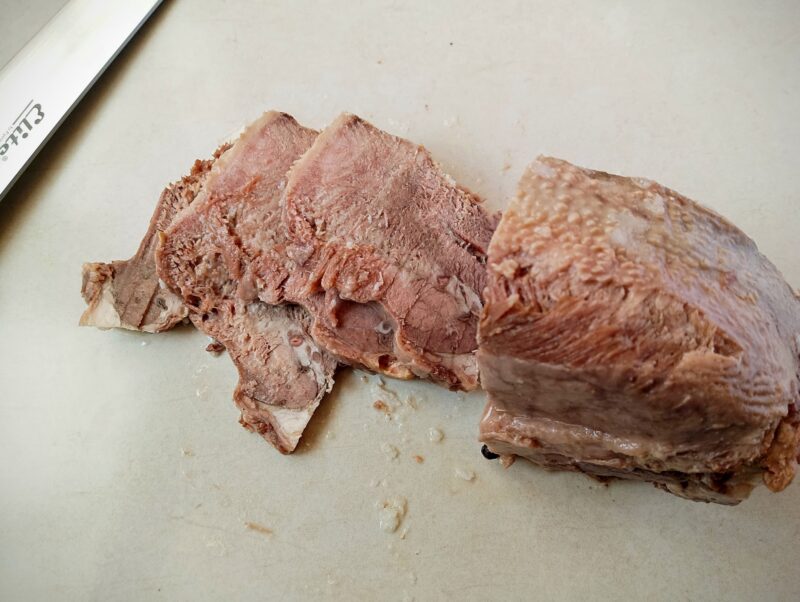
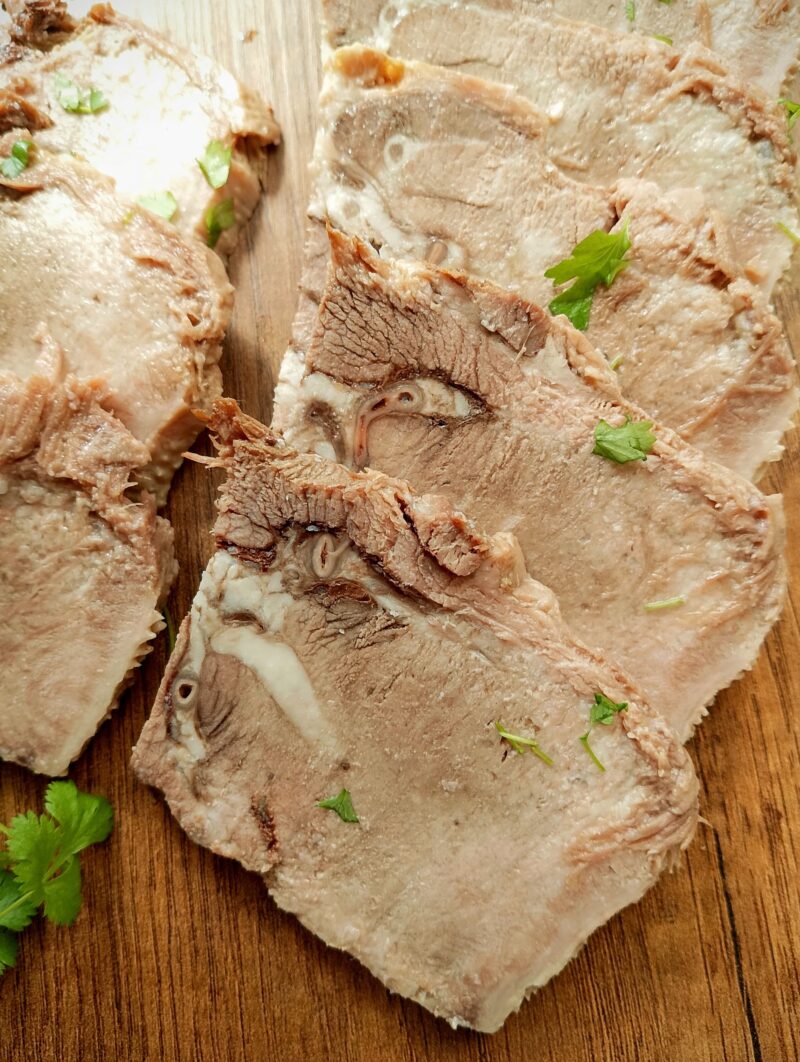
Step 5. After the tongue has chilled for a couple of hours, it will be firm and much easier to slice. Using a sharp knife, cut it into thin, even slices. Prepared this way, the tongue is perfect for sandwiches, tacos, salads, or any dish that calls for tender, flavorful beef.
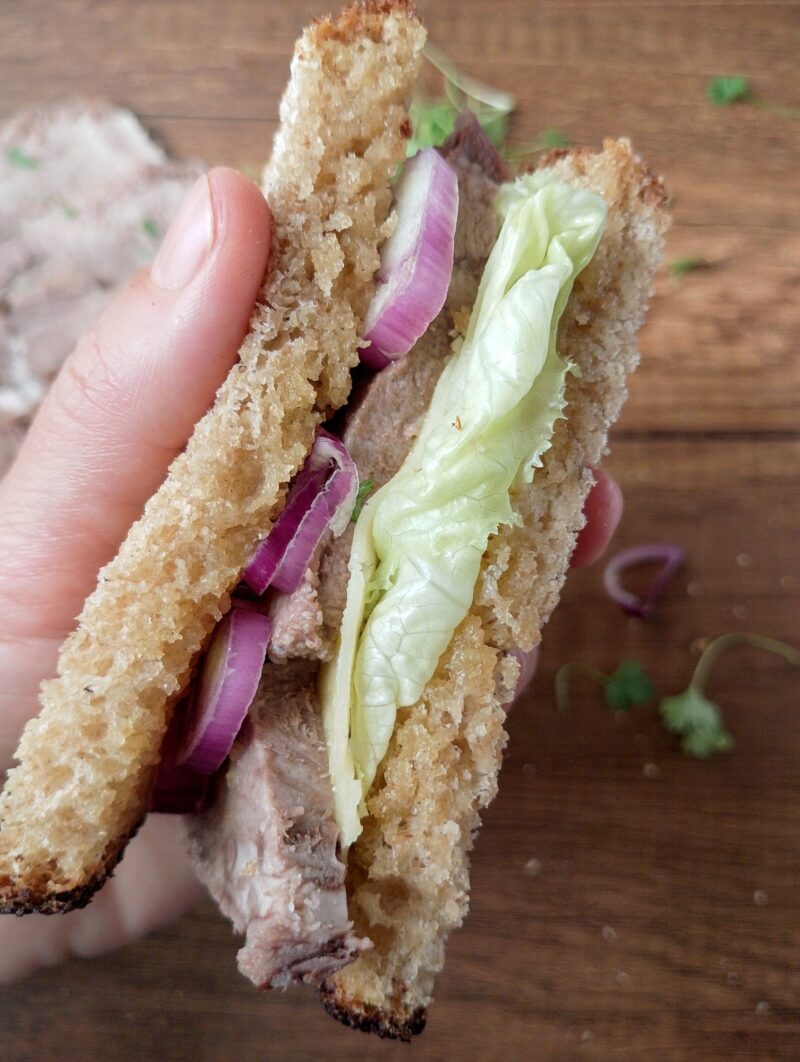
How to Make The Perfect Beef Tongue Sandwich
- Bread Base: Choose a bread that complements the richness of beef tongue – sourdough sandwich bread, crusty sourdough, ciabatta, and bagels are some good options to use. For tender fillings like beef tongue, slightly toasted bread helps prevent sogginess.
- Fat / Spread Layer: You could use butter, mayonnaise, aioli, mustard, or horseradish sauce. Thin layers on both slices keep sandwich juicy but not sloppy.
- Main Filling: It is best to slice the tongue thinly. Tongue is already rich — you can season it lightly with salt and pepper.
- Flavor Boosters: These layers add depth and richness without overpowering the tongue. My favorites for this layer are caramelized or pickled onions, sautéed mushrooms, and smoked paprika.
- Crunchy Veggies: sauerkraut, dill pickles, thinly sliced onion, pickled carrots, or thinly sliced radishes.
- Fresh Herbs / Greens: such as crispy lettuce, arugula, or microgreens. Add them just before serving to keep the crunch.
- Cheese Layer (optional): aged cheddar, Edam, Swiss cheese, Gruyère, or mozzarella. You can melt the cheese briefly if your sandwich is warm, or keep cold for contrast.
- Top Spread / Sauce Layer (optional): use the same spread as in the Fat / Spread Layer.
Assembly Order
- Bottom bread slice + spread
- Sliced beef tongue
- Cooked flavor boosters
- Crunchy veggies
- Fresh greens
- Cheese (optional)
- Top spread (optional)
- Top bread slice
Other Ways to Use Beef Tongue in Recipes
- Tacos de Lengua – slow-cooked, chopped tongue, served in corn tortillas with cilantro, onion, and salsa. Try my easy tongue tacos recipe.
- Tongue Quesadillas – grilled with melted cheese and sautéed peppers.
- Beef Tongue Curry – slow-cooked in Indian or Caribbean-style spices; tender tongue soaks up all the flavor.
- Hearty Tongue Stew – with root vegetables, potatoes, and barley.
- Tongue absorbs flavor beautifully, so don’t be afraid of bold spices, herbs, or sauces.
- Freeze extra cooked tongue slices for quick tacos, sandwiches, or stews.
Storage Tips
before cooking
- In the refrigerator: Keep raw tongue in its original packaging or tightly wrapped in plastic wrap or butcher paper on the bottom shelf of your fridge. Use within 3–5 days of purchase.
- In the freezer: Wrap tightly in plastic wrap and then in foil or a freezer bag to prevent freezer burn. Freeze for up to 6 months.
after cooking
- In the refrigerator: Let cooked tongue cool slightly at room temperature (no more than 1–2 hours) before storing. Place in an airtight container and use within 3–4 days. Slice as needed instead of cutting everything at once – this will prevent it from drying out.
- In the freezer: Slice or cube the tongue before freezing for easy portioning. Wrap in plastic wrap or vacuum seal, then place in a freezer bag. Freeze for up to 3 months for best texture.
Recipe FAQs
Conclusion
Beef tongue is delicious, nourishing, and often budget-friendly—though not everywhere! Where I live in Africa, organ meats are prized and can actually be among the most expensive cuts (and hard to find too — my husband had to look in quite a few shops to find tongue so I could cook it for this recipe!). Once cooked, beef tongue is incredibly versatile: tuck it into sandwiches, tacos, or salads, or use it in almost any family-friendly dish that calls for tender beef. Its mild flavor and familiar appearance once sliced make it one of the easiest types of offal to introduce to children. Try this tongue sandwich recipe today, and see how your family loves it!
Don’t stop here—if you want more easy, nutrient-dense recipes and practical tips for traditional cooking, subscribe to my newsletter now for fresh inspiration every week.
More Delicious Organ Meat Recipes:
Traditional Barley Soup with Chicken Hearts
Nutrient-Rich Chicken Liver Pâté
Simple and Flavorful Tripe Soup
How to Cook Beef Tongue + Tongue Sandwiches Recipe
Ingredients
To cook the tongue
- Veal tongue, just over 3lb (1.5kg) in weight
- 1 small onion, peeled and halved
- 2-3 celery sticks (or a small bunch of parsley)
- 2 cloves of garlic, peeled and smashed
- 2 medium carrots
- 6-8 peppercorns
- 2 bay leaves
- 4 cups stock + 4 cups water (or use all water)
- 1 Tbsp coarse salt
For the sandwiches
- Cooked veal tongue
- Sliced tomatoes
- Sliced red onions (pickled onions are great too)
- Sliced sharp cheddar
- Sliced jalapenos (optional)
- A few lettuce leaves
- ¼ cup softened butter
- 1/2 loaf sourdough sandwich bread, or other bread of your choice
- 1 cup sauerkraut, to serve on the side
Instructions
To cook the tongue
- Prepare the tongue. Rinse the tongue thoroughly under running water.
- Simmer with aromatics. Place the tongue, vegetables, and seasonings in a medium stockpot. Add stock and water (or all water). Bring to a boil, skimming foam, then reduce to a gentle simmer. Cover and cook 30 minutes, tasting the broth—add salt if it tastes flat.
- Cook until tender. Simmer for 1½–2 hours (beef tongue closer to 2 hours) until fork-tender. If still tough, continue cooking in 30-minute increments. Lift the tongue from the broth and let it rest until warm enough to handle. Save the broth for soups or sauces.
- Peel the skin. While still hot, peel off the outer skin starting at the tip—it should come off easily in one piece.
- Trim and chill. Trim the underside of the tongue if desired. Place the remaining tongue in a covered container and refrigerate until firm, making it easier to slice.
- Slice and serve. Use a sharp knife to cut the chilled tongue into thin slices. Perfect for sandwiches, tacos, salads, or any dish that calls for tender, flavorful beef.
To make the tongue sandwiches
- Lightly toast your bread.
- Spread butter, mustard, aioli, horseradish, or your favorite spread on both slices of the bread.
- Layer thin slices of cooked beef tongue on the bottom slice.
- Add caramelized onions, sautéed mushrooms, or other cooked flavor boosters.
- Top with pickles, pickled onions, or your favorite crunchy acidic layer.
- Add fresh greens and herbs for brightness.
- Place cheese (optional) on top of the greens.
- Close the sandwich, press lightly, and serve warm or cold.
Notes
- I used a veal tongue because that is enough for a substantial lunch for our family of 6.
- You can use beef tongue instead of veal tongue. It will take longer to cook – 2 1/2 to 3 1/2 hours.