Easy Sourdough Discard Orange Cinnamon Rolls From Scratch
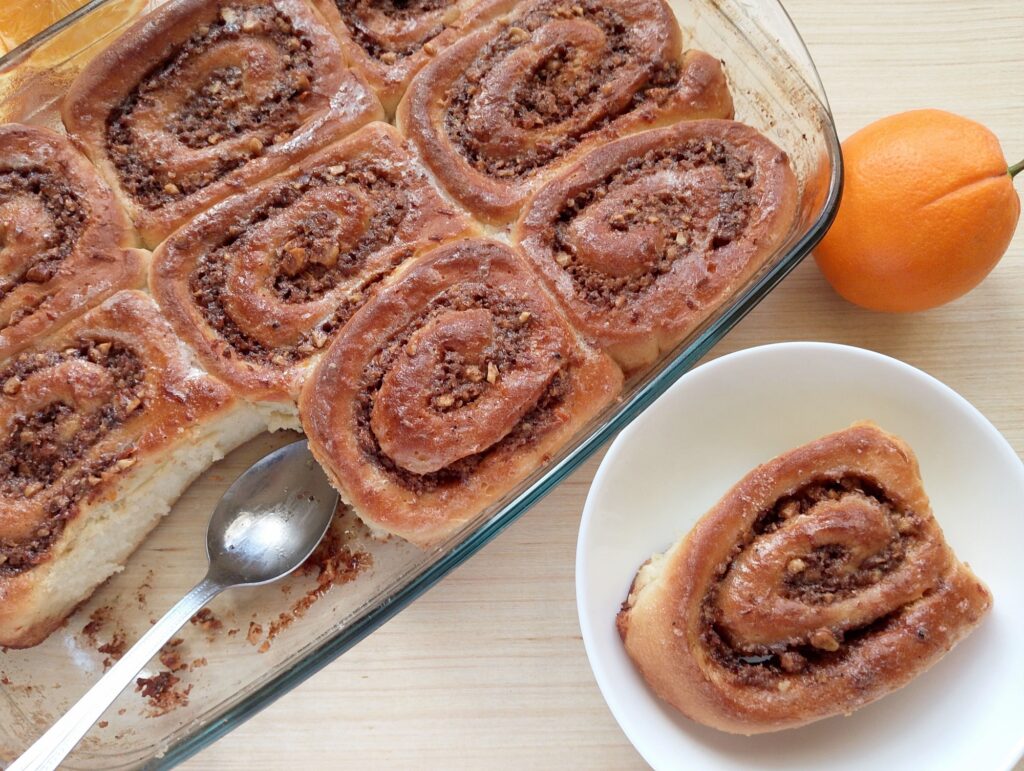
These sourdough discard orange cinnamon rolls are the perfect mix of soft, buttery dough and a gooey, aromatic filling. Right now, orange season is at its peak, and we’re lucky to get local oranges by the crate! This easy, from-scratch sourdough discard dessert bursts with the comforting flavors of butter, cinnamon, and bright citrus. I prefer skipping heavy icing, so I finished mine with a light, fragrant orange glaze that enhances the citrus flavor of the rolls. With both same-day and overnight options, these rolls fit easily into your schedule. Give these citrus-kissed cinnamon rolls a try—you won’t regret it!
Why You’ll Love This Recipe
- Soft, buttery, and pillowy rolls — enriched dough creates that perfect melt-in-your-mouth texture.
- Gooey, flavorful filling — brown sugar, butter, walnuts, cinnamon, and orange zest make every bite indulgent.
- Slightly tangy and aromatic — the sourdough discard adds subtle depth and complexity.
- Balanced sweetness — not overly sugary, with a light orange glaze that enhances the flavor of the rolls.
- Flexible prep options — can be made same-day or cold-proofed overnight for easy morning baking.
- Perfect for sharing — fills a 9×13-inch pan, ideal for family breakfasts or brunch.
Why Use Sourdough Discard in Cinnamon Rolls?
- Adds softness and flavor without long fermentation that would be required with an active starter. The combination of discard and a little yeast give the rolls a reliable rise.
- Reduces waste and makes baking more sustainable. To keep your starter healthy and prevent it from growing too large, you’ll need to use or discard a portion before each feeding. While discard can be stored in the fridge, it’s best used within a couple of weeks. That’s why discard recipes are so popular among sourdough bakers—they’re a delicious way to put leftover starter to good use!
Ingredients
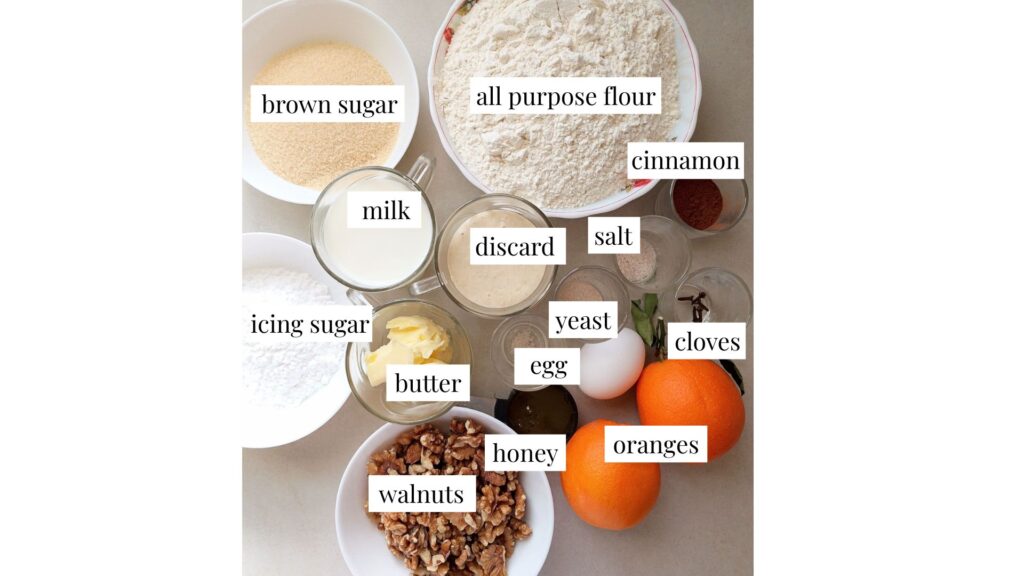
- Full list of ingredients with exact amounts can be found in the recipe card below.
How to Make Sourdough Discard Orange Cinnamon Rolls (Step by Step)
Step 1
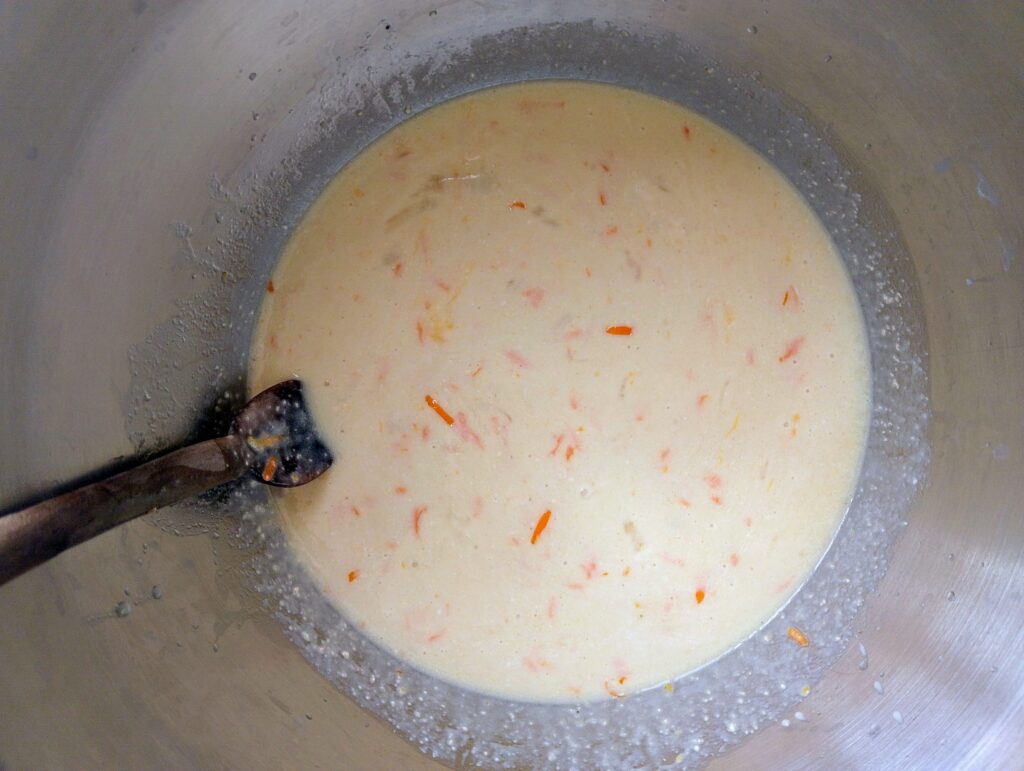
In a large mixing bowl, whisk together the warm milk and honey first, then add the melted butter, egg, yeast, sourdough discard, salt, and orange zest. Whisk until everything is fully incorporated and smooth.
Step 2
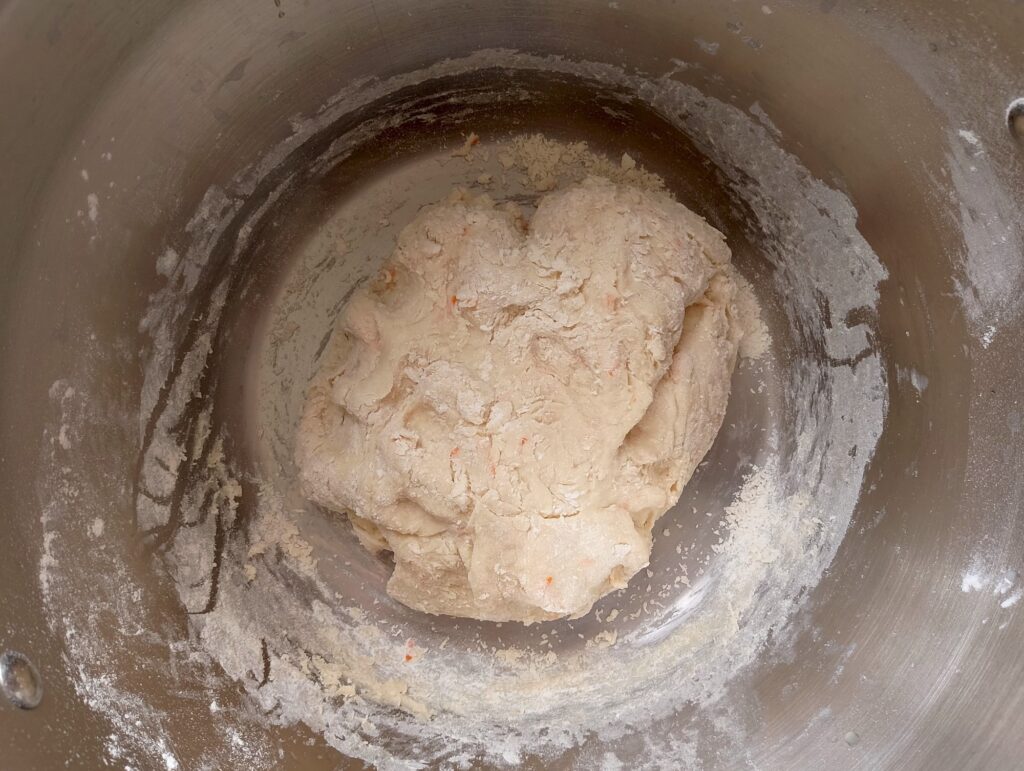
Gradually add the flour, mixing after each addition, until a soft dough forms that is slightly tacky but not sticky. You may not need all of the flour, depending on humidity and your sourdough discard.
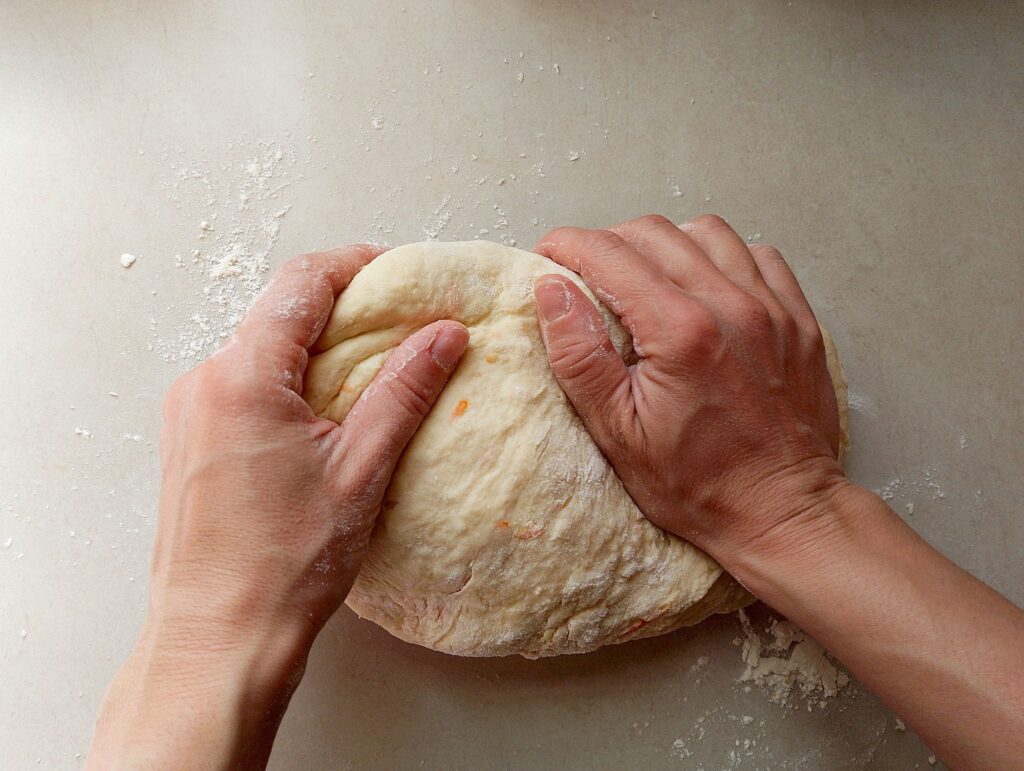
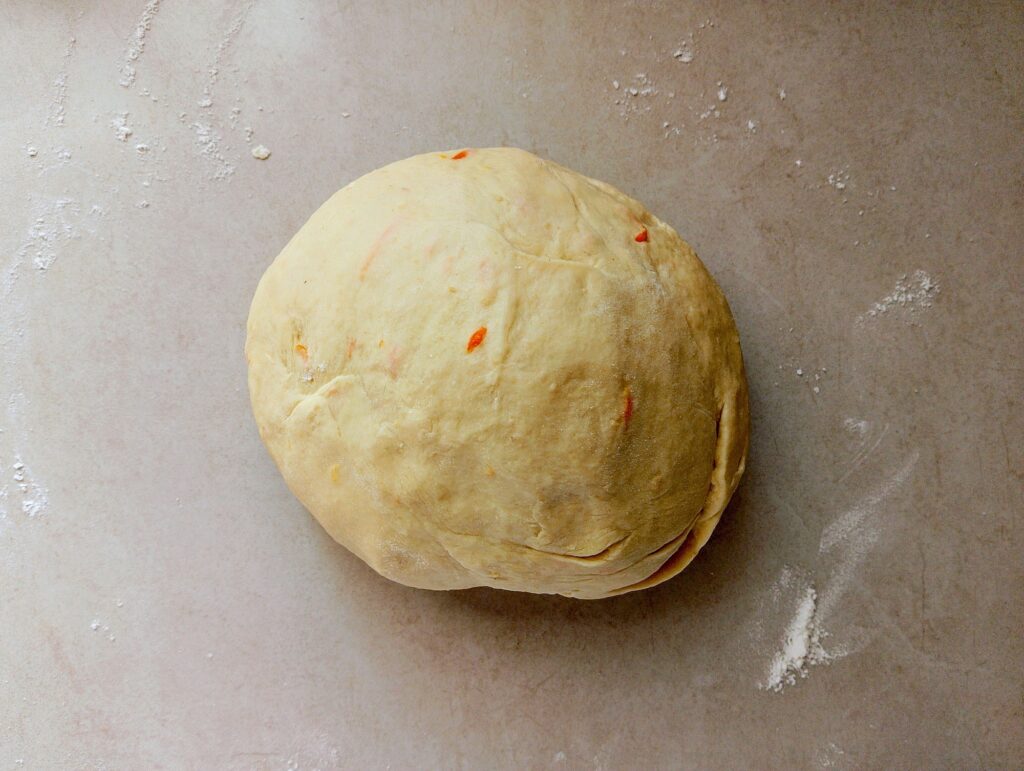
Step 5
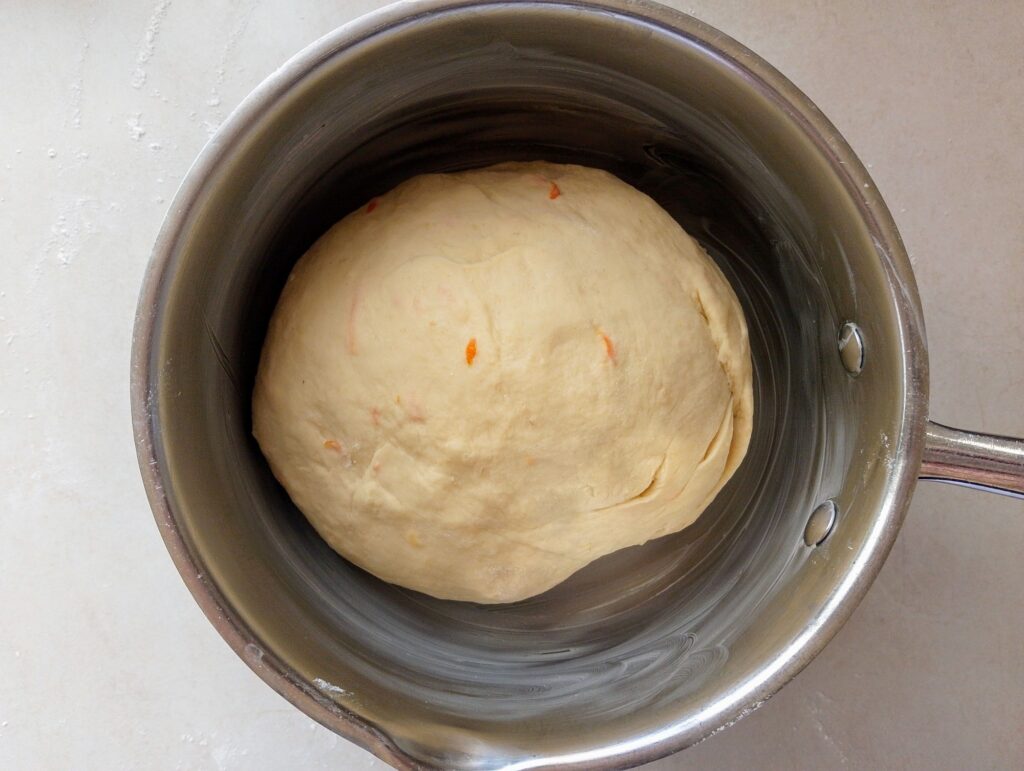
Transfer the dough to a lightly buttered bowl, then cover with plastic wrap or a damp tea towel. Allow it to rise until it’s noticeably puffy and about 70–75% larger than its original size—no need to wait for a full doubling. Press the dough gently with your finger; it should spring back slowly. This first rise typically takes 1–2 hours.
Step 6
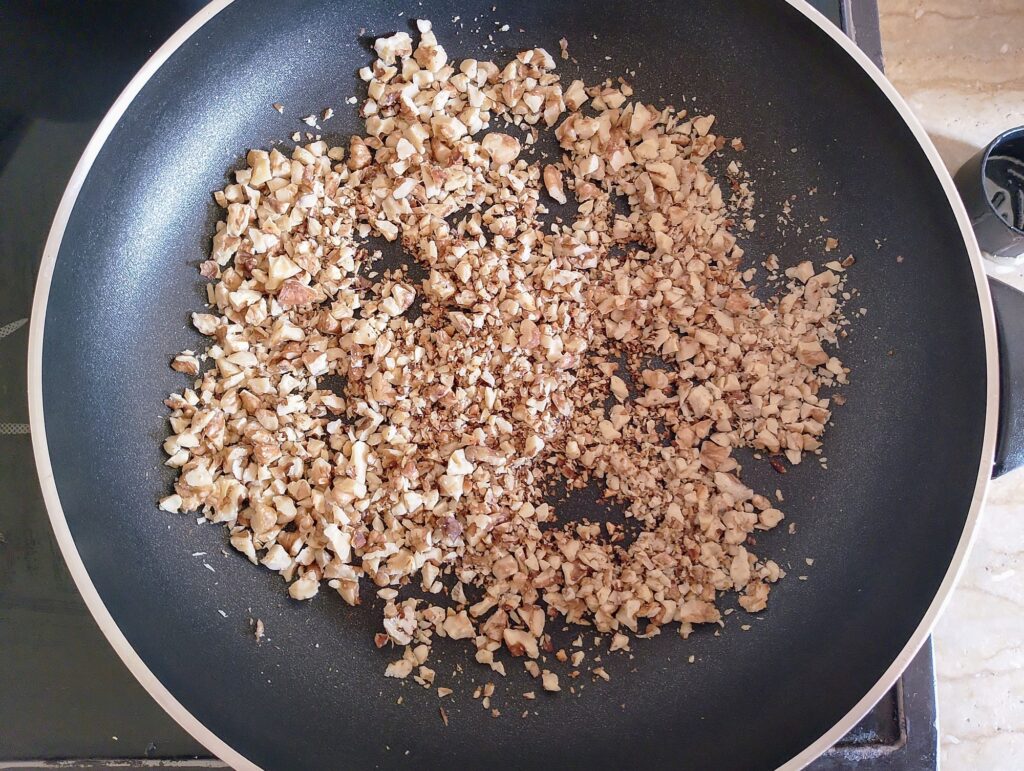
As the dough rises, make the filling. Chop the walnuts into small pieces, then toast them in a dry skillet over medium heat until they become aromatic and just a shade darker. Stir or shake the pan frequently to prevent burning.
Step 7
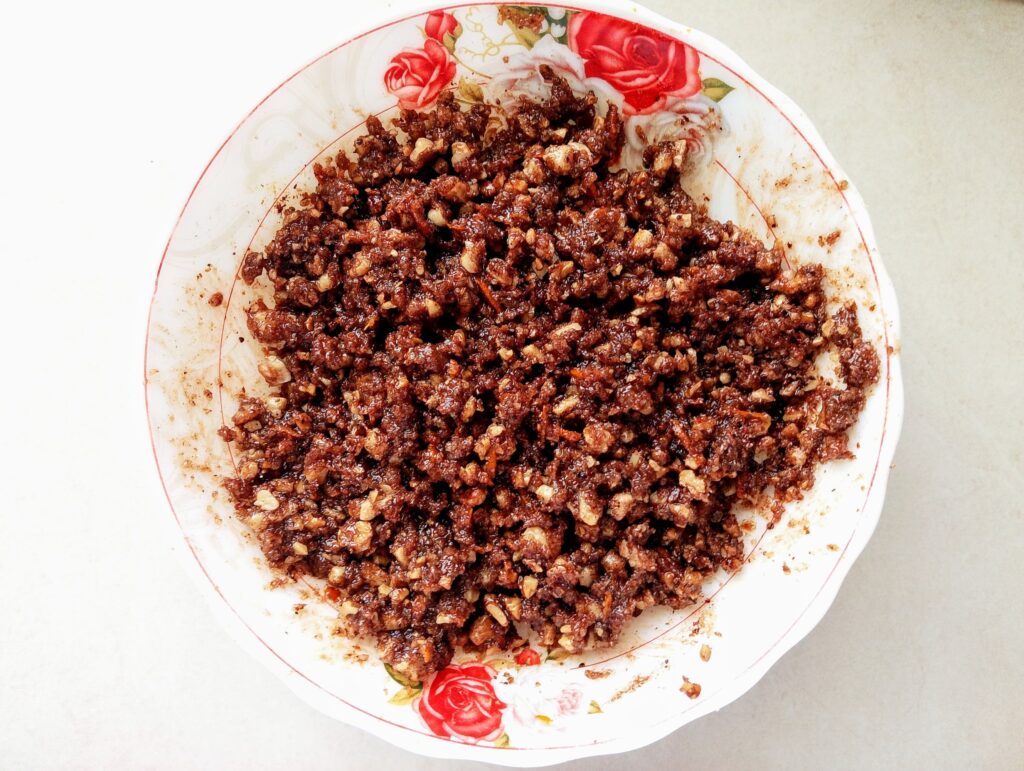
In a medium bowl, combine the softened butter, brown sugar, cinnamon, orange zest, and cardamom (or cloves), mixing until it forms a smooth, spreadable paste. Fold in the toasted walnuts so they are evenly distributed throughout the filling.
Step 8
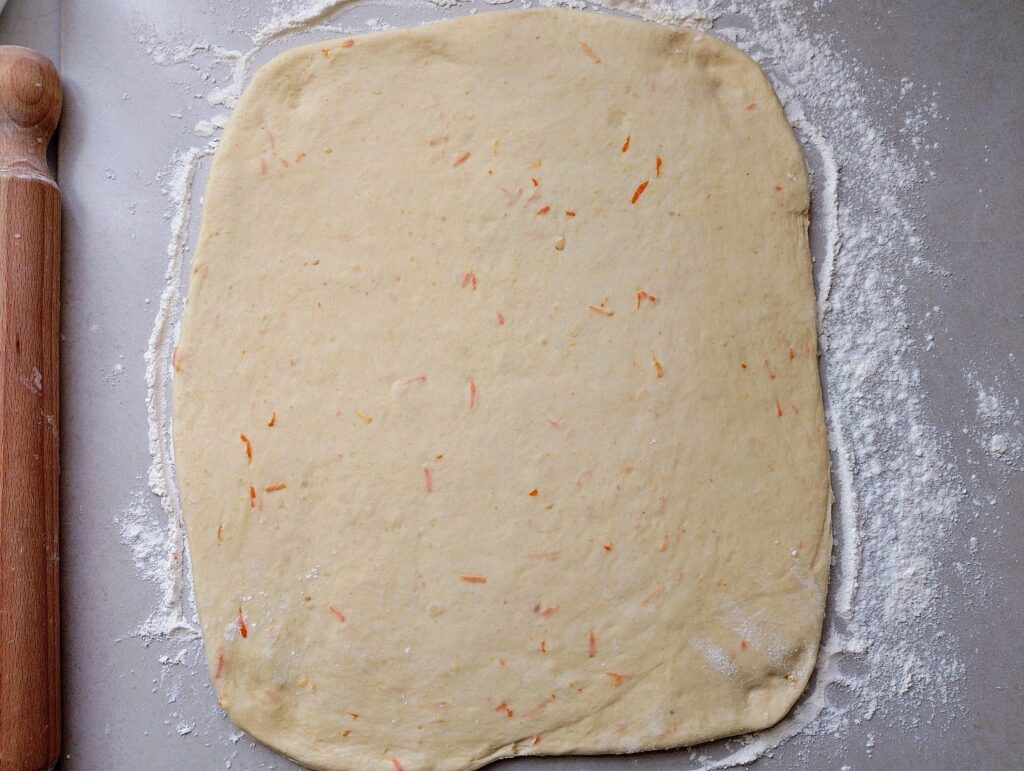
After the dough has finished rising, gently turn it out onto a lightly floured surface. Using a rolling pin, roll it into a rectangle roughly 14 × 18 inches, keeping the thickness even.
Step 9
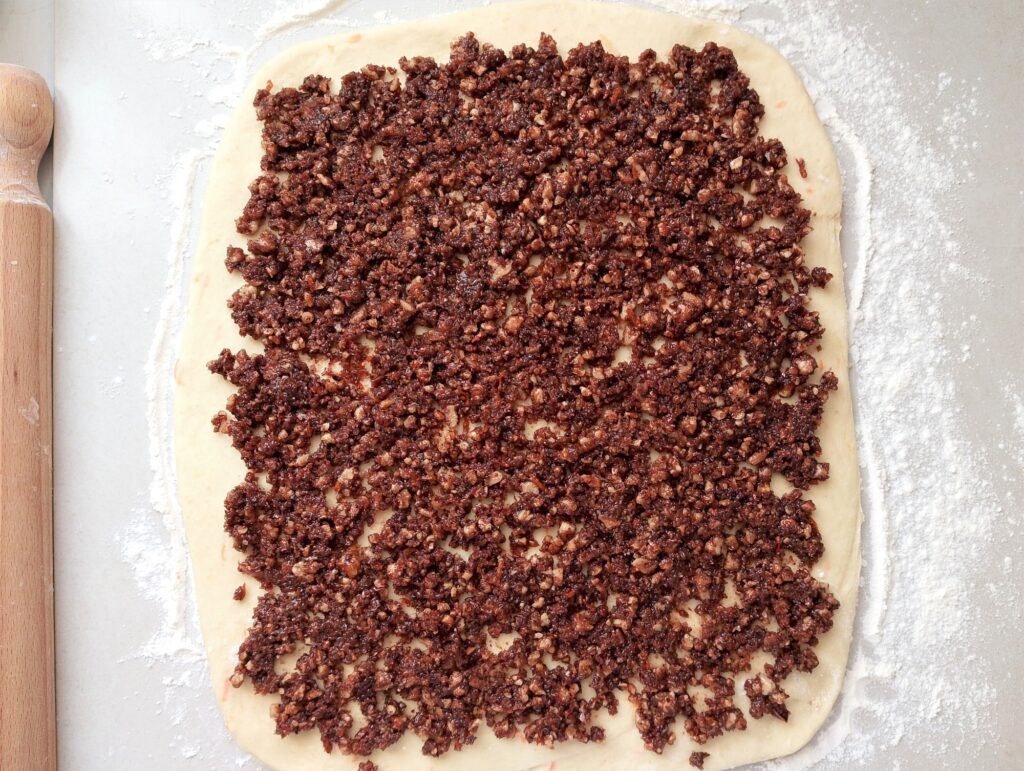
Use a spatula or the back of a spoon to spread the filling evenly over the dough, leaving a ½-inch border around the edges so it doesn’t spill out when rolled.
Step 10
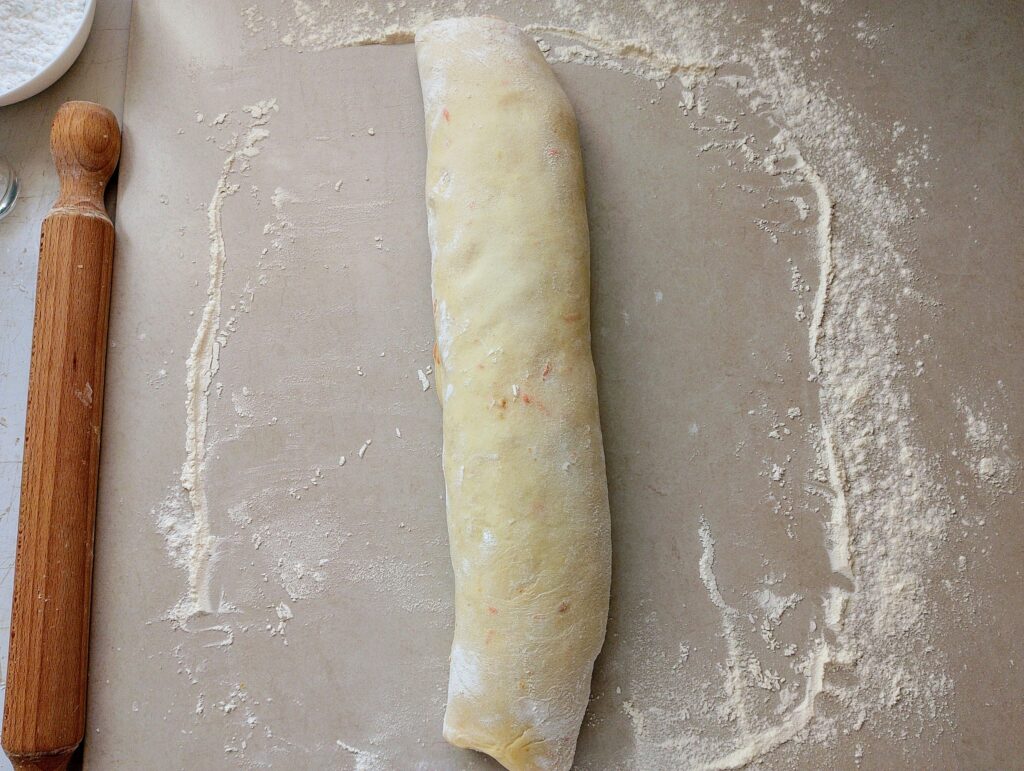
Starting at the long side, carefully roll the dough into a log, keeping it snug but not too tight. Use a pastry brush to sweep away any extra flour that might prevent the roll from sticking together.
Step 11
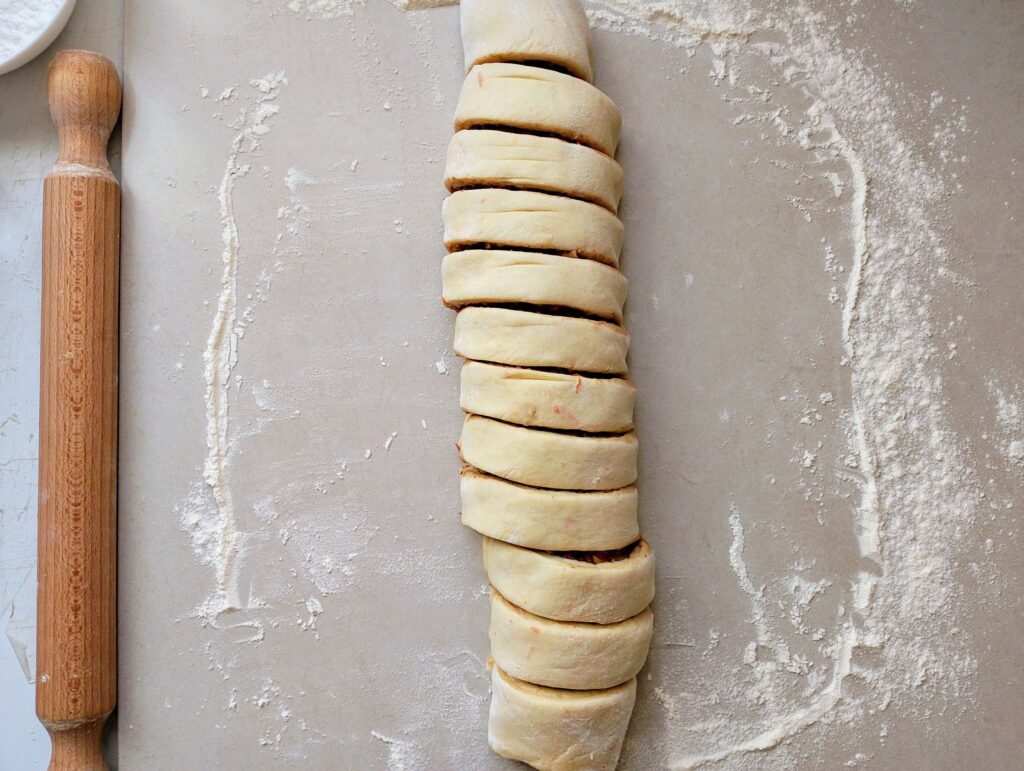
Carefully slice the rolled dough into 12 individual rolls. A sharp, thin knife works well, or for extra-smooth edges, gently use unflavored dental floss to cut each piece.
Step 12
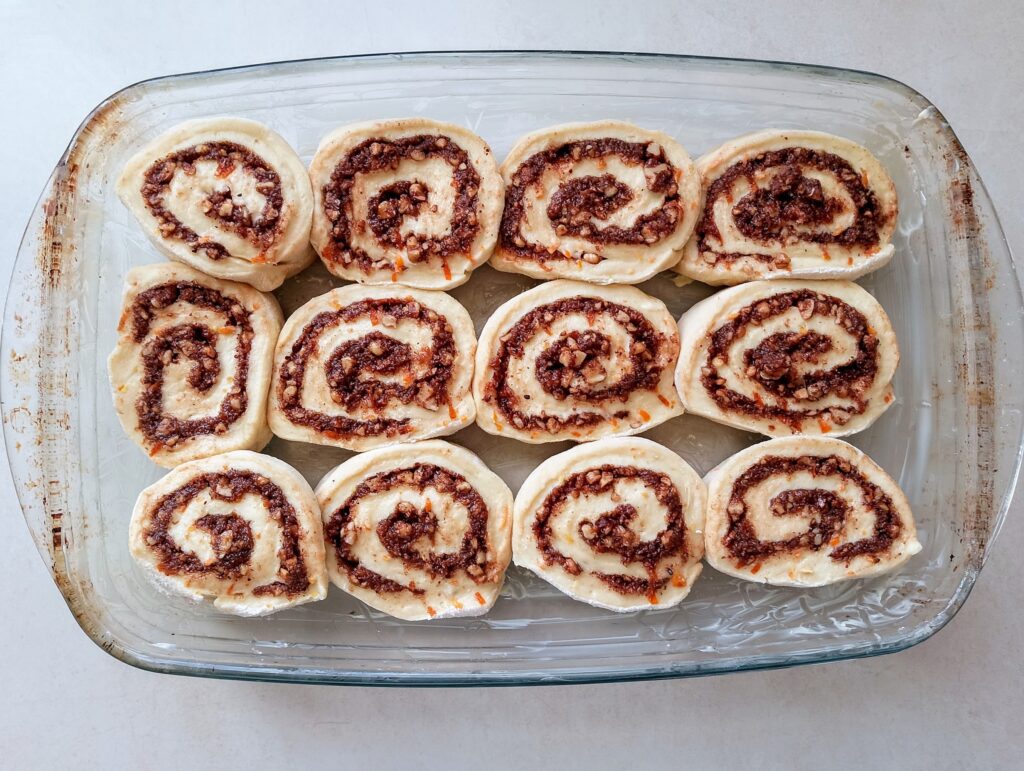
Transfer the rolls to a well-buttered baking dish, leaving a little space between them (my dish was a bit too small so I had to crowd them a bit). Cover loosely with plastic wrap or a damp tea towel and let them rise in a warm place for 45–75 minutes, until they’ve increased roughly 75–85% in size. They should be soft and puffy, touching each other, and gently spring back when pressed with a finger.
Step 13
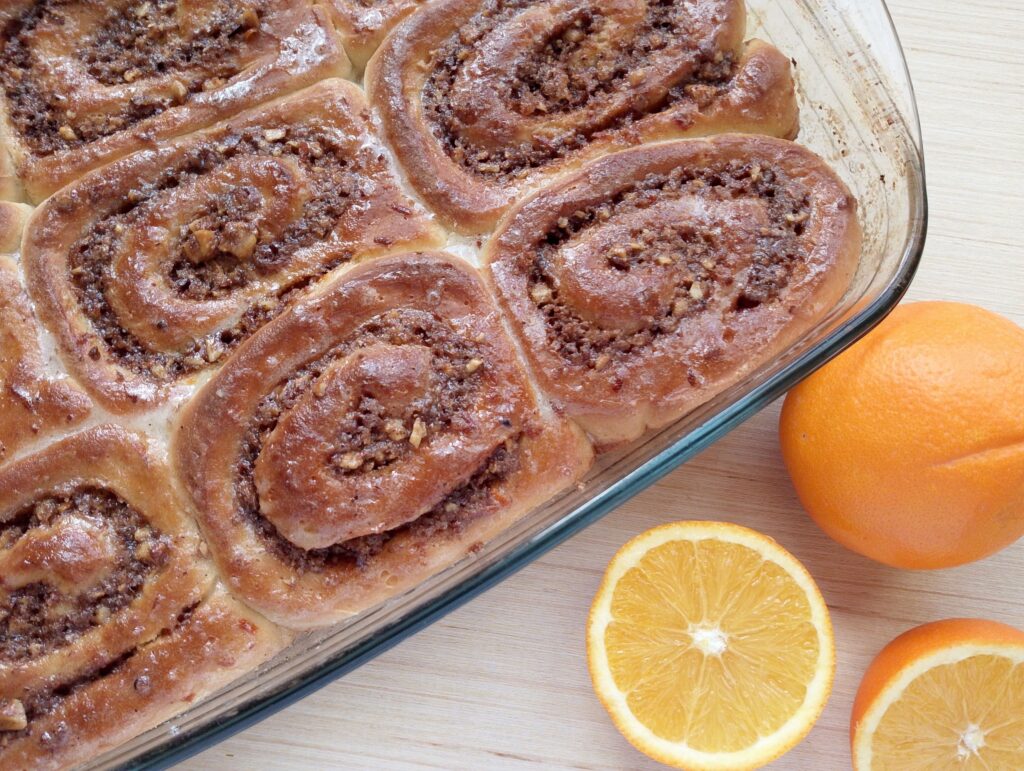
After the rolls have finished rising, pour 4 tablespoons of warm milk or cream evenly over them just before baking, letting it seep slightly into the spirals. This is an optional step and makes the rolls extra gooey. Place the rolls in a preheated 350°F (175°C) oven. Bake for 20–30 minutes, until they are lightly golden and fully set. If the tops start to brown too quickly, cover the dish loosely with foil. While the rolls bake, whisk the glaze until smooth and thin. Brush or drizzle the glaze generously over the warm rolls as soon as they come out of the oven.
Overnight Option
This recipe uses the same day option – you mix the dough in the late morning or around lunch time to have them ready by dinner. However, you can also let the rolls rise for the second time in the refrigerator and bake them the next day. Cold proofing the rolls overnight enhances the flavor of the rolls with a gentle tang of sourdough and simplifies morning baking – perfect if you want to serve the rolls as a brunch treat. To cold proof the rolls, use the following steps:
- Shorten the bulk ferment: After mixing and kneading the dough, let it rise until ~50–60% increased in size (soft, slightly puffy, and elastic, but not fully airy). This prevents over-proofing during the overnight chill.
- Shape the rolls: Roll, fill, and slice your cinnamon rolls, then place them in a buttered 9×13-inch pan. Cover tightly with plastic wrap or a lid.
- Refrigerate: Let the rolls rest in the fridge for 8–12 hours. The cold slows yeast and discard activity while still developing subtle tang and flavor.
- Before baking: Remove the pan 30–60 minutes before baking to let the rolls warm slightly. The rolls should puff to ~75–85% rise (puffy but not doubled).
- Bake as usual: 350°F for 25–30 minutes, until lightly golden and set.
Tips for the Best Rolls
- The secret to soft and buttery texture: Soft rolls come from milk, butter, and egg in the dough. These fats and proteins coat gluten strands, tenderizing the crumb. Always knead until the dough is smooth, elastic, and slightly tacky, but not stiff. Over-kneading in enriched dough can make it tough. Finally, don’t let the rolls double during the bulk ferment and the second rise to keep the texture tender.
- What is the secret to gooey cinnamon rolls? A ratio of soft butter + brown sugar + walnuts ensures syrupy, gooey layers inside the spiral. Don’t skimp — gooeyness starts inside the roll, not with frosting or glazing. You could also pour a small amount of warm milk or cream over the risen rolls just before baking. This helps create a custardy, self-saucing interior.
- How to avoid dry or dense rolls: Avoid adding too much flour – the dough should be soft and slightly sticky. Watch proofing carefully: under-proofed dough makes tight, dense rolls, while over-proofed dough can collapse. Also, be gentle when handling the dough during rolling and shaping.
Common Mistakes to Avoid
- Too much flour makes the dough dry and results in dense, heavy rolls.
- Adding hot milk to the dough will kill the yeast, preventing proper rise.
- Overbaking leads to dry, crumbly rolls. Bake only until the rolls are just set and lightly golden.
- Rushing the rise leads to under-proofed dough and tight, dense rolls. Watch the dough’s feel, not the clock. If your house is cool, the dough may take a little longer to rise so give it enough time.
Serving Ideas
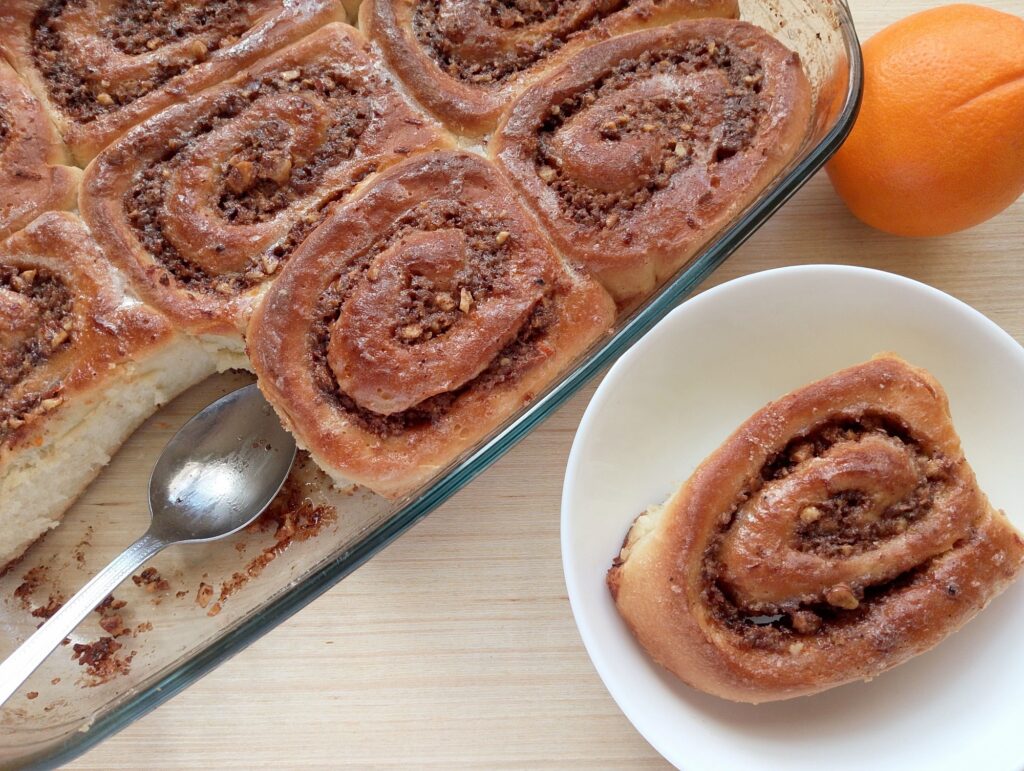
- Serve alongside coffee, tea, or hot chocolate for a cozy treat.
- Pair with fresh fruit or fruit compote to balance sweetness.
- Top with a few extra toasted walnuts for texture and presentation.
How to Store, Freeze, and Reheat
- You can keep the rolls in an airtight container at room temperature for 1–2 days.
- Alternatively, you can place them in an airtight container in the refrigerator for up to 4–5 days. They may get slightly firm, but reheating restores softness.
- Freeze unbaked shaped rolls: Wrap pan tightly with plastic wrap + foil and freeze for up to 2 months. Bake from frozen, adding ~5–10 minutes to bake time.
- To freeze baked rolls: Wrap individually or cover pan tightly, then freeze for up to 2 months. Defrost at room temp for 1-2 hours.
- To reheat the rolls, place them in a preheated 325°F (160°C) oven for 5–10 minutes. Cover the dish with foil to prevent browning.
Recipe FAQ
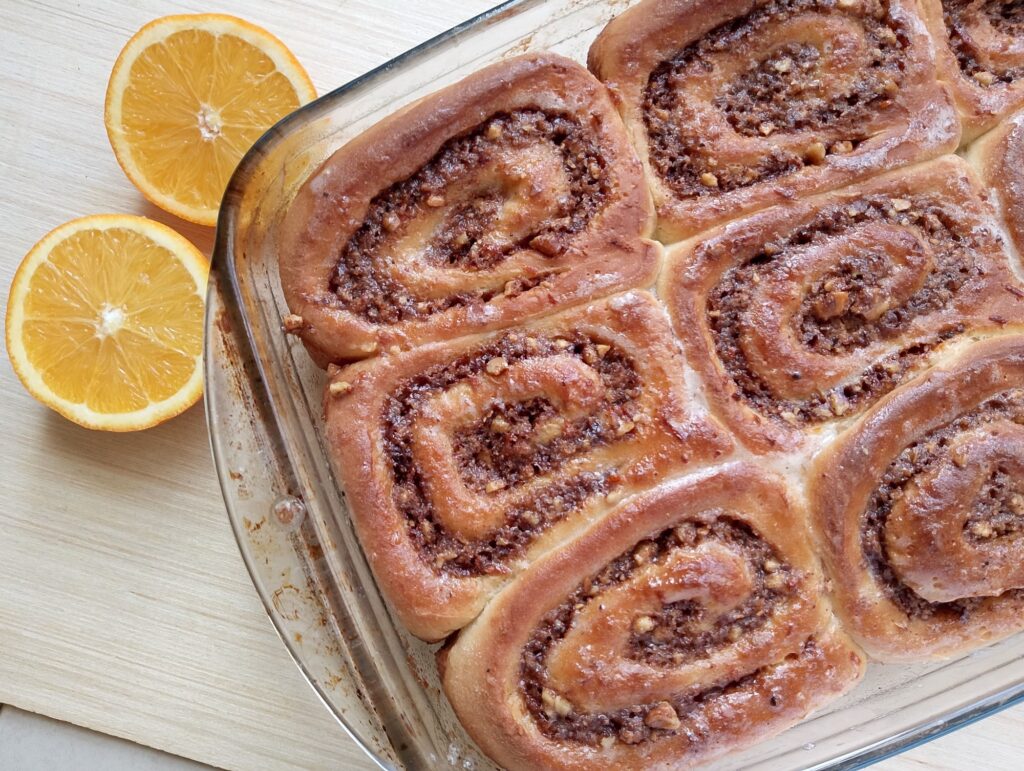
Let’s Talk Gooey, Buttery Perfection
I hope you fall in love with these buttery, gooey orange cinnamon rolls as much as I do! If you’re a fan of citrus-flavored treats, these rolls will definitely hit the spot. For more old-fashioned, farmhouse-style recipes and step-by-step tutorials, be sure to subscribe to my weekly newsletter.
More Delicious Sourdough Discard Dessert Recipes
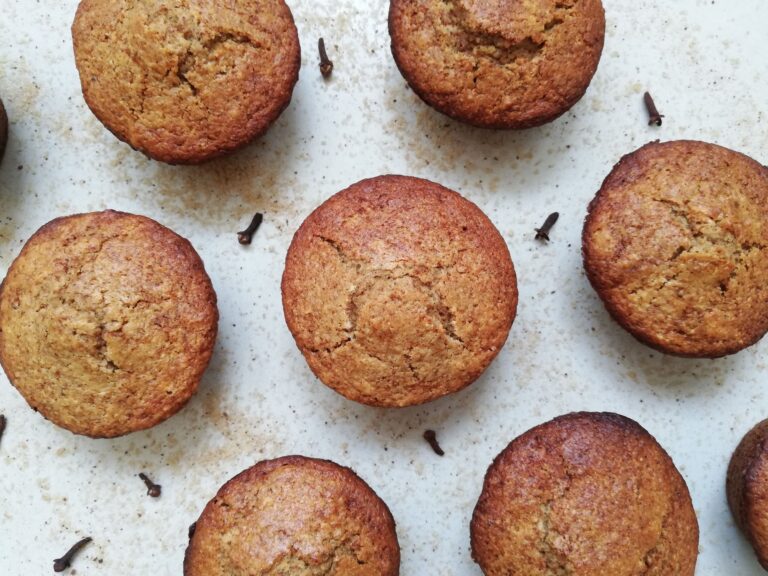
Old-Fashioned Applesauce Blackberry Muffins
Fluffy Sourdough Discard Scones
The Best Sourdough Banana Bread
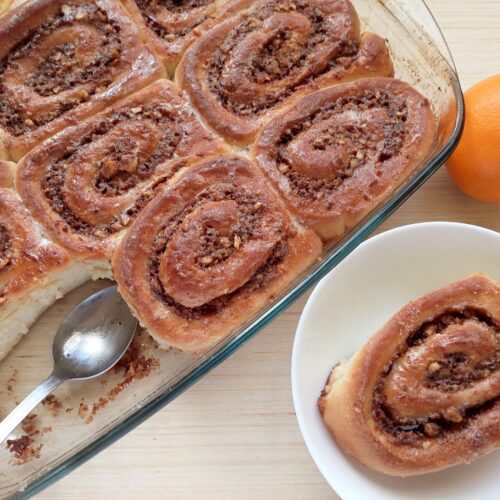
Sourdough Discard Orange Cinnamon Rolls
Equipment
- 9x13inch baking dish (or similar)
Ingredients
For the dough
- ½ cup sourdough discard (unfed, room temperature)
- ¾ cup whole milk, warm
- 4 Tbsp unsalted butter, melted and cooled
- ¼ cup honey or maple syrup
- 1 large egg
- ¾ tsp instant yeast (or 1 tsp active dry yeast, bloomed in the milk)
- 1 tsp fine sea salt
- Zest of 1 orange
- 3 to 3½ cups all-purpose flour (start with 3 cups)
For the filling
- ½ cup unsalted butter, very soft
- ¾ cup brown sugar, lightly packed
- 2¼ Tbsp ground cinnamon
- Zest of 1 orange
- 1 cup walnuts, finely chopped
- ¼ tsp cardamom OR a small pinch of cloves
Optional pre-bake soak
- 4 Tbsp warm milk or cream
For the orange glaze
- ⅓ cup powdered sugar
- juice of ½ orange
- 1½ Tbsp melted butter
- small pinch of salt
Instructions
- Mix the dough: In a large bowl, whisk together warm milk, honey, melted butter, egg, yeast, sourdough discard, salt, and orange zest until smooth.
- Add flour: Gradually mix in flour until a soft, slightly tacky dough forms (you may not need all of it).
- Knead: Knead by hand on a lightly floured surface for 8–10 minutes, or in a stand mixer on low for 5–6 minutes, until smooth, soft, and elastic.
- First rise: Place dough in a lightly buttered bowl, cover with plastic wrap or a damp towel, and let rise until puffy and ~70–75% larger, about 1–2 hours.
- Prepare filling: Chop walnuts and toast lightly in a dry skillet until fragrant. Mix softened butter, brown sugar, cinnamon, orange zest, and cardamom (or cloves) into a smooth paste, then stir in toasted walnuts.
- Roll out dough: Turn risen dough onto a floured surface and roll into a 14 × 18-inch rectangle. Spread filling evenly, leaving a small border.
- Form rolls: Starting at the long side, roll dough snugly into a log, brushing off extra flour as needed. Slice into 12 rolls using a sharp knife or dental floss.
- Second rise: Place rolls in a generously buttered baking dish with a small gap between them. Cover loosely and let rise until puffy and ~75–85% larger, 45–75 minutes. They should spring back slowly when pressed.
- Bake: Preheat oven to 350°F (175°C). Pour 4 tablespoons of warm milk or cream evenly over the rolls just before baking, letting it seep slightly into the spirals. Bake rolls 20–30 minutes until lightly golden and set. Tent with foil if tops brown too quickly.
- Glaze: While baking, whisk glaze until smooth and thin. Brush or drizzle generously over warm rolls.