Easy Chicken Hearts Recipe: Crispy Hash for Beginners
Chicken hearts are an often-overlooked organ meat, but they’re surprisingly simple to cook, mild in flavor, and quick to prep. In this chicken hearts hash recipe, I’ll show you how to turn this nutrient-dense, budget-friendly ingredient into a crispy, family-friendly breakfast—or an easy quick lunch.
Then I’ll share my best tips for getting a perfectly crispy, flavorful hash every time, plus how to store and reheat it so you can enjoy an easy meal the next day.
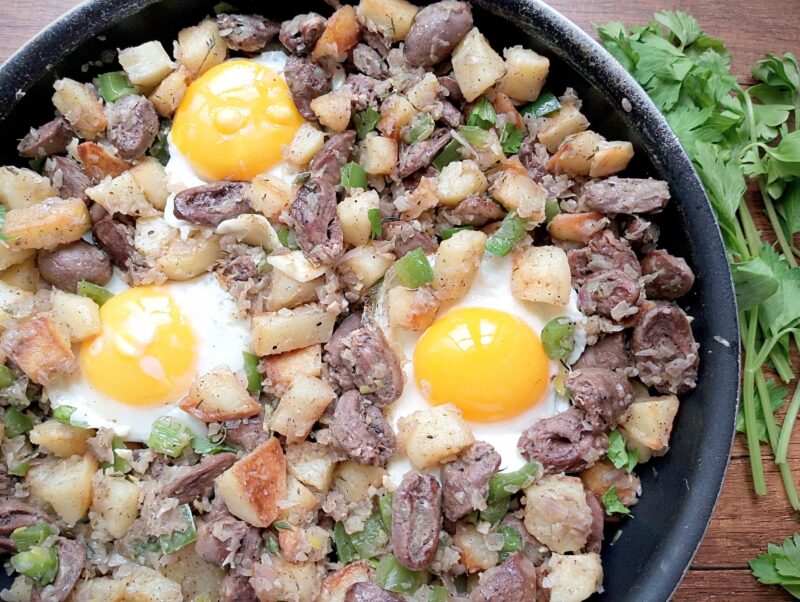
Why You’ll Love This Chicken Hearts Hash
- Crispy, savory, and surprisingly family-friendly—even for the skeptical
- Make-ahead friendly for easy, no-stress breakfasts
- Rich in protein, iron, and B12 to fuel your morning well
Chicken Hearts Benefits
All organ meats are incredibly nutrient-dense, and chicken hearts are no exception. They’re rich in protein, iron, and B vitamins—especially vitamin B12. That’s probably why I always feel so energized after eating them, and why this chicken hearts hash is such a great option for breakfast to start your day strong or for lunch when you need steady energy through the afternoon.
Chicken hearts are also one of the most approachable organ meats in terms of flavor. They’re pleasantly chewy and taste a little like steak, which makes them an easy “starter” organ meat if you’re new to cooking them.
On top of that, they’re very budget-friendly. In a real food kitchen, costs can add up quickly, and organ meats like hearts are one of the easiest ways to boost nutrition without stretching your grocery budget. They help you feed your family truly nourishing food while staying aligned with traditional, real food principles. Organ meats are the number one way I make sure my kids get the vitamins and minerals they need to grow healthy.
Ingredients
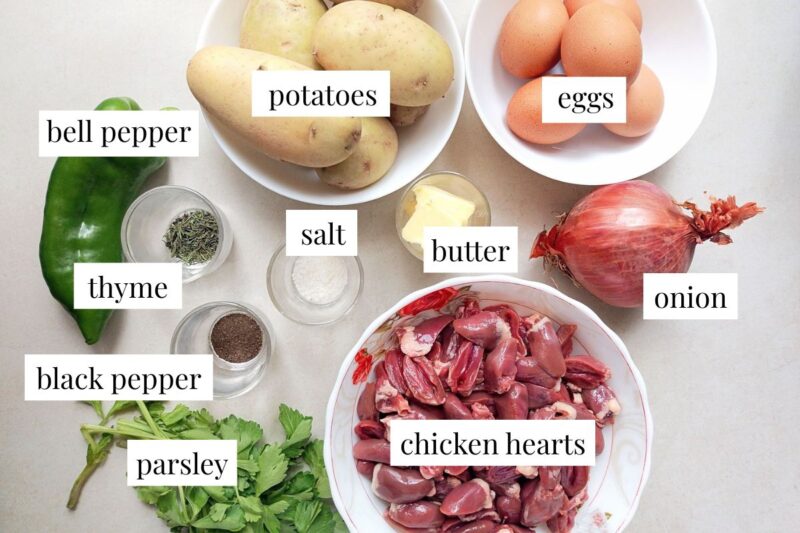
- Chicken hearts: The star ingredient—small, quick-cooking, and naturally rich in flavor and nutrients. I like to slice them in half so they cook faster and brown more evenly. Duck or turkey hearts also work well in this chicken hearts hash if that’s what you have on hand.
- Butter: Adds traditional richness and helps everything crisp beautifully in the pan. You can also use tallow, chicken fat, or ghee.
- Potatoes: Cooked in butter until golden and crispy, they give the hash its hearty base and help stretch it into a family-friendly meal. For seasonal variation, sweet potato or squash work just as well.
- Onion: Adds natural sweetness and depth, balancing the richness of the meat and fat.
- Salt & pepper: Simple but essential for bringing all the natural flavors together.
If you would like to learn how to prepare chicken hearts for cooking, check my quick tutorial here.
Tools You May Need
No special equipment needed—just a basic skillet and kitchen tools.
How to Cook Chicken Hearts Hash Step-By-Step
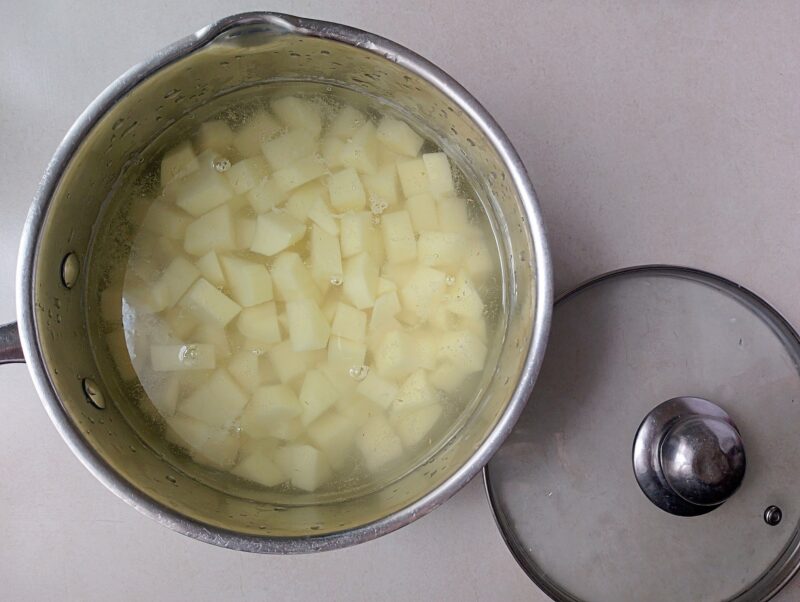
Step 1. Cover the potatoes with water and parboil for about 5 minutes, until just soft but still holding their shape. Drain well, then let them sit in the pot for a few minutes to steam dry before frying.
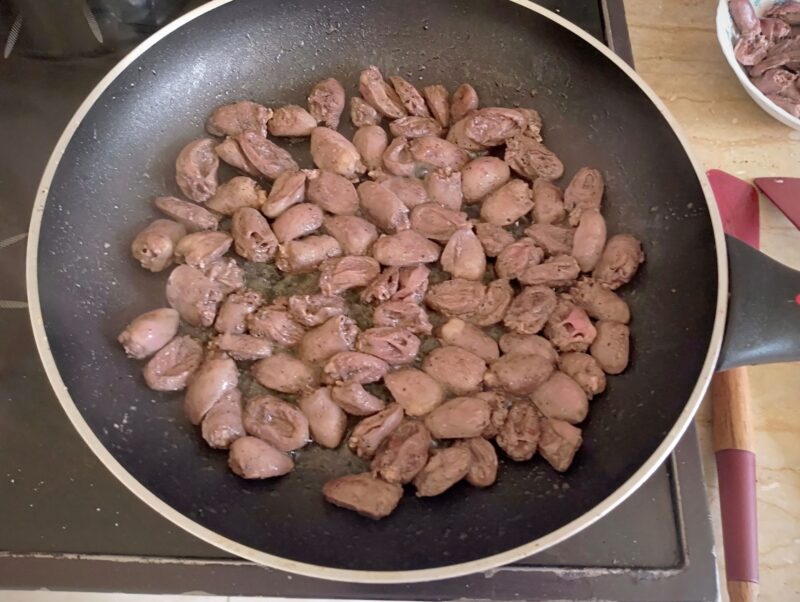
Step 2. While the potatoes are cooking, pat the hearts dry with paper towels—this helps them sear properly instead of steaming. Melt a tablespoon of butter in a large skillet and cook the hearts over medium-high heat for 5–6 minutes, until nicely browned. Season well with salt and black pepper, then set aside.
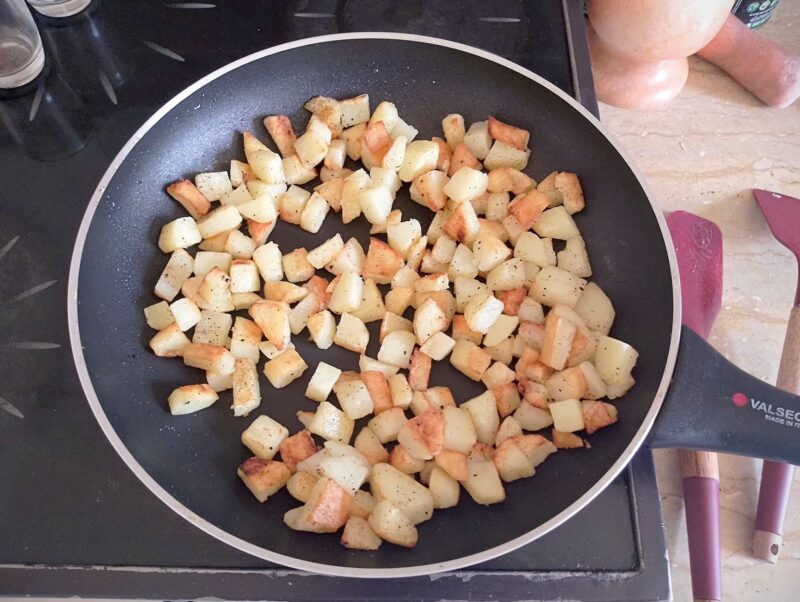
Step 3. Add a little more butter to the pan, then fry the parboiled potatoes over medium-high heat until golden. Let them sit undisturbed for a few minutes so they can brown properly on one side before stirring. Season well with salt and pepper, then set aside.
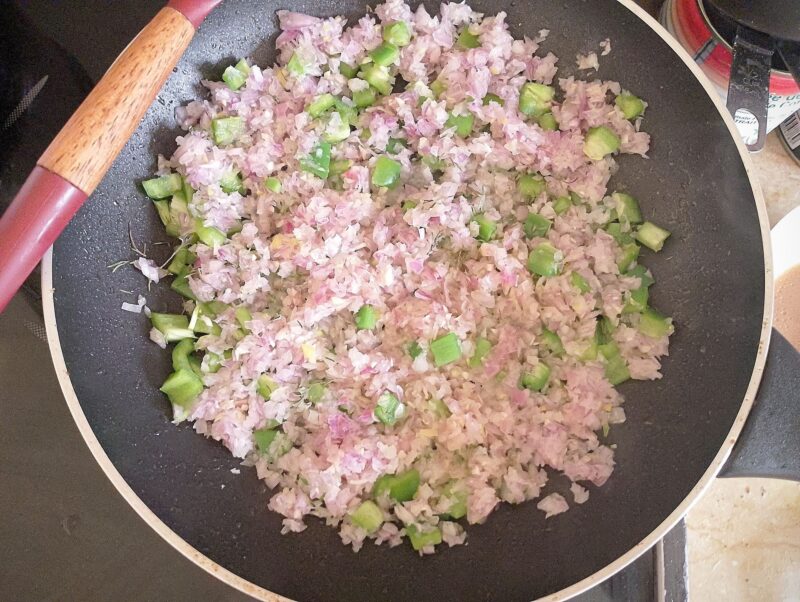
Step 4. Add a little more butter to the pan if needed, then sauté the onion and bell pepper until softened. Stir in the thyme and cook for about a minute to release its flavor. Season lightly with salt and pepper.
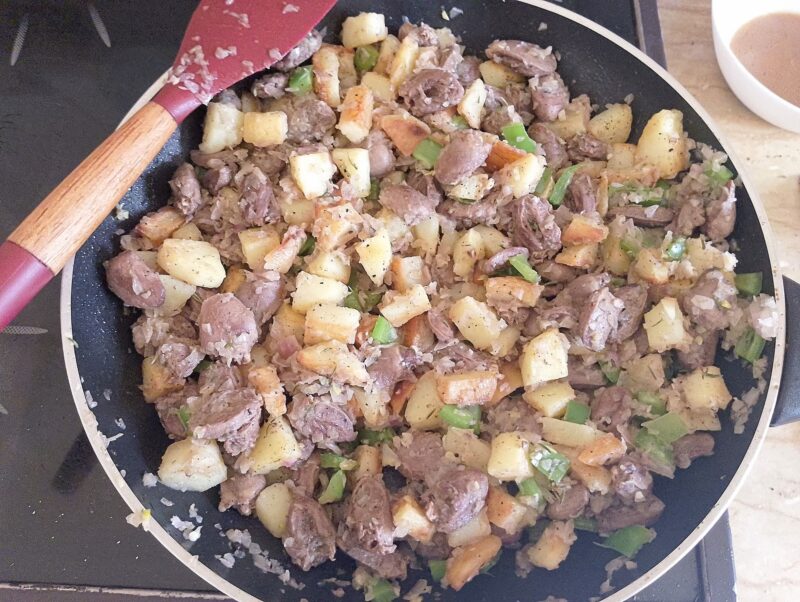
Step 5. Return the potatoes and chicken hearts to the pan and cook everything together until hot and well combined. Taste and adjust the seasoning as needed.
Meanwhile, in a separate skillet, fry the eggs until the whites are set but the yolks are still runny.
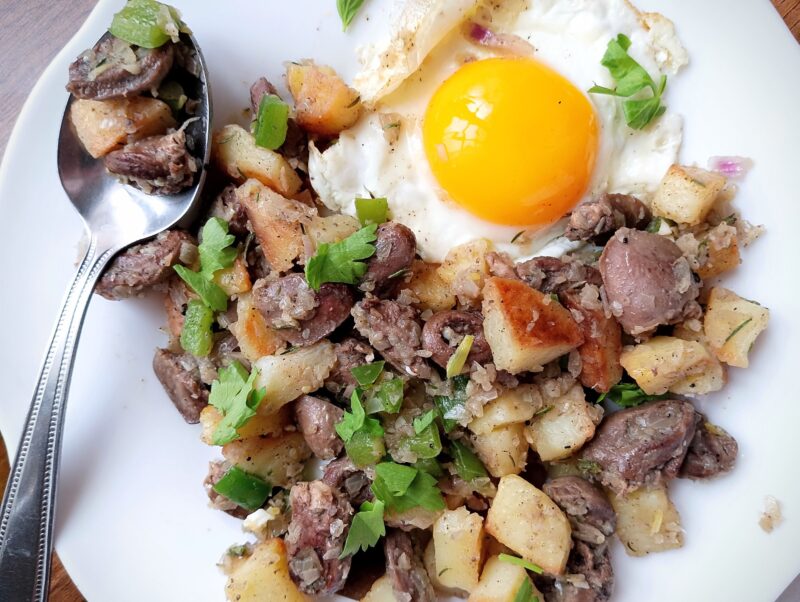
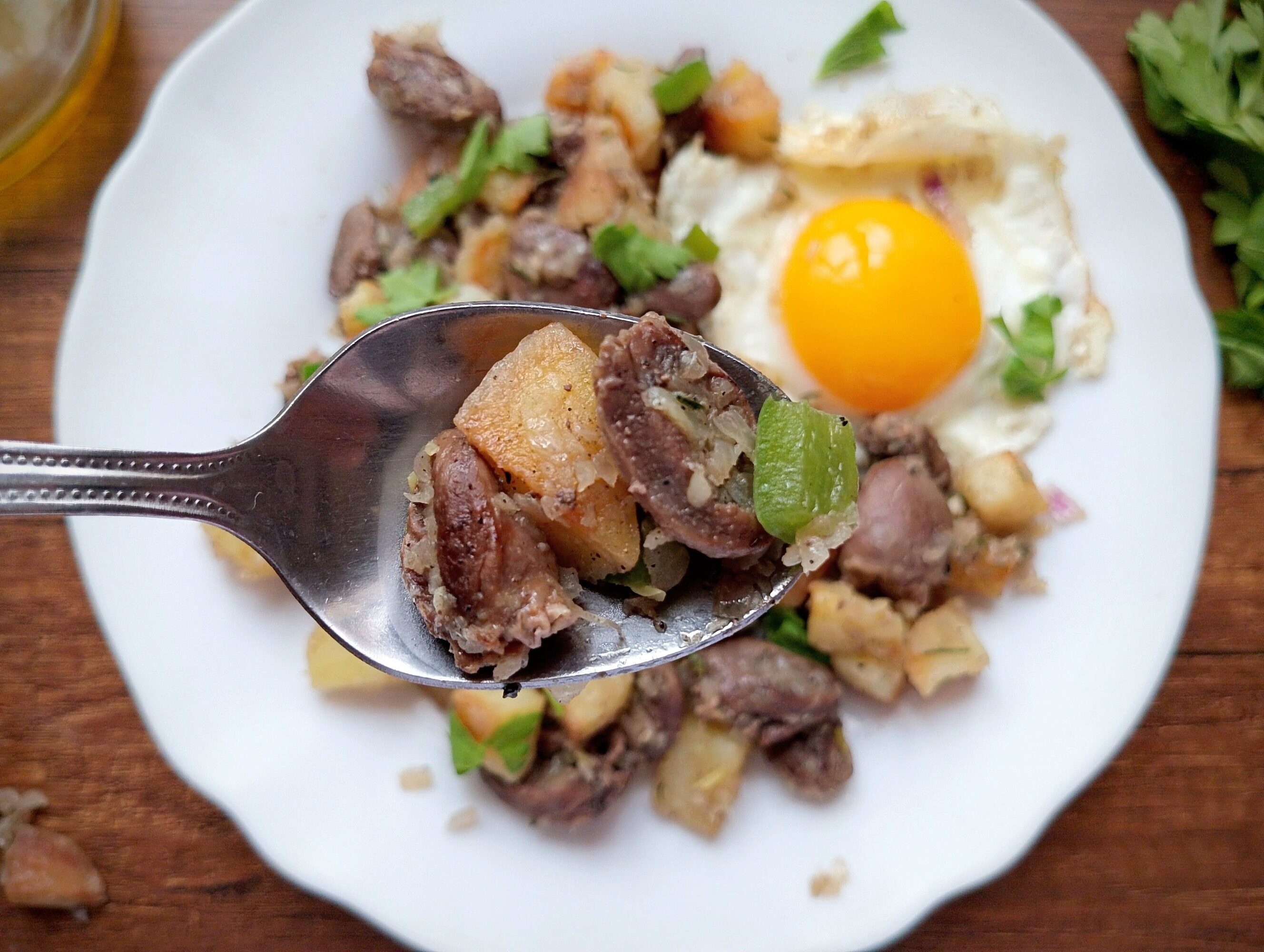
Step 6. Serve the hash immediately, topped with the fried eggs. Garnish with fresh chopped parsley if you like for a fresh finish.
Make-Ahead Option
If you want to make this chicken hearts hash ahead of time while still keeping that fresh-cooked flavor, avoid fully finishing it in one go.
Instead, cook each component partway: cook the potatoes until just tender (not crispy), the chicken hearts until just cooked through (but not deeply browned), and sauté the onion and bell pepper until softened. Store everything separately in the refrigerator for up to 2 days.
When you’re ready to serve, simply combine everything in a hot pan with a little fat and sauté until it’s golden and crisped up. This gives you that just-cooked texture and flavor with very little effort at mealtime.
Alternatively, you can fully cook the hash, store it in an airtight container in the refrigerator for up to 3 days, and reheat it in a skillet with a bit of butter or cooking fat. This method is still delicious—just a little softer and less crispy than freshly made.
Serving Ideas
This hash is a complete meal on its own, but if you’d like to round it out, you could also serve it with:
- Buttered sourdough on the side for a simple, hearty pairing. This is how we usually eat it!
- Fermented vegetables like sauerkraut or pickles to add brightness and balance the richness of the hash
- Used as a protein base for breakfast bowls with leftovers and extra toppings
Tips & Troubleshooting
- Hearts turning rubbery: This usually means they’ve been overcooked or cooked too slowly. Chicken hearts do best with a hot, fast cook—just until tender and browned.
- No browning: The pan may be too crowded or not hot enough. Also make sure to pat the hearts dry before cooking so they sear instead of steaming in their own moisture.
- Too dry: Not enough fat in the pan, or they’ve cooked a bit too long. Add a little extra butter or cooking fat to bring back moisture and richness.
- Flavor feels bland: Add a bit more salt, and don’t skip blooming your herbs. Cooking thyme (or marjoram) with the onion and pepper for about a minute helps release their aroma and brings the whole dish together.
How to Store
- Let your hash cool fully, then transfer to an airtight glass container and store in the refrigerator for up to 3 days.
- Reheat in a skillet with a little fat (tallow, butter, or lard) over medium heat.
- You can freeze it, but potatoes tend to get grainy. If you do decide to freeze it, portion it into airtight containers and freeze for up to 2 months. Thaw overnight in the fridge before reheating in a skillet.
Recipe FAQ
Real Food for Real Life
I hope this recipe inspires you to include more organ meats in your family’s diet. It’s often much easier than it seems—liver, hearts, and tongue can all be served simply when they’re worked into meals your family already knows and enjoys.
If you try this chicken hearts hash and love it, I’d really appreciate you coming back to leave a 5-star rating. And for more old-fashioned real food cooking, homemaking tips, and seasonal inspiration, I’d love for you to subscribe to my weekly newsletter.
More Family-Friendly Organ Meat Recipes
Barley Soup with Chicken Hearts
Mexican Style Chicken Liver Pâté
Nutrient-Rich Chicken Liver Pâté
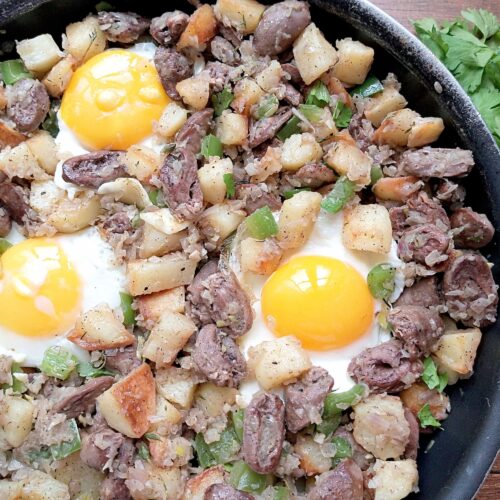
Chicken Hearts Hash
Equipment
- large skillet
Ingredients
- 3 Tbsp butter, tallow, or coconut oil
- 25 oz (700g) chicken hearts, halved
- 4 medium potatoes, peeled and diced small
- 1 large onion, chopped
- 1 bell pepper, diced (any color)
- 1½ tsp salt, or to taste
- ½ black pepper
- 1 tsp dried thyme or marjoram
- 5 eggs (optional)
- small bunch parsley, to garnish (optional)
Instructions
- Parboil the potatoes in salted water for about 5 minutes, until just tender but still holding their shape. Drain well and let them steam dry for a few minutes in the pot.
- While the potatoes cook, pat the chicken hearts dry with paper towels. Heat 1 tablespoon of butter in a large skillet and cook the hearts over medium-high heat for 5–6 minutes, until browned and just cooked through. Season with salt and pepper, then set aside.
- Add a little more butter to the pan and fry the potatoes over medium-high heat until golden and crisp. Let them sit undisturbed for a few minutes to brown before stirring. Season and set aside.
- If needed, add a bit more butter and sauté the onion and bell pepper until softened. Stir in the thyme (or marjoram) and cook for about 1 minute. Season lightly.
- Return the potatoes and chicken hearts to the pan and cook until heated through. Taste and adjust seasoning.
- Meanwhile, fry the eggs in a separate skillet until the whites are set and the yolks are still runny.
- Serve the hash immediately topped with fried eggs and fresh parsley if desired.
Notes
- Store the hash for up to 3 days in airtight container in the refrigerator.
- Reheat in a skillet with some extra butter or fat.