How to Cook Tripe (Complete Beginner-Friendly Guide)
The first time I learned how to cook tripe, I wasn’t entirely convinced I’d ever enjoy it.
Like many people, I wasn’t sure how to make it tender—or even if I would like the taste once it was cooked. It felt like one of those traditional foods that homesteaders talk about, but few people actually feel confident preparing.
But tripe has always held an important place in traditional cooking around the world. It’s one of the most valued organ meats, and for good reason. When you prepare it properly, it’s not only deeply nourishing but also surprisingly delicious—especially when it’s gently simmered for a long time in stews and soups.
In this guide, I’ll walk you through exactly how to clean and prepare tripe, how to cook tripe so it turns tender instead of tough, and the simple mistakes that can easily put people off the first time. I’ll also share easy, family-friendly ways to serve it once it’s cooked.
Here I’m using lamb tripe, but the same method works just as well for beef tripe and most other varieties.
If you’ve ever felt unsure about cooking it, my hope is that this guide helps you feel confident enough to try—and maybe even turn tripe into a regular part of your kitchen, just like it became in mine.
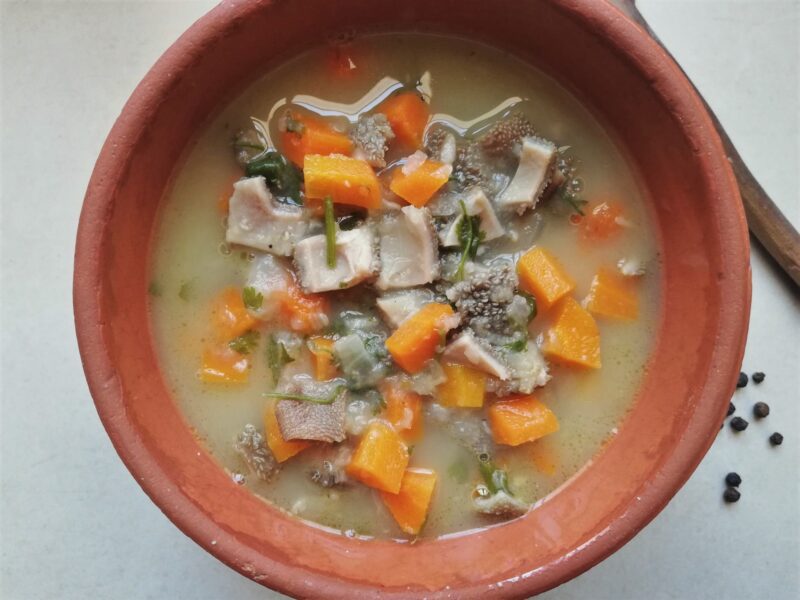
What Is Tripe?
Tripe is the edible lining from the stomachs of ruminant animals like cows, sheep, and goats.
I almost always use sheep tripe because that’s what we have easiest access to—lamb is the most popular meat in our region. That said, beef and goat tripe are very similar in appearance and texture to sheep tripe. The main difference is size, with beef tripe being much larger.
The good news is that the cooking method is exactly the same no matter which type you use. So whether you have lamb, beef, or goat tripe, you can prepare it in the same way and get great results.
Who Eats Tripe? (Traditional Uses Around the World)
Tripe shows up in traditional cooking all over the world, usually in slow-cooked, heavily seasoned dishes that transform its texture into something tender and deeply flavorful. Because tripe has a naturally mild taste, it absorbs spices and seasonings beautifully, which is why it’s so often used in soups and stews.
In Europe
In Italy, cooks make trippa alla Romana by simmering tripe in tomato sauce with pecorino and mint, while in the UK people often prepare it as creamy tripe and onions. I used to live in Scotland, where haggis is the national dish—sheep stomach filled with minced organs, oats, onions, and spices.
In Eastern Europe, where I grew up, tripe is very traditional and features in many hearty, peasant-style soups and stews that rely on slow cooking, simple aromatics, and warming spices. In Poland, for example, flaki (or flaczki) is one of the most famous tripe dishes—a clear, deeply seasoned soup with sliced tripe, carrots, marjoram, and sometimes paprika. It’s very similar to Polish-style gizzard soup on my blog—if you’d like to try it with tripe, you can simply replace the sliced gizzards with chopped cooked tripe while keeping everything else the same.
In South America
Mexico’s famous menudo (or pancita) is a rich red chili soup with hominy, garlic, and oregano, traditionally enjoyed as a restorative weekend dish. If you’d like to try it, I also have a mild, family-friendly version on my blog here. In Peru, cau cau combines tripe with potatoes, turmeric, and mint.
In Africa
Here in North Africa, tripe is one of the most prized parts of the animal—like most organ meats. I often find it difficult to get when I need it for a recipe, as organs are usually the first things to disappear from the butcher’s display.
Across cultures, the pattern for cooking tripe is essentially the same: long, slow cooking with bold aromatics and spices to transform both its texture and flavor. For this reason, stews and soups are the most common way you’ll find tripe prepared around the world.
Different Types of Tripe (And How to Use Them)
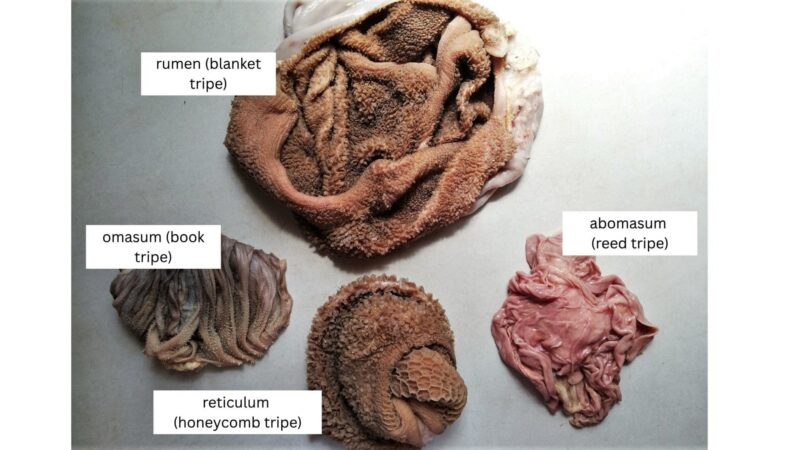
Where to Buy Fresh Tripe
If you’re wondering where to buy tripe near me, independent butchers are usually the best place to start. Many carry it regularly or can order it if you call ahead, especially if they practice whole-animal butchery.
Asian, Latin American, Middle Eastern, and Eastern European markets are also excellent places to find tripe, since it’s commonly used in dishes like pho, menudo, and traditional stews.
When we lived in Britain, our go-to source for tripe was Asian butchers—they consistently had a good selection of organ meats at affordable prices.
You may also find tripe in larger supermarkets, especially in diverse areas, usually in the frozen or international section. Local farmers or small-scale producers may also sell it if they process whole animals.
Finally, if you’re still searching, online meat suppliers can often ship tripe directly to your door.
Because tripe is less commonly purchased, it’s often very affordable once you do find a source.
How to Clean Tripe Properly
Cleaning tripe properly is essential for good flavor and texture—especially if it’s not pre-cleaned. Here’s a simple way to do it:
- Start by rinsing the tripe under cold running water, removing any visible debris or residue.
- Use a knife to gently scrape the surface, removing any dark bits or tough membranes (more common with unbleached tripe like the one I show in this post).
- Soak the tripe in cold water with salt or a splash of vinegar (or lemon juice) for 30–60 minutes to help draw out impurities and reduce odor.
- Drain and rinse thoroughly until the water runs clean.
Once your have cleaned your tripe properly, you’re ready for the next step—how to cook tripe using the instructions below.
How to Cook Tripe (Step-by-Step Basics)
Cooking tripe is fairly straightforward, as long as you remember to clean it thoroughly beforehand and then simmer it low and slow for the best texture and flavor.
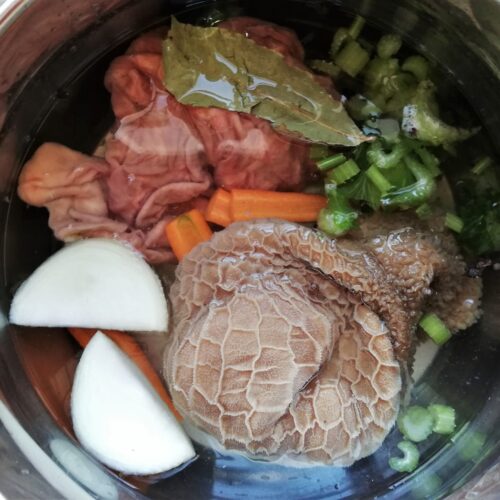
In the images below, I’m cooking honeycomb and reed tripe, but the process is the same no matter which type of tripe you use.
Stovetop Method
Step 1
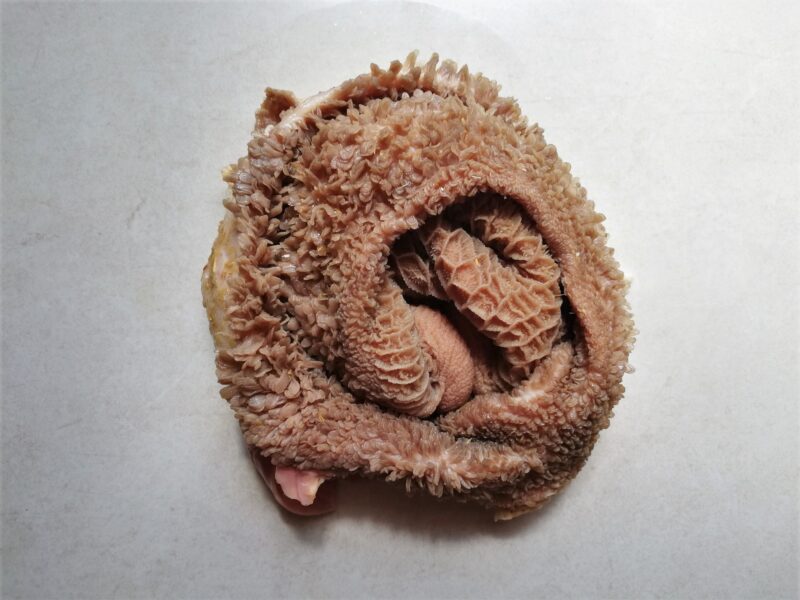
Once your tripe is clean, it’s ready to cook.
If you want it tender and ready to add into dishes at the end of cooking, follow the instructions below. If you’re adding it to a stew at the beginning of cooking, simply parboil it briefly (as shown in the next step), then slice or chop it before adding it to your stew.
Step 2
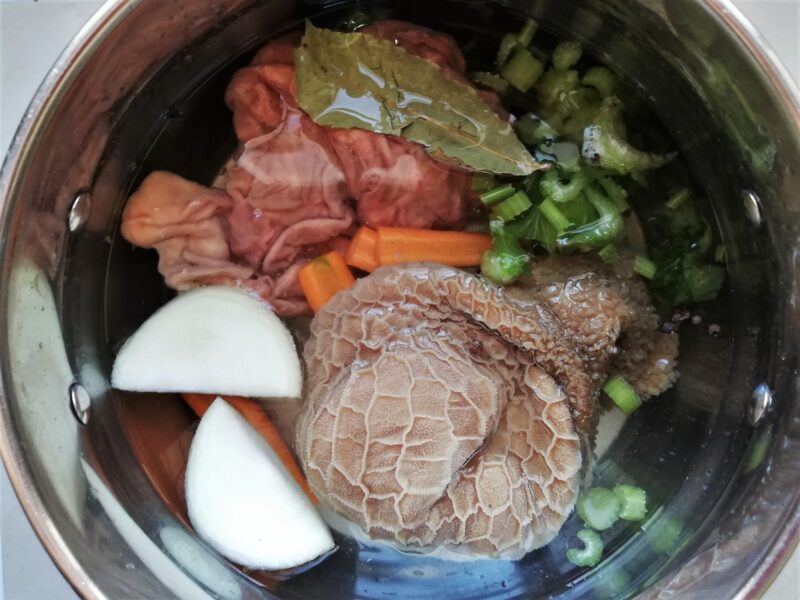
Place the tripe in a pot of fresh water, bring it to a boil, and cook for 10–15 minutes. Drain and discard the water, then rinse the tripe again. This step helps remove any remaining impurities and strong odors.
Return the tripe to the pot and cover with fresh water. Add a good amount of salt (similar to cooking pasta). For extra flavor, you can also add onion, garlic, carrot, celery, and a bay leaf.
Bring to a gentle simmer—avoid a rolling boil—and cook slowly for 1.5 to 3 hours, until the tripe is tender.
Step 3
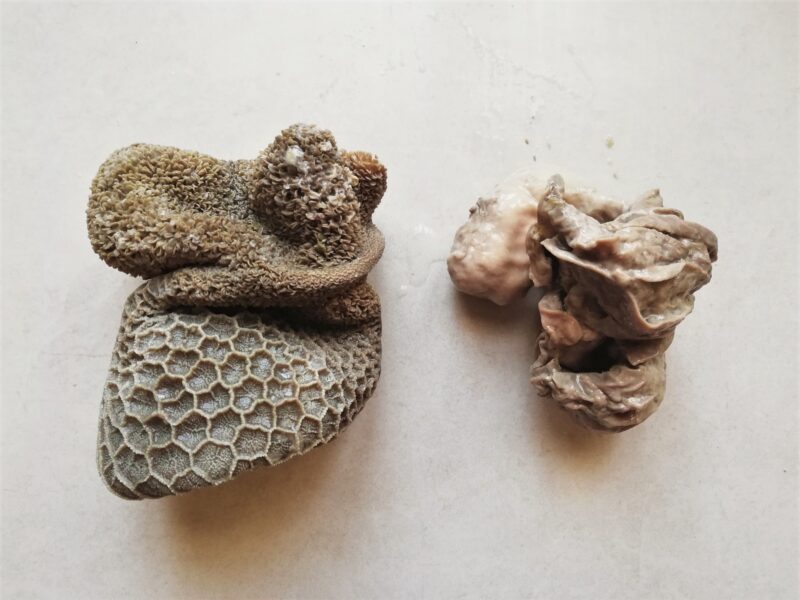
Tripe is ready when it is tender, soft, and easy to chew—there should be no rubbery texture left.
Check for doneness with a fork; it should pierce the tripe easily without resistance.
Step 4
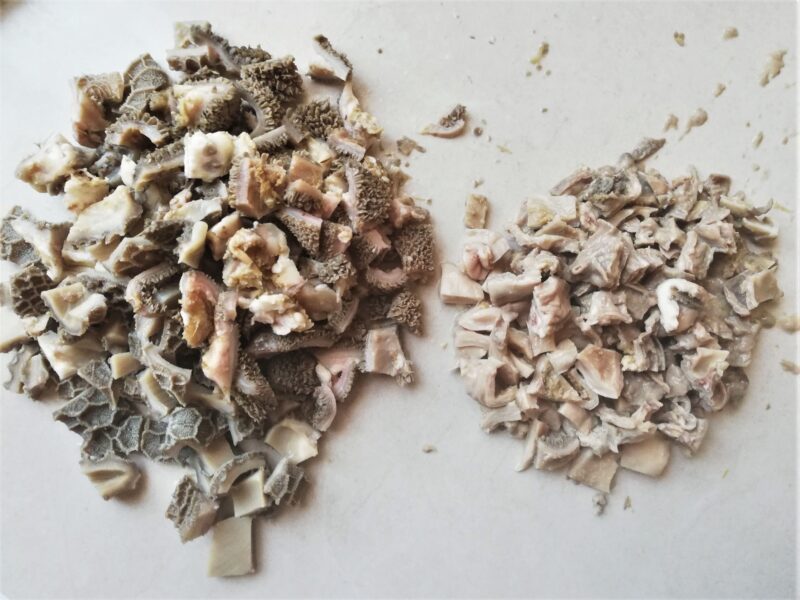
Once your tripe is tender, slice it into strips or cut it into cubes. You can then add it to soups, simmer it in tomato sauce, or quickly sautée it with spices and herbs for extra flavor.
Crock Pot (Slow Cooker) Method
Here’s how to cook tripe in a crockpot—perfect for a hands-off, tender result:
- Clean the tripe thoroughly, then parboil for 10–15 minutes and discard the water. This step is key for good flavor.
- Add the tripe to your crockpot with filtered water (enough to cover), onion, garlic, celery, carrot, and bay leaf. Add plenty of salt.
- Cook on Low for 6–8 hours (best for tenderness).
- Tripe is ready when it’s fork tender and easy to chew, not rubbery.
- Slice your tripe or cut it into cubes, then add it to soups and stews towards the end of cooking, or sautée it briefly with spices and herbs.
Pressure Cooker Method
If you want tender tripe faster, you can cook it in a pressure cooker or Instant Pot. I have a detailed step by step tutorial for cooking tripe in your Istant Pot here.
How Long to Cook Tripe
Tripe typically needs 1.5 to 3 hours of gentle simmering to become tender. The time depends mostly on the type of tripe – beef tripe is thicker and can take longer to cook than lamb tripe. It’s ready when it turns soft, slightly silky, and easy to bite, with no rubbery texture remaining.
To check for doneness, I use a fork—if it pierces the tripe easily, it’s ready. I usually start checking around the 1.5-hour mark. In most cases it’s perfectly tender by about 2 hours, no matter what type of tripe I’m cooking.
If the tripe is very thick, it may take closer to 3–4 hours to reach full tenderness.
What Does Tripe Taste Like?
Tripe has a very mild, slightly liver-like taste, though overall it is quite neutral in flavor. Because of this, it works beautifully in stews and soups, where it easily absorbs the flavors of the surrounding ingredients.
When cooked properly, it also develops a unique, pleasantly chewy yet tender texture that makes it especially satisfying in slow-cooked dishes.
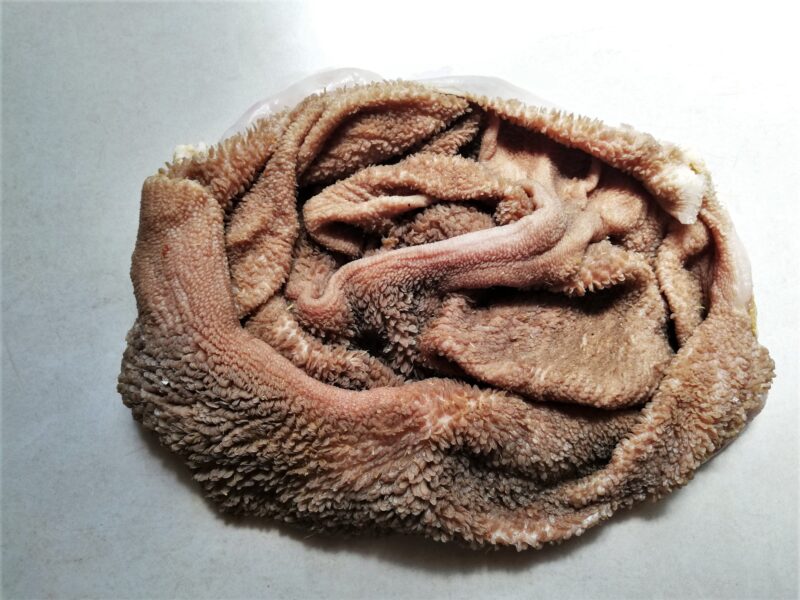
Can Tripe Taste Good?
When cooked properly, tripe can taste really good. Because of its mildness, it absorbs seasonings beautifully, and its texture becomes pleasantly silky and chewy.
It’s also worth to remember that if you’ve never tried it before, it may take a little time to get used to the flavor—just like any new food. Some people love it right away, while others learn to enjoy it over time.
I definitely fell into the second category. When I first cooked tripe years ago, I made it in an Italian-style tomato-based dish and honestly hated it. That experience put me off tripe for a long time.
The second time I tried it, I kept things simple with a light broth-based soup—and it was delicious. To this day, I still don’t enjoy tomato sauces with organ meats.
So if you’re new to tripe, don’t be afraid to experiment. Try it in different styles and let yourself discover the way you enjoy it most.
Is Tripe Healthy to Eat?
Yes, like all organ meats, tripe is very nutritious. It’s high in protein and it provides important nutrients like vitamin B12, zinc, selenium, and collagen.
Because it comes from the stomach lining, it’s also rich in connective tissue. This is why it takes so long to cook it. Long, gentle simmering helps to break down the connective tissue in tripe when you slow cook it into rich broths and soups.
Common Mistakes When Cooking Tripe
- Undercooking: Tripe needs long, slow cooking to break down its tough, collagen-rich structure. If you undercook tripe, it stays rubbery and chewy instead of becoming tender and silky. You’ll know when your tripe is ready when it is fork tender (soft enough to pierce easily with a fork).
- Not cleaning: If you don’t clean tripe thoroughly, it can carry unpleasant odors or traces of grit from the stomach. Good rinsing, scraping, and soaking (especially for home-butchered tripe) are essential for achieving a clean, mild flavor. When I use tripe from our own sheep, I wash it very thoroughly in a large bucket of water, scrubbing it almost like laundry.
- Skipping pre-boil: The initial short boil helps remove impurities and strong odors before the main cooking process. Skipping this step can result in a heavier smell and a less clean-tasting final dish. I did try cooking tripe without pre-boiling it first, and it made my kitchen smell strongly of wet sheep—so much so that I had to open all the windows just to air the house out!
How to Store and Freeze Tripe
- Uncooked (raw) tripe: Keep it in an airtight container or tightly wrapped and store in the coldest part of the fridge. You should use it within 1–2 days for best freshness. For longer storage, freeze it as soon as possible.
- Cooked tripe: Let it cool completely, then store it in an airtight container with a little of its cooking liquid to keep it moist. It will keep in the fridge for about 3–4 days.
- Freezing (raw or cooked): Freeze tripe in airtight freezer bags or containers, removing as much air as possible to prevent freezer burn. Raw tripe freezes well for up to 3–6 months, and cooked tripe for about 2–3 months. Thaw overnight in the fridge before reheating gently.
What to Serve With Tripe
Tripe is rich, savory, and often gently chewy, so it pairs best with sides that either soak up the broth, balance the richness, or add freshness and crunch. Here are some of my best family-friendly ideas for serving tripe:
- Crusty bread or sourdough, perfect for soaking up brothy tripe soups or stews.
- Plain white rice or fluffy couscous works beautifully with saucy tripe dishes (like tomato-based stews). It absorbs flavor and stretches the meal further.
- Potatoes (boiled or mashed) pair especially well with Eastern European-style tripe soups or stews, adding comfort and substance without overpowering the flavor.
- Parsley, cilantro, dill, or green onions sprinkled on top right before serving add freshness and lift the dish. A squeeze of lemon or vinegar can do the same.
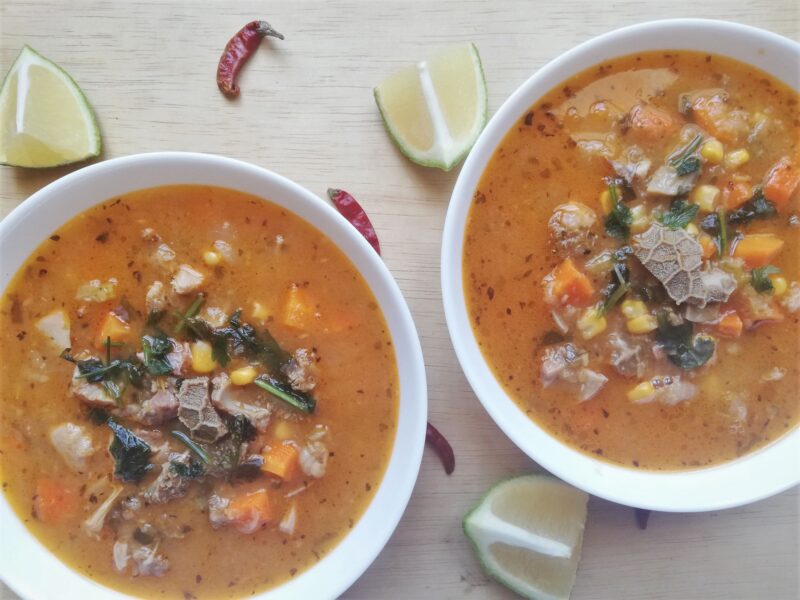
Tripe for Beginners (Where to Start)
If someone is new to tripe, the best recipes are the ones that are mild, well-seasoned, and brothy or saucy, so the texture is soft and the flavor is familiar. Here are some of my favorite tripe dishes for you to try:
- Simple tripe soup (clear broth style): A great starter because the flavor is gentle and familiar. Think slow-simmered tripe with onion, garlic, carrot, and herbs like parsley or marjoram. You can also easily swap tripe into your favorite chicken noodle soup recipe. Simply replace the chicken with chopped cooked tripe. There’s really no need to search for entirely new recipes; tripe works beautifully in dishes you already know and love.
- Polish-style tripe soup (flaki): A classic Eastern European version with lightly spiced broth, vegetables, and a touch of marjoram. Follow this easy recipe but replace gizzards with cooked, chopped tripe.
- Mexican-style tripe soup (menudo): A bold but very popular introduction: red chili broth with garlic, oregano, and hominy. The strong flavors help balance the texture of the tripe. I have a mild, family-friendly version of red menudo here.
- Slow-cooked tripe stew: Tripe works beautifully in a slow-cooked stew with onions, carrots, potatoes, and simple seasoning in a rich broth. You can easily replace stewing beef with sliced or chopped tripe (pre-boiled for 10 minutes first) in your favorite beef stew recipe. There’s really no need to reinvent the wheel here! Tripe works in any stew that uses tough cuts of meat like stewing beef or mutton, since it benefits from the same long, slow cooking method.
FAQ
Final Thoughts
When it comes to nutrient density, nothing beats liver. When it comes to taste, I’ll choose beef tongue every time. But when it comes to the “cool factor,” tripe wins hands down. It just looks so unusual (in a good way), and it’s incredibly versatile.
Its mildness is actually its greatest strength. Whatever cuisine you love, tripe absorbs the flavors of your soups and stews beautifully, while adding that silky, pleasantly chewy texture to the final dish.
If you’d like to see more family-friendly organ meat recipes, along with other old-world foods like sourdough breads, raw milk cheeses, and simple ferments, be sure to subscribe to my newsletter. I write it every week for real food moms like you.
Family-Friendly Organ Meat Recipes
Red Menudo (Mexican Tripe Soup)
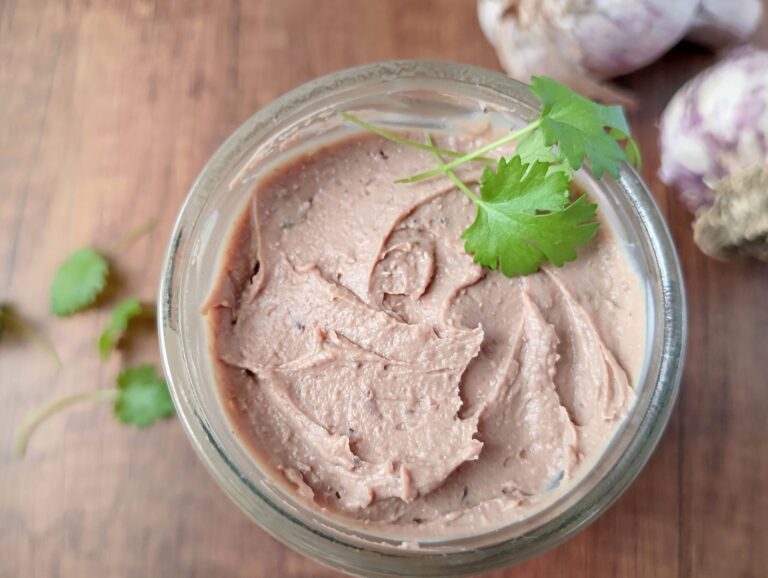
Nutrient-Rich Chicken Liver Pâté
How to Cook Tripe
Equipment
- Large cooking pot
- knife and chopping board
Ingredients
- Cleaned tripe
- Filtered water
- Salt
- Optional aromatics: onion, garlic, carrot, celery, bay leaf
Instructions
- Pre-boil (important step): Place the tripe in a pot of fresh water. Bring to a boil and cook for 10–15 minutes. Drain and discard the water, then rinse the tripe well. (This helps remove impurities and strong odors.)
- Main simmer: Return the tripe to the pot and cover with fresh water. Add salt (like cooking pasta). Add optional aromatics such as onion, garlic, carrot, celery, and a bay leaf for extra flavor.
- Slow cook until tender: Bring to a gentle simmer (do not boil rapidly). Cook for 1.5 to 3 hours, until tender.
- Check doneness: Tripe is ready when it is soft, silky, and easy to chew. A fork should pierce it easily with no resistance.
- Rest and use: Once tender, slice into strips or cubes and use in soups, stews, or sauces.
Notes
- Start checking tenderness around 1.5 hours.
- Most tripe is fully tender by ~2 hours.
- Very thick or unboiled tripe may take up to 3–4 hours.
- Always simmer gently for best texture.
- Cooked tripe can be stored in an airtight container in the refrigerator for 3–4 days. Reheat gently in soups, stews, or sauces over low heat until warmed through.
- For longer storage, tripe can be frozen for up to 3 months. Freeze it in portions for easy use in future recipes.