Bread and Butter Pudding With Sourdough: Simple, Homestyle, and Delicious
This old-fashioned, from-scratch bread and butter pudding is a recipe I’ve been making for my family for over 10 years. It’s the perfect way to use up leftover sourdough bread, turning it into a frugal, custardy, gently sweet dessert—or even a cozy breakfast. It takes only about 10 minutes to prep, and you can easily assemble it the night before to bake in the morning.
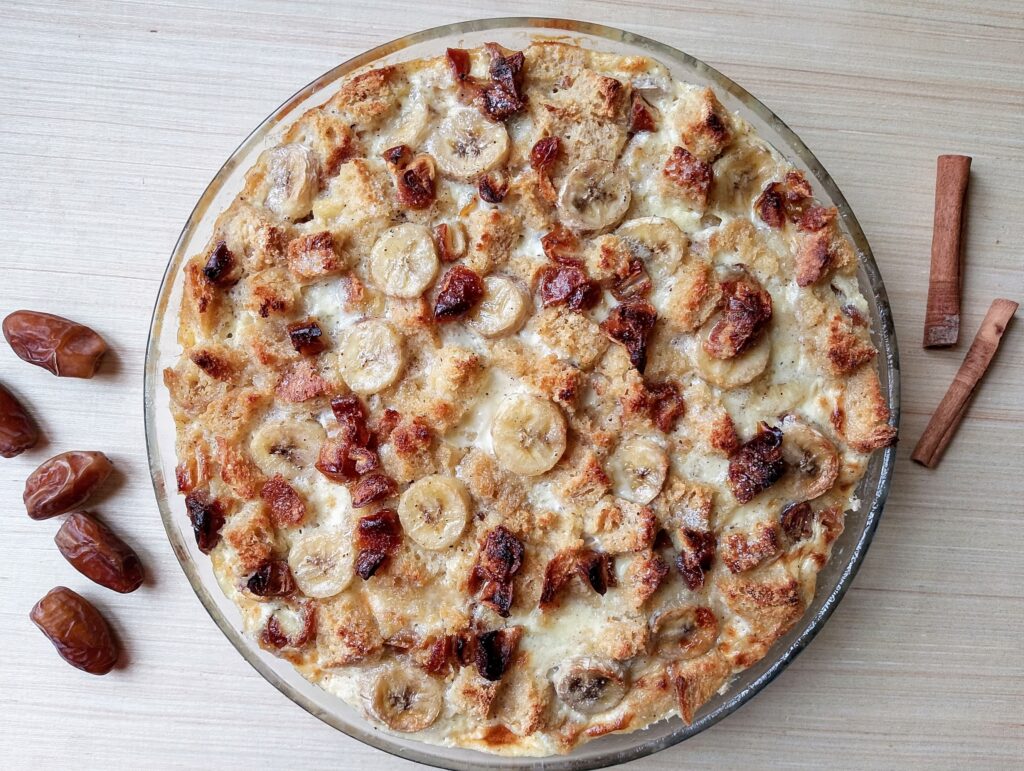
What Is Bread and Butter Pudding?
Bread and butter pudding is a classic frugal British dessert. It’s made with buttered slices of bread layered in a dish, then soaked in a sweetened custard before baking. Many traditional versions also include extras like fresh fruit, dried fruit, nuts, or warm spices for added flavor and texture. I usually cube my bread for the pudding, but you could slice it instead if you prefer.
What Type of Bread Is Best for Bread and Butter Pudding?
Slightly stale bread works best for this pudding, as it soaks up the custard more evenly while holding its shape during baking. Almost any type of sourdough works well—just avoid artisanal loaves with a very open crumb and large holes, as they won’t absorb the custard consistently.
Why Sourdough Is So Good for Bread and Butter Pudding
- It doesn’t go mushy. Sourdough has a naturally sturdier crumb, which means it will hold its shape well when soaked with custard, resulting in a pudding which is creamy but not soggy.
- It adds a depth of flavor. Because it is fermented for a long time, sourdough bread has a richer flavor than yeast bread. It adds a subtle tang and a slightly nutty flavor to pudding.
- It absorbs the custard really well. It has a more porous structure than yeast bread, which means it absorbs the custard evenly and gives a great texture throughtout the pudding.
- It’s nutrient-dense. Sourdough fermentation reduces phytic acid and other anti-nutrients in the wheat while increasing the mineral absorption, resulting in a bread which is easier to digest and more nutritious.
- It makes a heartier pudding. Pudding made with sourdough bread has a lovely, soft interior, crispy edges, and a golden top.
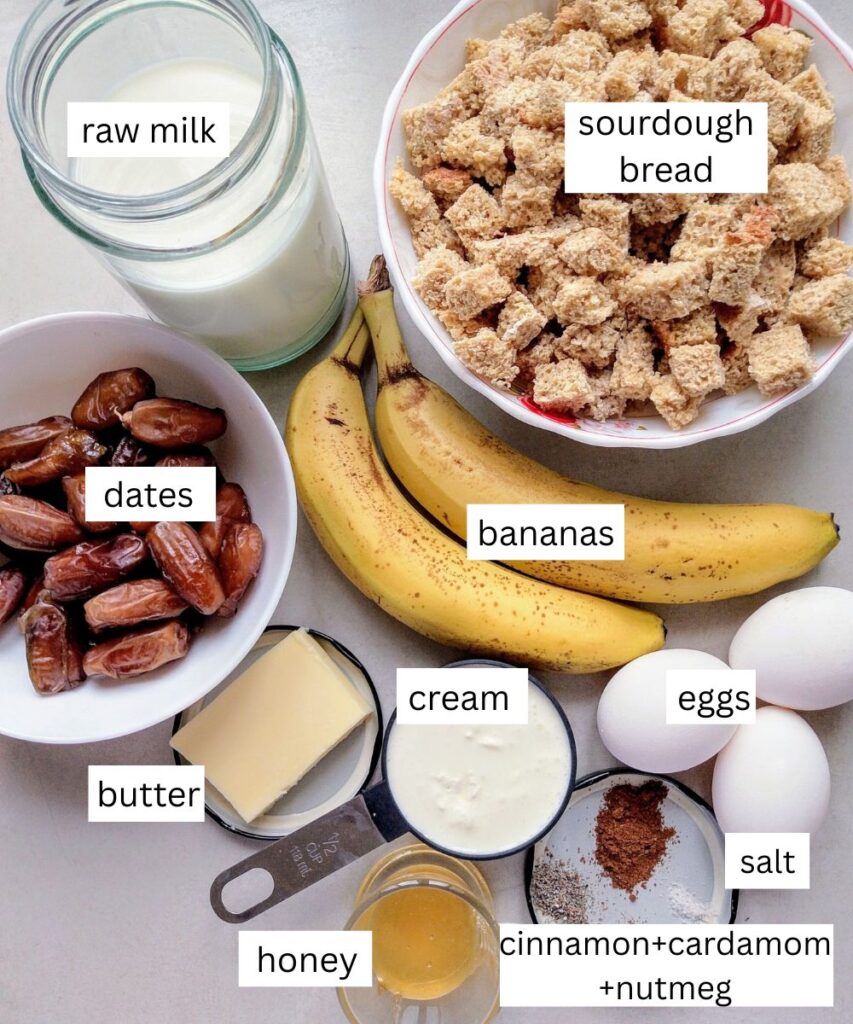
Ingredients You’ll Need
Step-by-Step: How to Make Bread and Butter Pudding
Step 1
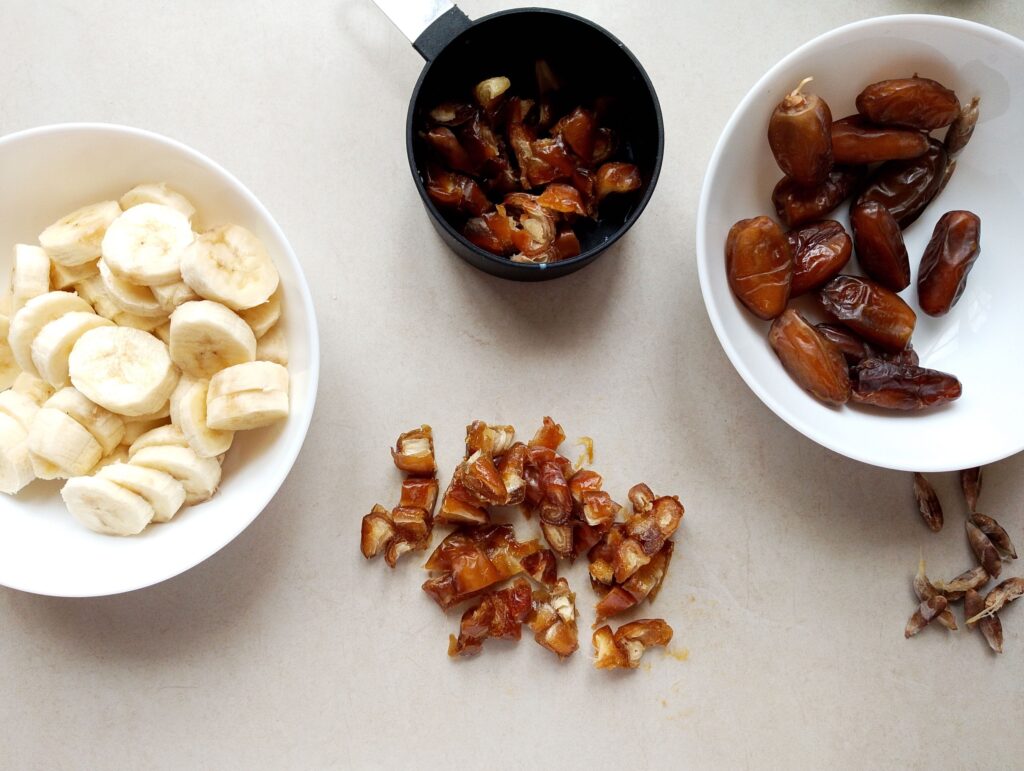
Slice the bananas, and pit and chop the dates if you haven’t already. As a guide, about 2 cups of whole dates will yield roughly 1 cup of chopped, pitted dates.
Step 2
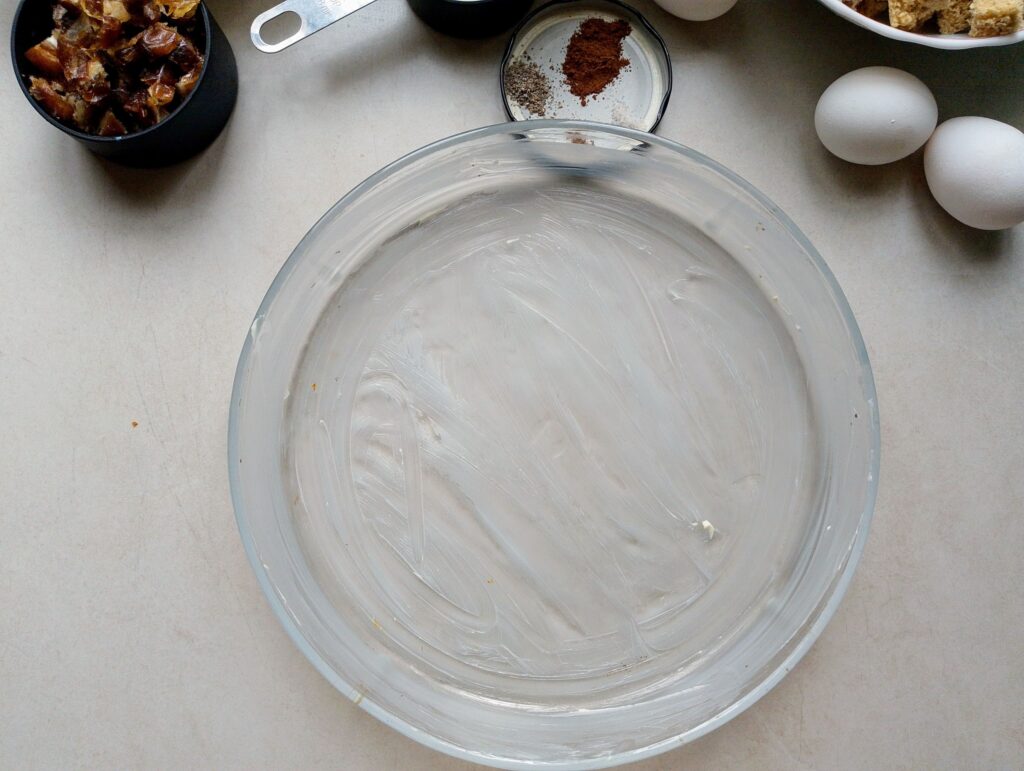
Preheat your oven to 180°C / 350°F and generously grease your baking dish with butter so the pudding releases easily after baking.
Step 3
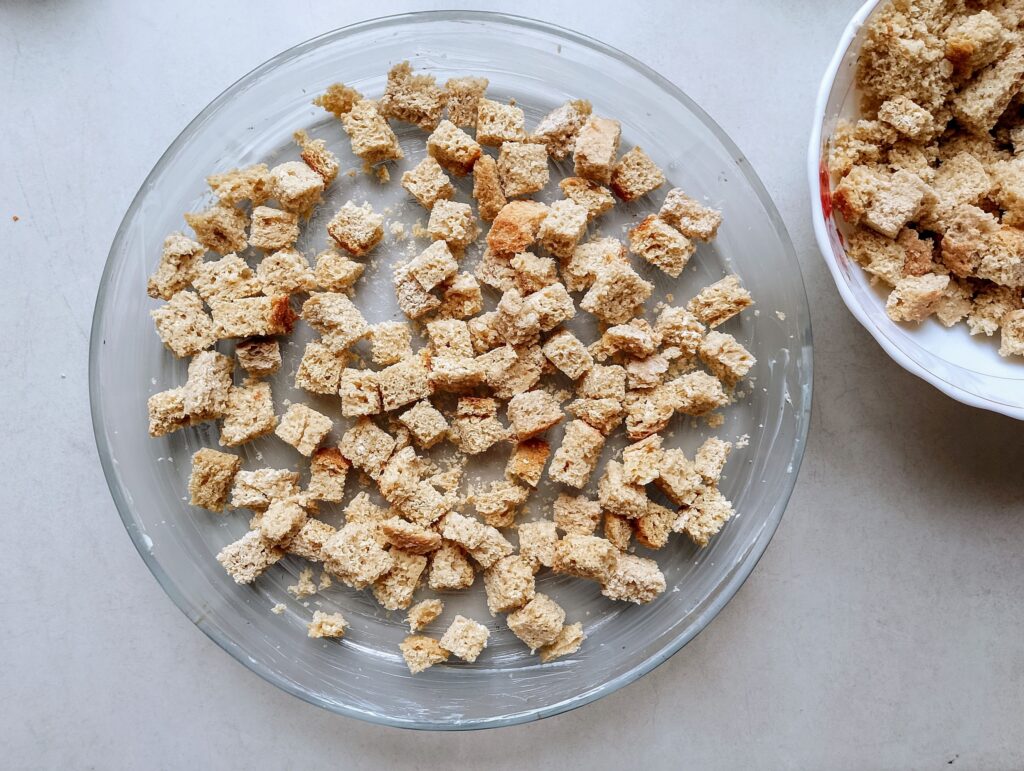
Spread half of the cubed sourdough bread in an even layer across the bottom of your prepared baking dish.
Step 4
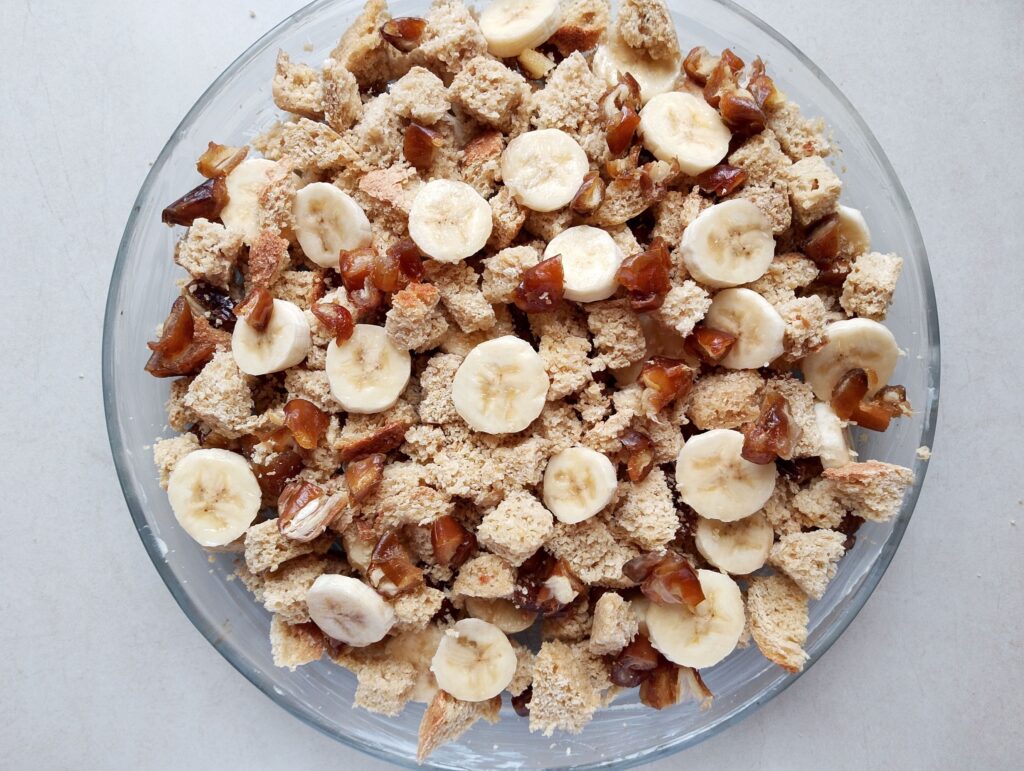
Layer the sliced bananas and chopped dates over the bread, then scatter the remaining sourdough cubes on top. Finish with the other half of banana slices and dates so they’re evenly distributed.
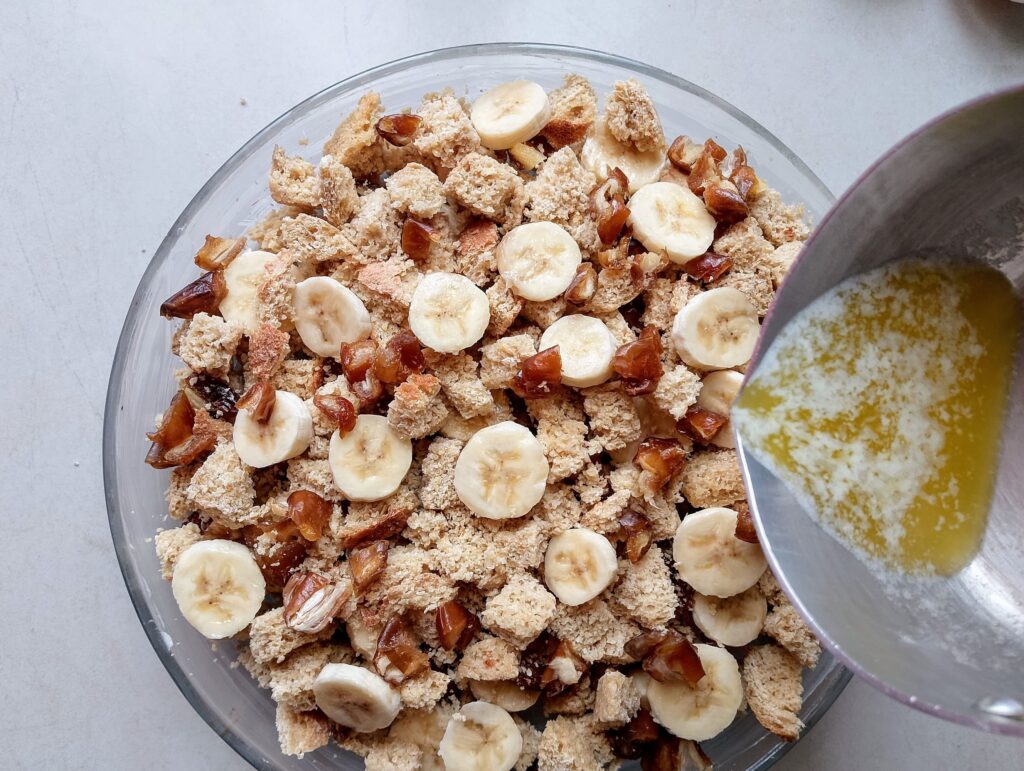
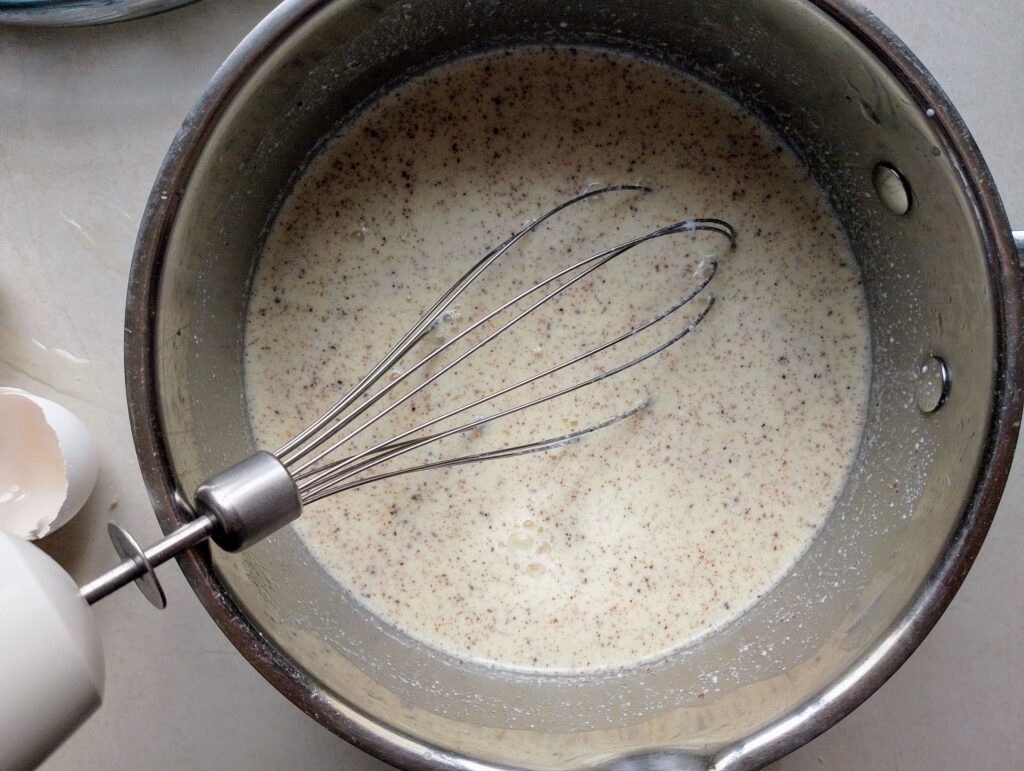
Step 7
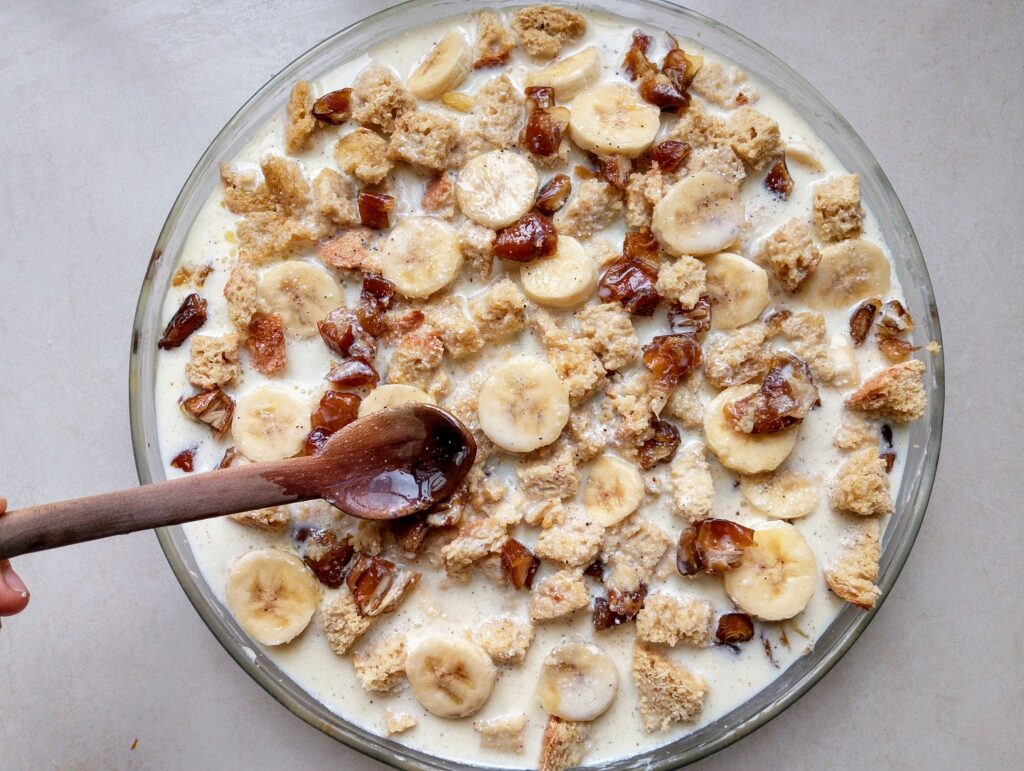
Slowly and evenly pour the custard over the bread mixture. Use the back of a wooden spoon to gently press the bread down so it absorbs the custard thoroughly. Let it rest for 15 minutes.
Step 8
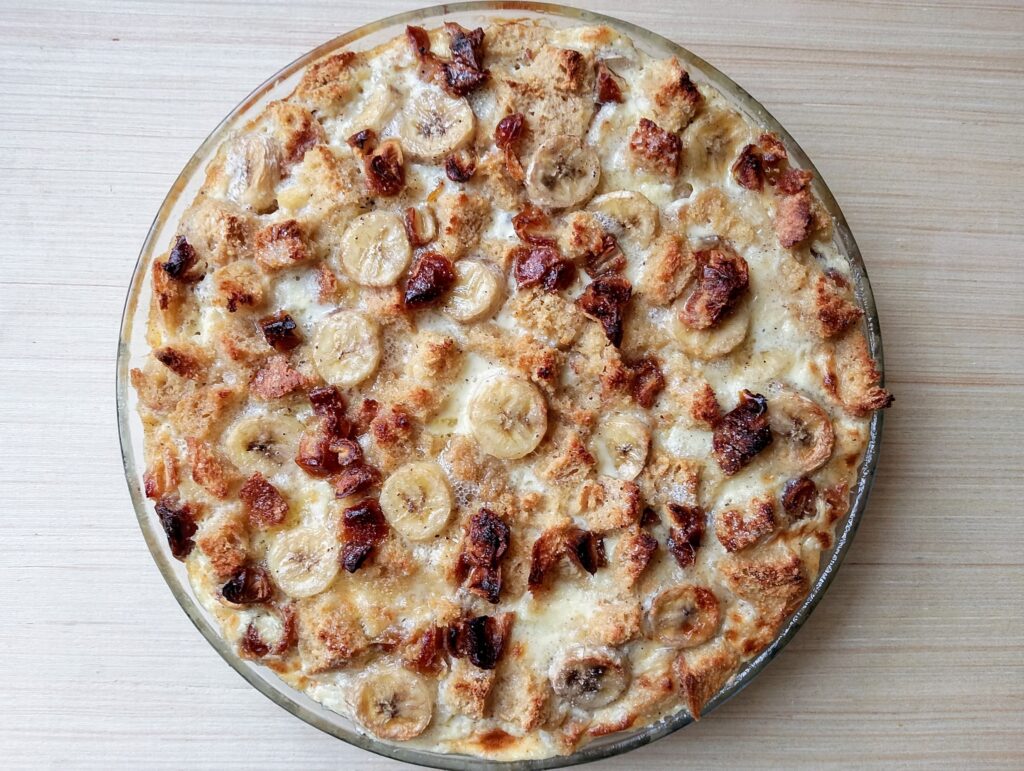
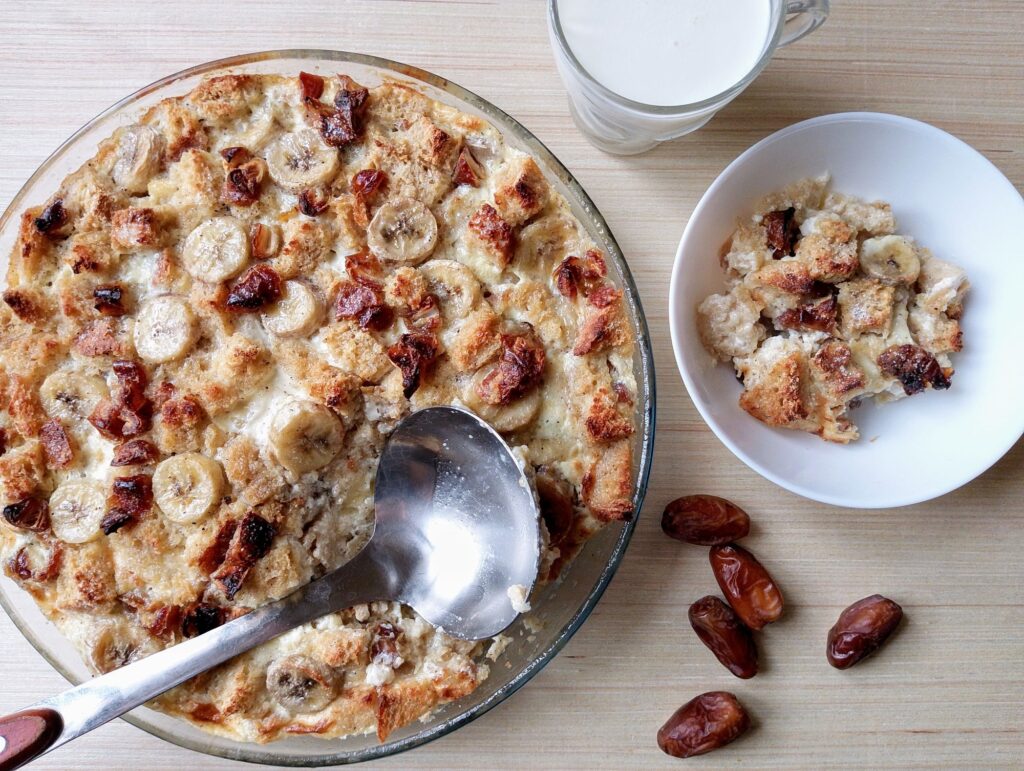
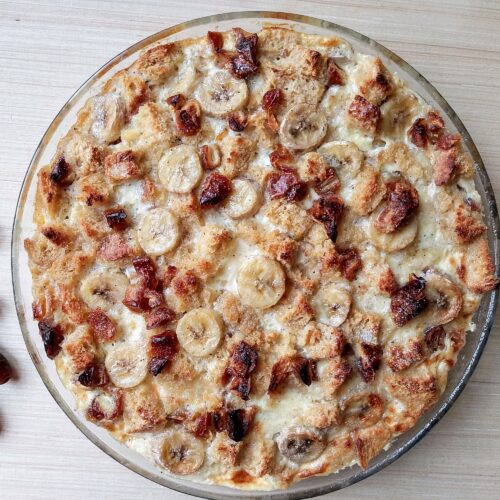
Bake for about 35 minutes, or until the custard is set but still slightly soft in the centre and the top is golden. Let the pudding rest for 10 minutes, then serve warm with a drizzle of cream or warm milk.
Common Bread and Butter Pudding Mistakes (and How to Avoid Them)
- The pudding turns out soggy: use stale bread so it absorbs the liquid properly, press the bread down after adding the custard so it absorbs it better, then let it sit for about 15 minutes before baking.
- The pudding turns out dry: make sure the custard fully coats the bread, then stop baking when the center is set but still has a slight wobble.
- The eggs scramble in the custard: make sure to whisk the custard until it looks completely smooth, with no egg pieces visible.
- Top burns before center sets: use a deeper baking dish and tent with foil once the top is golden if necessary.
- Custard separates (watery on bottom, firm on top): make sure to whisk the custard really well, then bake at a moderate temperature and avoid overbaking.
- Texture is rubbery: don’t use more eggs than specified in the recipe, bake until the center is set but still soft, let it rest for 10 minutes before serving.
How to Serve
We love to serve this pudding warm, drizzled with thick cream or a splash of warm milk. It’s such a rich, satisfying dish on its own that additional toppings or accompaniments aren’t really necessary.
Storage and Make-Ahead Tips
- Any leftovers can be stored covered in the refrigerator for 3-4 days.
- To reheat the pudding, place it in a preheated 160°C / 325°F oven. Cover with foil to prevent it drying out and heat for about 15 minutes for a portion or around 25 minutes for the whole dish.
- This pudding can also be wrapped well and frozen for up to 2 months.
FAQ
Final Thoughts
This sourdough bread and butter pudding is a frugal, comforting treat that you can pull together in no time. The warming spices—cinnamon, cardamom, and nutmeg—make it perfect for curling up on a chilly winter evening. If you love recipes like this one and want more old-fashioned, nourishing dishes straight from my kitchen, subscribe to my newsletter and join me in bringing a little homemade warmth to your table.
More Traditional, From-Scratch Desserts You’ll Love
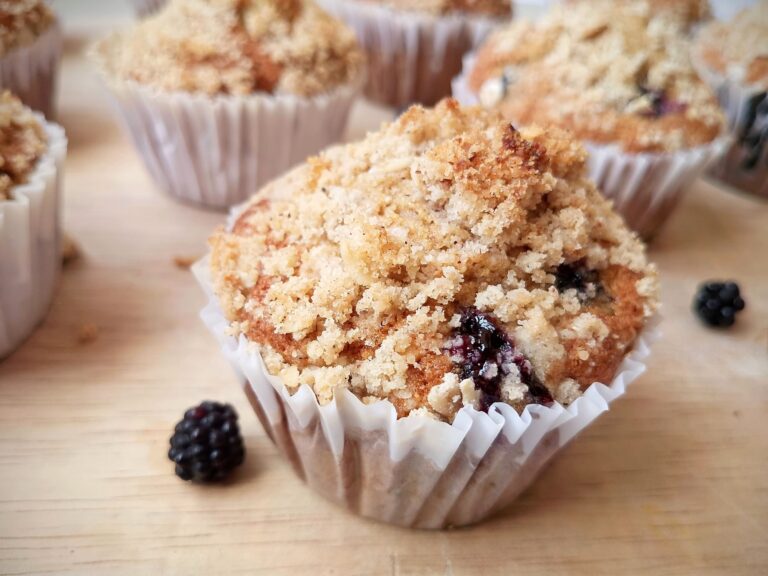
Old-Fashioned Applesauce Blackberry Muffins
Banana and Coconut Cake with Sourdough Discard
Sourdough Apple Cinnamon French Toast
Bread and Butter Pudding
Equipment
- 8 x 10 inch casserole dish or similar
Ingredients
- 5 cups cubed sourdough bread, preferably a day or two old
- 2 medium bananas, sliced
- 1 cup chopped dates
- 3 tbsp butter, melted (plus extra for greasing)
- 3 large eggs
- 2 cups raw milk
- ½ cup cream
- 2 tbsp brown sugar OR 1-2 tbsp honey
- ½ tsp cinnamon
- ¼ tsp ground cardamom
- a pinch of nutmeg
- a pinch of salt
- 1 tsp vanilla extract (optional)
- 1-2 tbsp brown sugar, to sprinkle over the pudding before baking
Instructions
- Preheat your oven to 175°C / 350°F. Butter a medium baking dish (about 8×10 or similar).
- Add half of the cubed sourdough to the baking dish. Scatter over half of the sliced bananas and half of the chopped dates. Add the remaining bread, bananas, and dates on top.
- Melt the butter and drizzle it over the pudding.
- In a large bowl, combine eggs, milk, cream, sugar or honey, cinnamon, cardamom, nutmeg, salt and vanilla (if using). Whish until smooth.
- Slowly and evenly pour the custard over the bread mixture in the baking dish. Gently press the bread down with the back of a wooden spoon so it absorbs the custard. Sprinkle the pudding with a tablespoon or two of brown sugar if you like a crispier topping.
- Let the pudding sit for 15 minutes to soak.
- Bake uncovered for about 35 minutes until the custard is set but still slightly soft in the middle, and the top is golden.
- Let it rest for 10 minutes, then serve warm with a drizzle of cream or warm milk.
Notes
- Make-ahead: Assemble, cover, and refrigerate overnight. Bake from cold (add a few extra minutes) or bring to room temperature first if you prefer.
- Storage: Keep covered in the fridge up to 3–4 days. Reheat gently in a low oven. Baked pudding freezes well in portions for up to 2 months — thaw in the fridge before reheating.