Soft Sourdough Rolls with Whole Wheat Flour
If you scroll around my blog a bit, you’ll notice that I don’t bake any sourdough bread with 100% refined flour. Such loaves might look pretty on Instagram, but they lack the nutritional benefits of whole grains. I bake bread at home so I can make our diet more nutrient dense, not less. On the other hand, I don’t bake 100% whole wheat sourdough either, because no one in my family enjoys it that much. I’ve found that the happy medium for us is sourdough bread made with 40–60% whole wheat flour and some refined flour to give it a softer, more open crumb and make it more pleasant to eat.
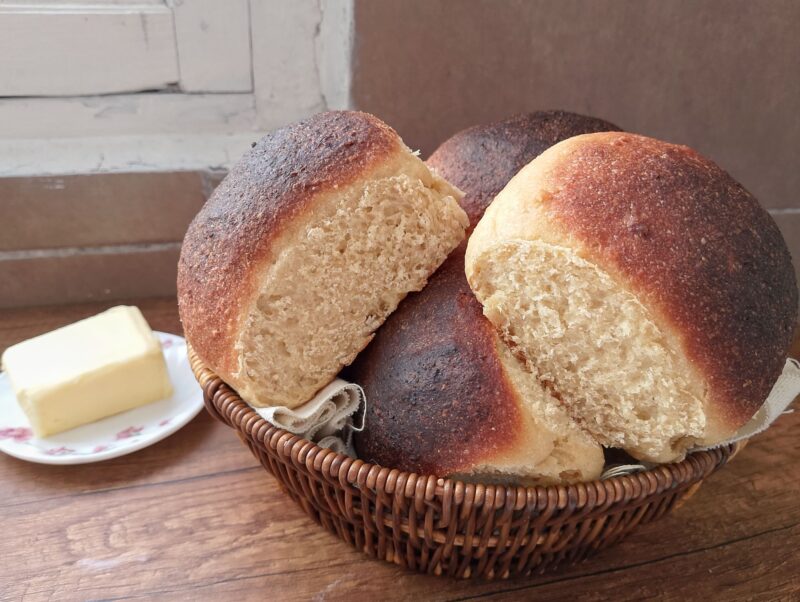
These soft sourdough rolls are made with 40% whole wheat flour, striking the perfect balance between nutrition and family-friendliness. They’re also enriched with butter, milk, and eggs, making them hearty, tender, and delicious.
Why You’ll Love These Rolls
- The best of both worlds: Made with 40% whole wheat flour, these rolls have a pleasant whole wheat flavor while staying soft, fluffy, and light.
- Naturally fermented: Made with an active sourdough starter for a long fermentation that can help make the bread easier to digest.
- Versatile: Perfect for breakfast, lunch, or as a side to serve with stew for dinner.
- No overnight fermentation required: Mix the dough in the morning, and your soft sourdough rolls will be ready by dinnertime.
Ingredients
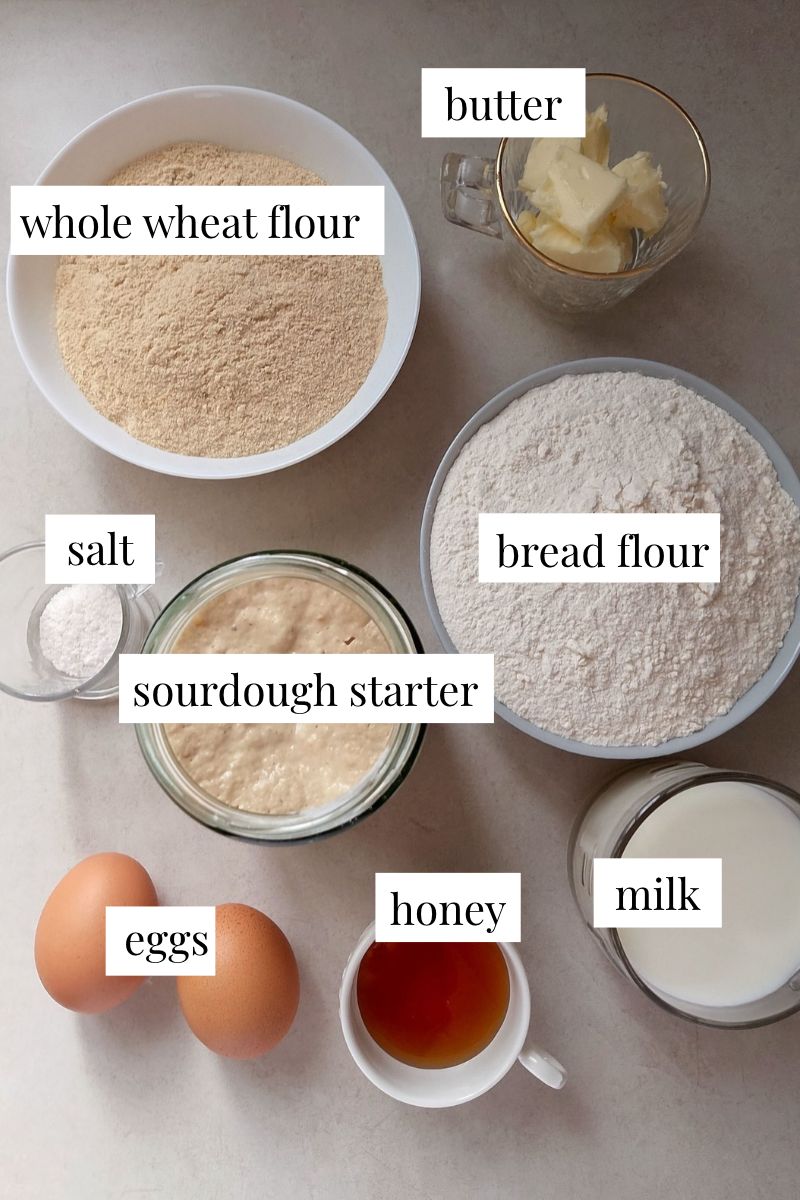
- Whole wheat flour: Adds nutrients and a pleasant whole wheat flavor. If you’d like to increase the proportion of whole wheat flour, you’ll need to add a little more milk, as whole wheat flour absorbs more liquid.
- Bread flour: Helps create a softer, more open crumb. Bread flour is ideal for these rolls because its higher protein content helps develop the gluten needed for a light, fluffy texture.
- Sourdough starter: Use an active, bubbly starter at its peak or just past its peak for the best rise.
- Butter: Adds richness and tenderness. You can also use tallow.
- Milk: Whole milk works best for these rolls. Raw milk is fine, too.
- Eggs: Make the rolls richer, softer, and more tender while giving them a beautiful golden color.
- Honey: Adds a touch of sweetness and can help speed up fermentation slightly. You can also substitute sugar for the honey.
How to Make Soft Sourdough Rolls
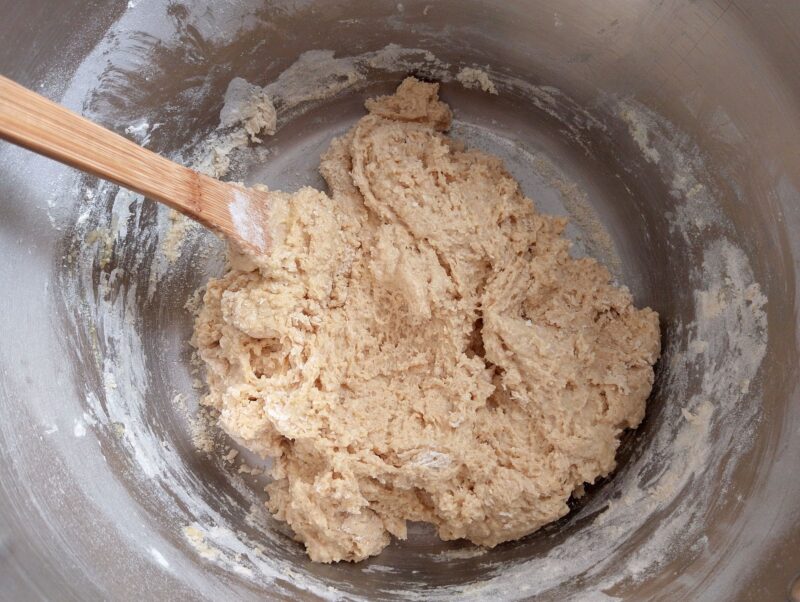
Step 1: In a large bowl, mix together the sourdough starter, milk, eggs, honey, bread flour, and whole wheat flour until well combined and no dry flour remains. Cover with a damp tea towel or plastic wrap and let the dough rest for 30 minutes.
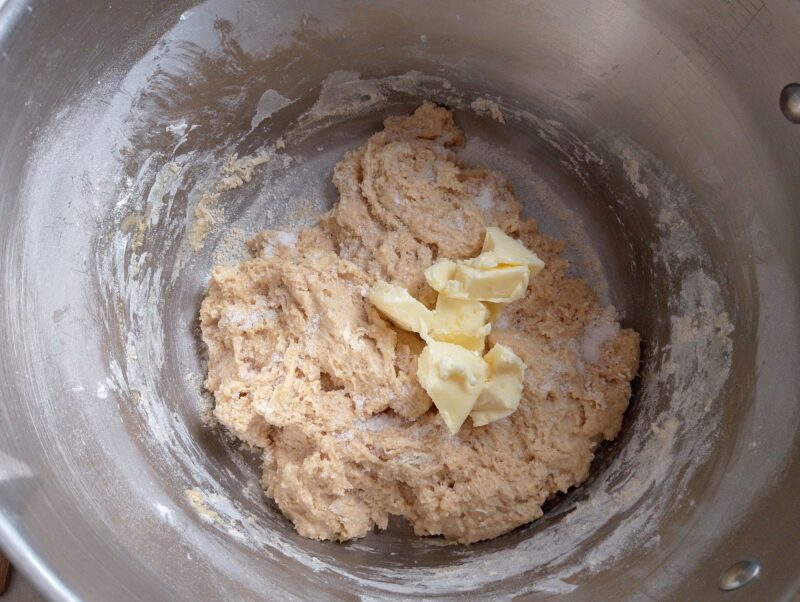
Step 2: Add the softened butter and salt. Knead briefly until the butter is fully incorporated and the dough is smooth and soft. Cover and let the dough rest for 30 minutes.
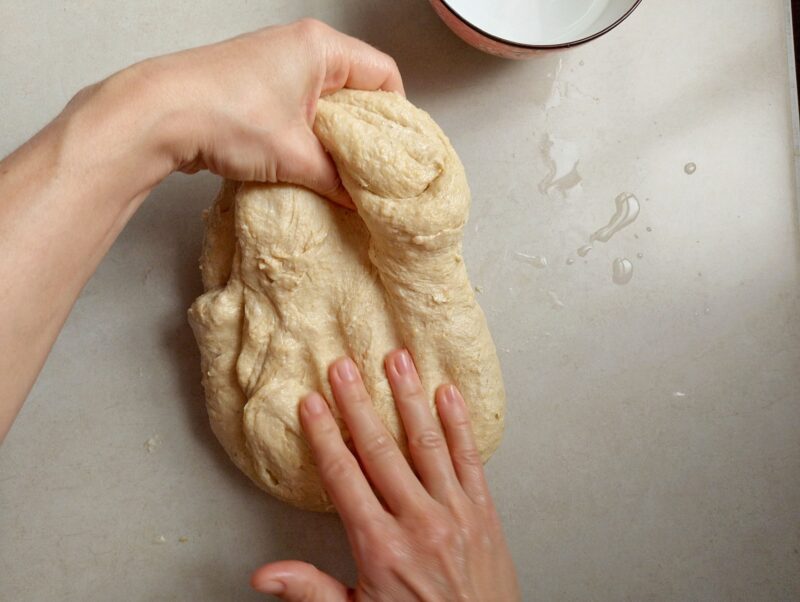
Step 3: Over the next 1½–2 hours, perform 2–3 gentle stretch-and-folds, about 30 minutes apart. To do a stretch-and-fold, gently grab one side of the dough, stretch it upward without tearing, then fold it over the center. Turn the bowl and repeat on the remaining three sides. To prevent the dough from sticking, lightly wet your hands and the counter rather than adding flour. The dough will become smoother and more elastic with each set of folds.
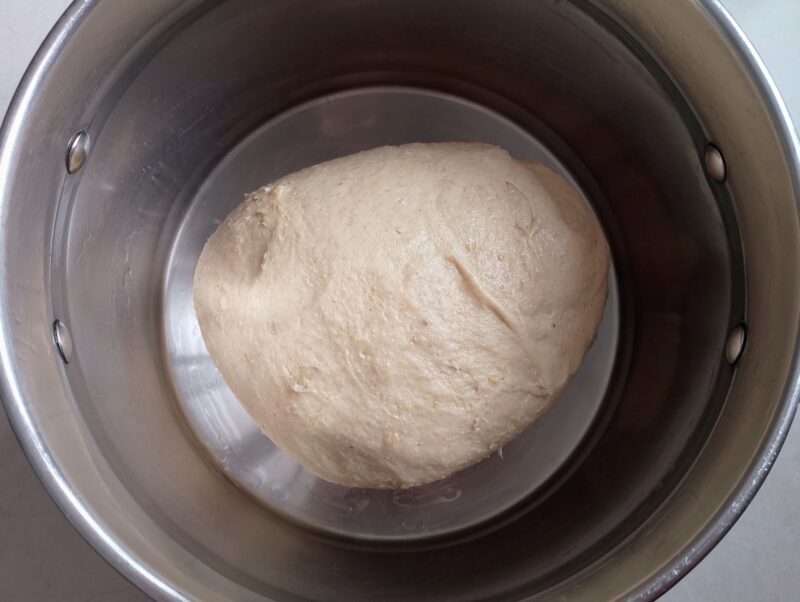
Step 4: After completing the stretch-and-folds, place the dough in a lightly greased bowl, cover, and let it rise at warm room temperature until it has increased in volume by 60–70%. Don’t wait for it to double completely. This usually takes about 3 hours in my warm kitchen, but the exact timing will depend on the temperature of your kitchen.
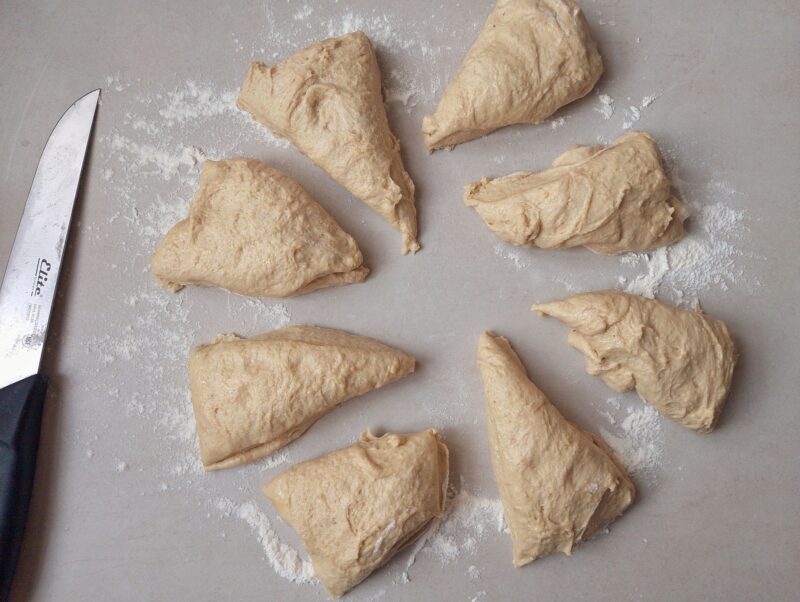
Step 5: Once the dough has risen, gently turn it out onto a lightly floured counter. Divide it into 8 equal pieces for large rolls or 12 for smaller rolls.
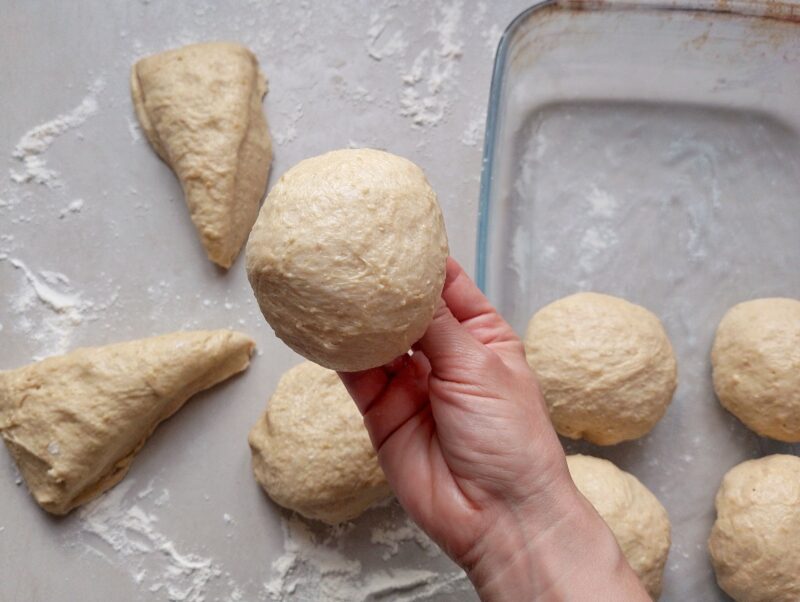
Step 6: Shape each piece into a smooth, tight ball by pulling the edges underneath and pinching them together. Then, gently roll each ball gently against the counter to create surface tension and help it hold its shape.
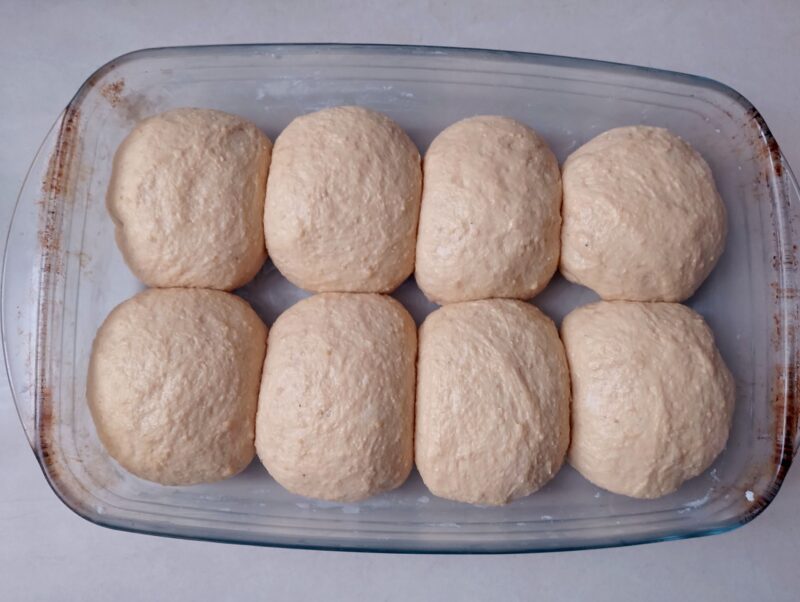
Step 7: Place the rolls in a greased 9 × 13-inch baking dish, leaving a little space between them. Cover and let them rise until they’re puffy, have increased in volume by about 50–60%, and are just touching each other. This usually takes around 2 hours in my warm kitchen, but the timing will depend on your kitchen temperature and the strength of your starter.
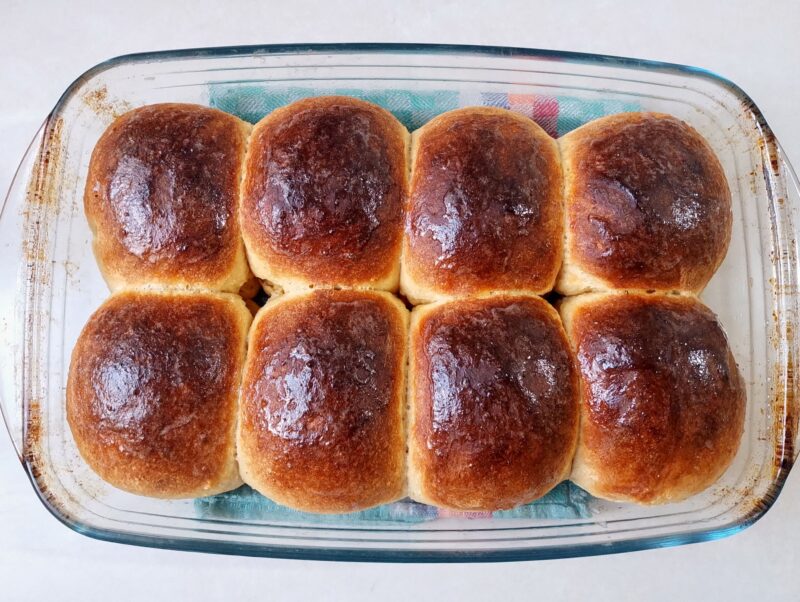
Step 8: Preheat your oven to 180°C (350°F). Bake the rolls for 20–25 minutes, until they’re golden brown on top and cooked through. As soon as they come out of the oven, brush the tops with a little melted butter. Let the rolls cool for at least 15 minutes before pulling them apart and serving.
Tips For the Best Rolls
Use an active starter. A healthy starter that’s ready for baking should reliably double in size within 2–4 hours after every feeding. For the best rise, use it at its peak (when it has doubled and the top is still slightly domed) or just past its peak.
Don’t add too much flour. When handling the dough, lightly wet your hands and the counter instead of dusting them with flour. Adding too much flour can make your rolls dense. The only time you’ll need a little flour is when dividing the dough into individual rolls, and even then, use just a light dusting.
Watch the dough, not the clock. How quickly your dough ferments and rises depends largely on your kitchen temperature, assuming you’re using a strong, active starter. (A weaker starter can slow fermentation.) During bulk fermentation, let the dough rise until it has increased in volume by 60–70%. For the final proof, aim for a 50–60% increase in volume.
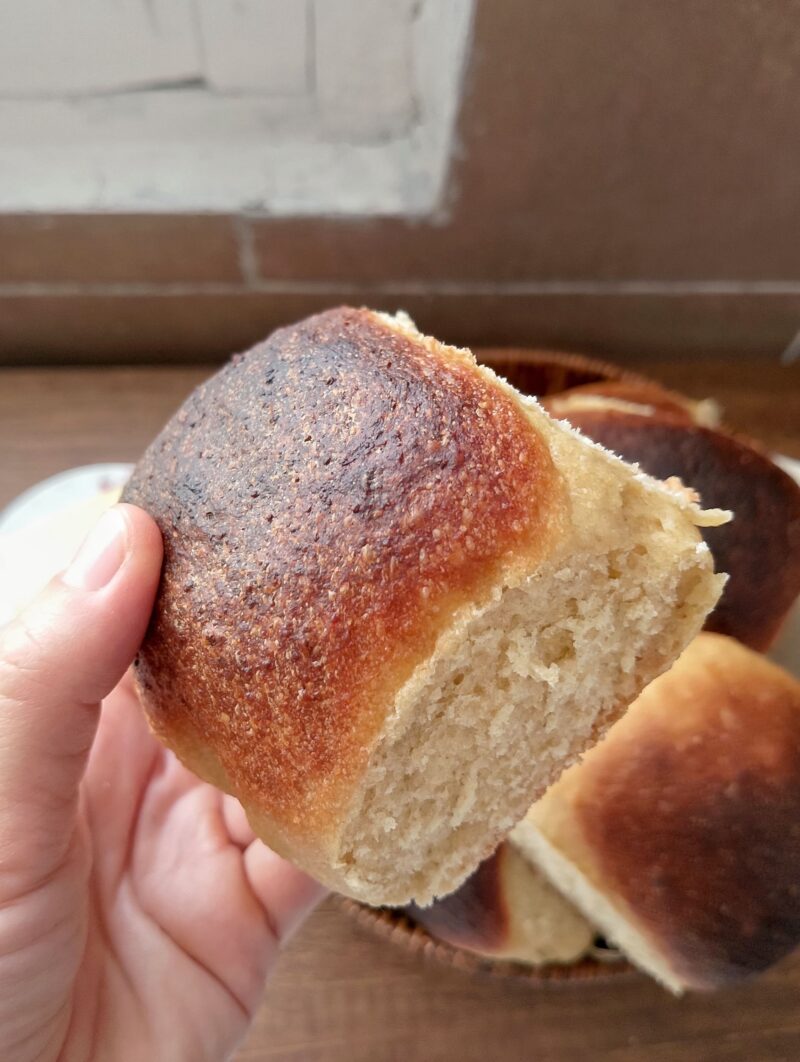
Don’t overbake. Baking the rolls for too long will dry them out. Bake until they’re well risen and deep golden brown on top.
Serving Ideas
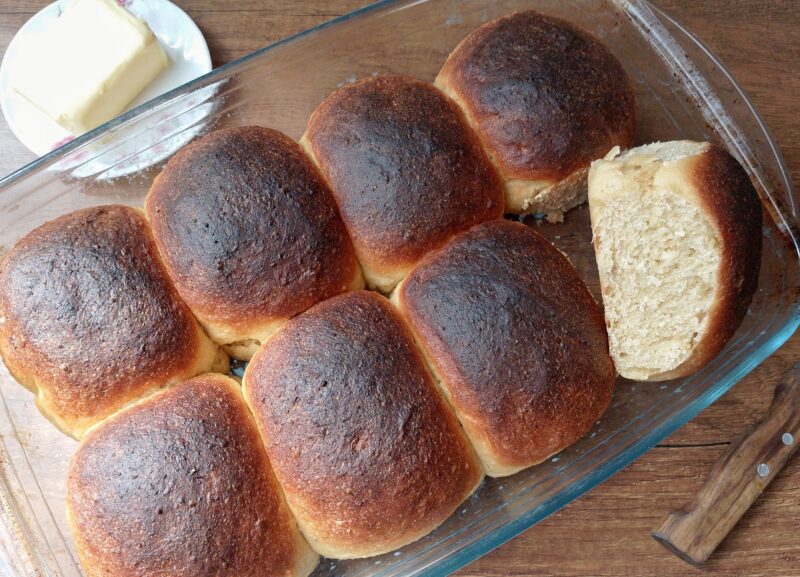
- For breakfast: Serve these rolls warm with butter, homemade jam, or honey.
- For a savory brunch: Pair them with scrambled eggs, cheddar, homemade cottage cheese, or leftover roast meat.
- For a picnic: Turn them into little sandwiches with butter, pickles, and cheese or deli meat.
- For dinner: Serve them as dinner rolls alongside a bowl of homemade soup or stew. They’re perfect for soaking up all that delicious broth!
How to Store and Freeze Sourdough Rolls
- Let the rolls cool completely, then place them in an airtight container or sealed bag and store at room temperature for 1–2 days. If your kitchen is very warm, as mine is during our hot summers, I wouldn’t keep them at room temperature for longer than 24 hours, as they may develop mold.
- For longer storage, freeze them. These soft sourdough rolls freeze really well for up to 2–3 months. Place them in ziplock bags, removing as much air as possible before sealing. They’re quick to defrost, and we usually slice them once thawed and pop them into the toaster.
- If you want them to taste almost freshly baked once thawed, warm them in an oven at 150–160°C (300–320°F) for 5–8 minutes. If the crust feels dry, lightly sprinkle or brush the rolls with water before reheating to help keep them from drying out further.
Recipe FAQ
Enjoy Your Rolls
I hope you enjoy these soft, buttery rolls! Most days, we eat sourdough sandwich bread, but sometimes I want something a little richer, and these rolls are perfect for that. I also like to keep a batch in the freezer for days when we want to go on an outing and need something easy to pack for a picnic. They’re delicious with cheese or sausages cooked over a fire!
Don’t you just love old-fashioned, homey cooking and baking? I certainly do! And I’d love to have you join me in making our homes a little healthier, our meals a little more nourishing, and everyday homemaking a little simpler. Every Sunday, I send out a newsletter filled with recipes, practical homemaking tips, and old-fashioned wisdom to inspire you for the week ahead. I’d love for you to be part of it! Come join our little community, and I’ll see you in your inbox every Sunday.
Soft Sourdough Rolls
Equipment
- 9 x 13 inch baking dish or similar
Ingredients
- 150 g active sourdough starter
- 250 g whole milk (lukewarm)
- 2 large eggs
- 50 g honey
- 350 g bread flour
- 250 g whole wheat flour
- 60 g butter, softened
- 10 g salt
Instructions
- Mix the dough: In a large bowl, mix the sourdough starter, milk, eggs, honey, bread flour, and whole wheat flour until well combined and no dry flour remains. Cover and let the dough rest for 30 minutes.
- Add butter and salt: Add the softened butter and salt. Knead briefly until the butter is fully incorporated and the dough is smooth and soft. Cover and let rest for 30 minutes.
- Stretch and fold: Over the next 1½–2 hours, perform 2–3 gentle stretch-and-folds, about 30 minutes apart. For each set, stretch one side of the dough upward without tearing and fold it over the center. Turn the dough and repeat on the remaining three sides. Lightly wet your hands and the counter to prevent sticking.
- Bulk fermentation: Place the dough in a lightly greased bowl, cover, and let rise at warm room temperature until it has increased in volume by 60–70%. This usually takes about 3 hours in my warm kitchen, but timing will vary.
- Divide and shape: Gently turn the dough onto a lightly floured counter. Divide into 8 equal pieces for large rolls or 12 for smaller rolls. Shape each piece into a smooth, tight ball by pulling the edges underneath, pinching them together, and gently rolling the ball against the counter.
- Final proof: Place the rolls in a greased 9 × 13-inch baking dish, leaving a little space between them. Cover and let rise until puffy, increased in volume by about 50–60%, and just touching each other. This usually takes around 2 hours in my warm kitchen.
- Bake: Preheat the oven to 180°C (350°F). Bake for 20–25 minutes, until golden brown on top and cooked through.
- Brush and serve: Immediately brush the tops with melted butter. Let the rolls cool for at least 15 minutes before pulling them apart and serving.
Notes
- The bulk ferment and final proofing time will depend on the temperature in your kitchen and can be several hours. I recommend you mix the dough in the morning if you want the rolls ready by dinnertime.