How to Make Calendula Oil (Simple Step-by-Step Guide)
If you’ve ever wanted a simple, natural remedy you can make at home—one that actually works and becomes the base for so many other herbal recipes—this is it. Calendula oil is one of those simple but powerful staples every traditional kitchen should have. It’s gentle enough for babies, effective enough for dry or irritated skin, and incredibly versatile. From soothing balms to nourishing salves and homemade skincare, there are many recipes you can use it in.
And the best part? You only need two ingredients and a little time.
In this guide, I’ll show you exactly how to make calendula oil step by step, including both the slow, traditional infusion method and a quicker option for when you need it sooner. I’ll also walk you through the small but important details (like why dried flowers matter) so you can make it confidently—without wasting ingredients or ending up with moldy oil.
Once you have this one jar on your shelf, you’ll be able to turn it into dozens of simple, nourishing remedies for your home, from balms and salves, to body butters and hair oils. Let’s start!
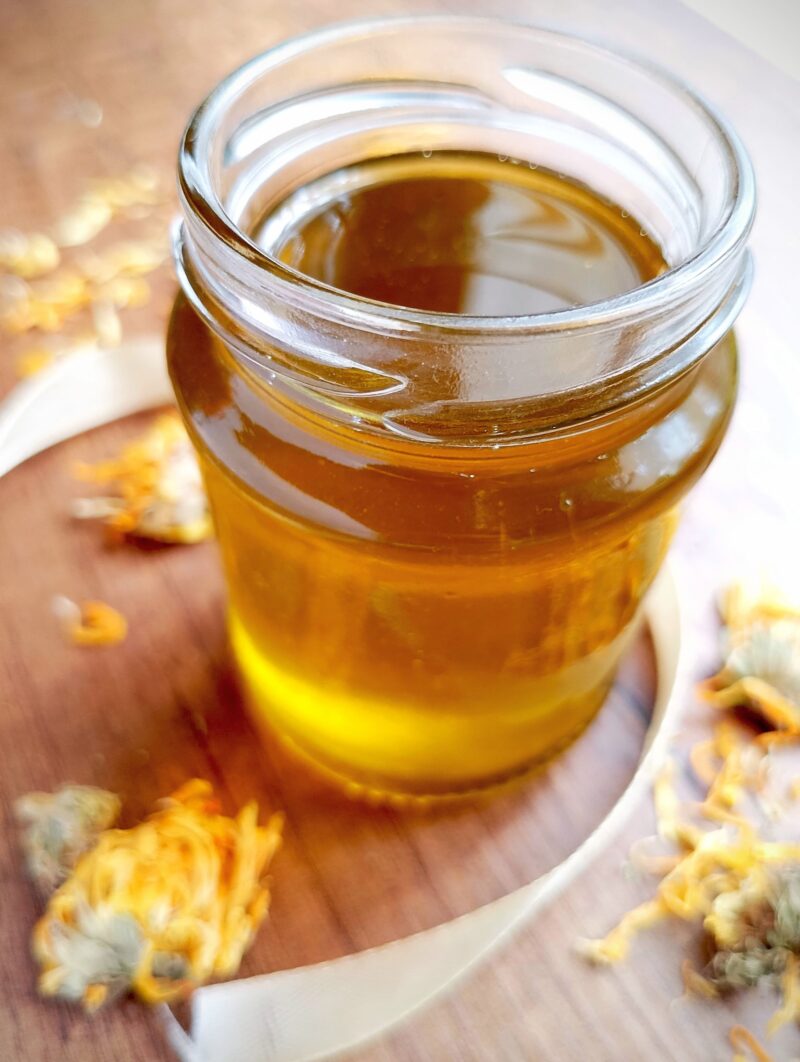
How to Make Calendula Oil (Quick Overview)
- Fill a glass jar with dried calendula flowers
- Pour carrier oil over the flowers until fully covered
- Infuse for 2–6 weeks in a warm place or 2–4 hours using gentle heat
- Strain the oil through a fine mesh sieve or cheesecloth
- Store in a sealed jar in a cool, dark place
Benefits of Calendula Oil
This oil combines the soothing, anti-inflammatory benefits of calendula flowers with the nourishing properties of your chosen carrier oil. When learning how to make calendula oil, you’re creating a gentle infused oil that helps calm skin irritation, support the healing of wounds, scars, and minor burns, and deeply moisturize dry skin. It’s also very gentle, making it a great option for sensitive or baby skin.
Calendula Oil Benefits for Skin
Because it is deeply soothing, it can help calm dryness, irritation, and redness while supporting the skin’s natural healing process. It’s often used for minor cuts, scrapes, and rough or sensitive skin. I’ve also used it many times on nettle rash, and it worked like magic—soothing the irritation almost instantly.
Benefits For Face
Calendula oil is gentle and non-irritating, making it a wonderful option for sensitive or reactive facial skin. It helps hydrate the skin, calm redness, and support a healthy skin barrier, all without clogging pores when used appropriately.
Calendula Oil for Hair
This oil can help nourish the scalp, reduce dryness, and create a healthy environment for hair growth. It may also soften the hair and add a natural shine. It works well as a scalp treatment or light hair oil.
Benefits of Calendula Oil for Babies
Calendula oil is widely loved for baby care because of how gentle and soothing it is on delicate skin. It can help calm diaper rash, dryness, and irritation when applied in a clean, properly prepared form. I’ve used it many times on diaper rash with my babies. When combined with regular diaper-free time, it’s very effective.
Once you’ve learned how to make calendula oil, you can easily turn it into simple remedies like soothing salves, baby balms, and body butters.
What You Need to Make Calendula Oil
Ingredients
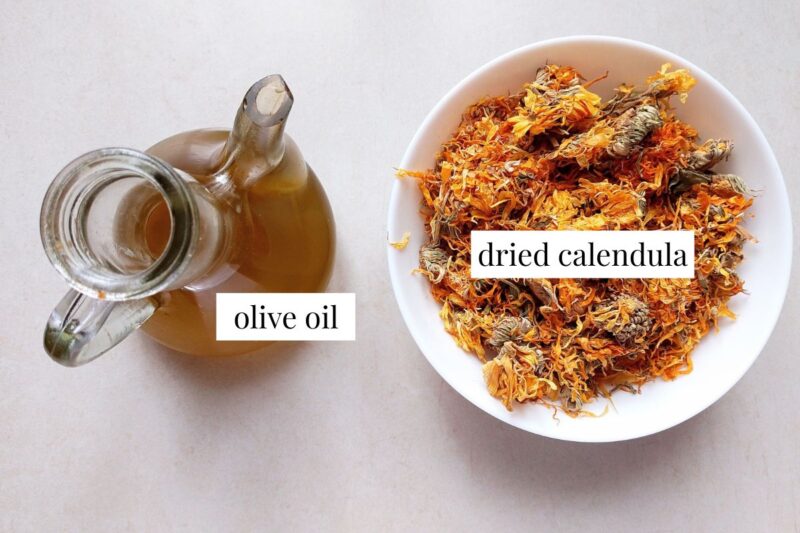
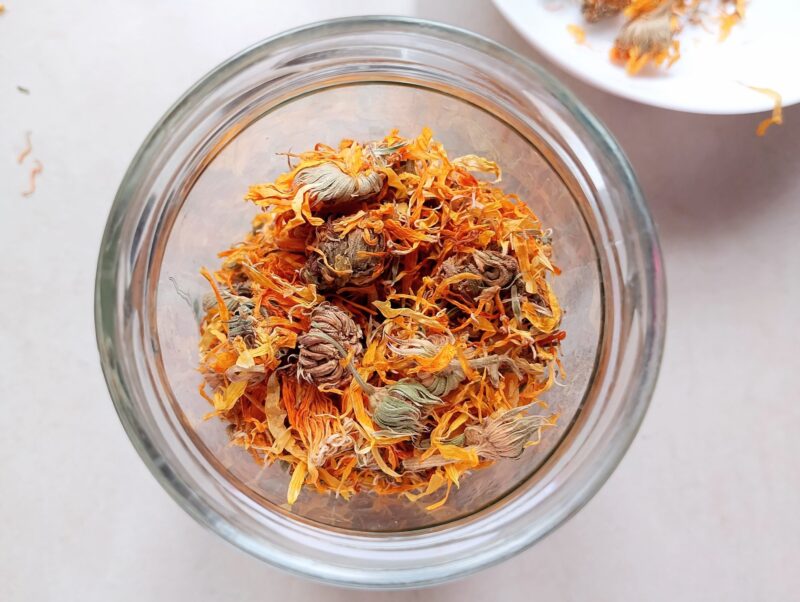
- Dried calendula flowers: It’s important to use only dried flowers, as fresh calendula contains moisture that can cause your oil to spoil.
- Carrier oils: I use extra virgin olive oil in this recipe, but other good options include jojoba oil, sweet almond oil, or a high-quality sunflower oil. Each carrier oil brings its own nourishing benefits, so feel free to choose one that suits your needs.
Tools
Best Oils to Use For Calendula Infusion
Some of the best carrier oils for calendula infusions are those that are stable, gentle on the skin, and well-suited to how you want to use them. For example, if you want to use it in face cream, jojoba oil might be the best option. For body butters, olive oil might be the best to use because of its rich, nourishing properties. When learning how to make calendula oil, choosing a high-quality carrier oil helps ensure your infusion is both nourishing and long-lasting.
- Olive oil is a classic choice—very nourishing, long-lasting, and ideal for salves and body care. It’s my personal favorite, as both my kids and I tend to have dry skin, and its richness works beautifully for us.
- Sweet almond oil is lighter and absorbs well, making it a great option for face and baby products.
- Jojoba oil closely mimics the skin’s natural oils and is especially well-suited for sensitive or acne-prone skin.
- Sunflower oil is another excellent option. It’s light, affordable, and rich in vitamin E. Be sure to choose a high-quality, cold-pressed sunflower oil for the best results.
Can You Use Fresh Calendula Flowers?
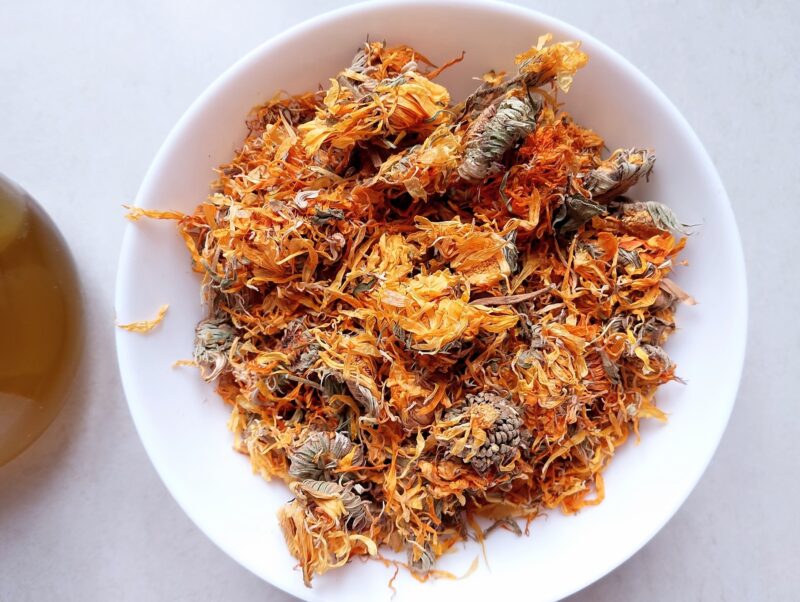
It’s not recommended to use fresh flowers when making calendula oil. Fresh calendula contains moisture, which can lead to mold or spoilage in the finished oil. For the best results and safety, always use fully dried flowers.
I usually dry my fresh calendula on wooden trays or newspapers for 7–14 days in a warm, dry place with good airflow. Once properly dried, the flowers should feel crisp rather than soft.
From experience, I’ve tried making infused oils using slightly wilted—but not fully dried—plants, and the results were very disappointing. The oil spoiled quickly, so taking the time to dry your flowers properly really makes all the difference.
How to Make Calendula Oil Step By Step
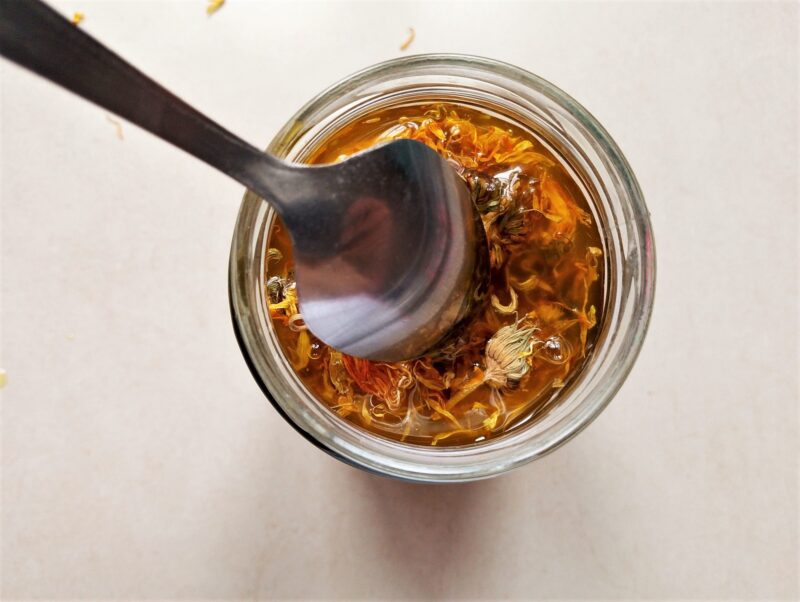
Step 3: Gently stir the mixture with a clean spoon to ensure all the flowers are fully coated in oil and to release any trapped air bubbles.
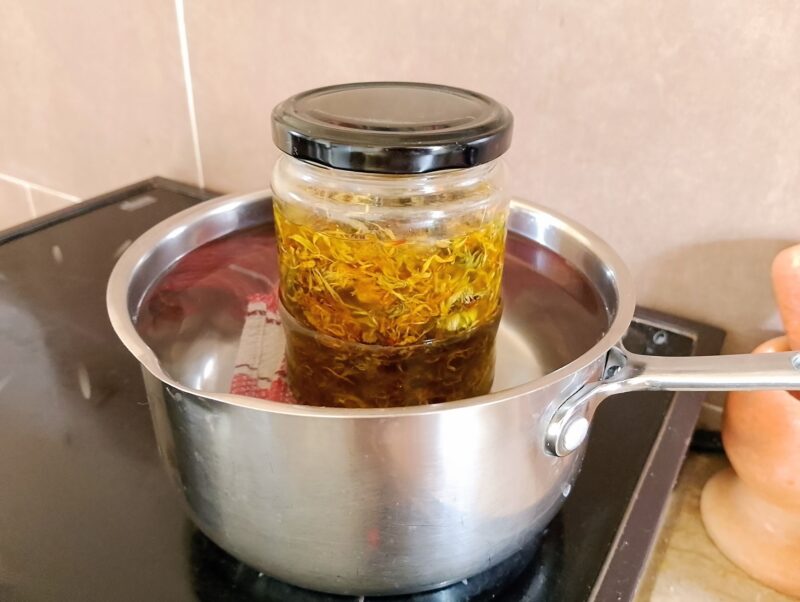
Step 4: Screw the lid on tightly and place the jar in a saucepan lined with a folded tea towel. Fill the pan with warm water so it comes up at least halfway up the jar, but not as high as the neck (you want to prevent any water from getting inside). Turn the heat to very low and allow the oil to infuse for 2–4 hours. The oil should stay gently warm, not hot—test by carefully dipping your finger. It should feel warm but never hot enough to burn.
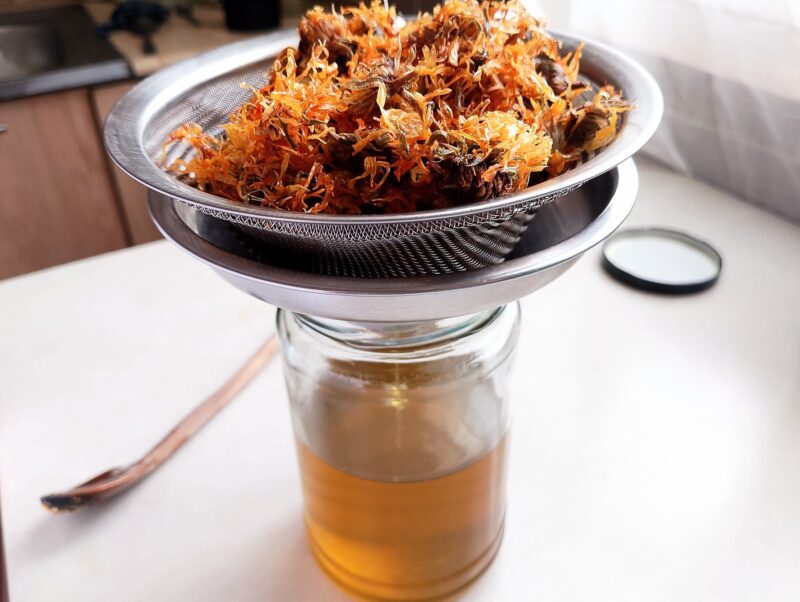
Step 5: After the oil has infused for 2–4 hours, strain it through a fine mesh sieve into another clean, dry jar. For a clearer oil, you can line your sieve with a piece of cheesecloth.
Dark glass jars are ideal for storage, but if you’re using a clear jar like I do, simply keep your calendula oil in a cool, dark cupboard. Let the flowers sit in the sieve for about 30 minutes to allow any remaining oil to fully drip through before discarding the spent flowers.
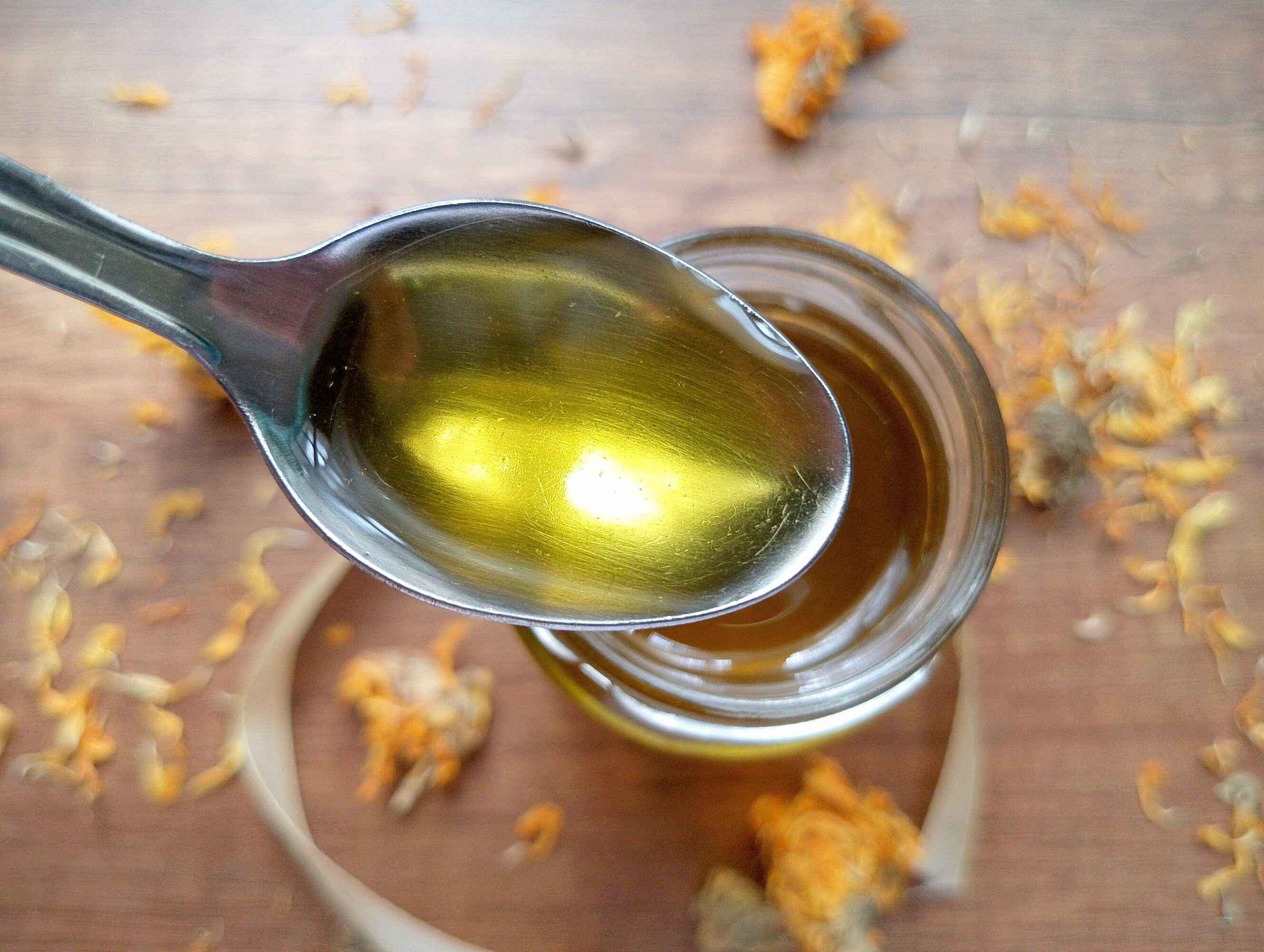
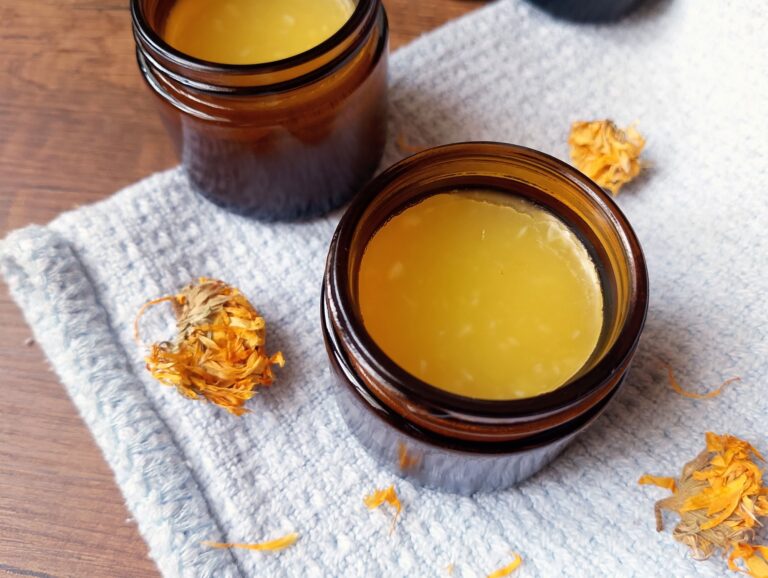
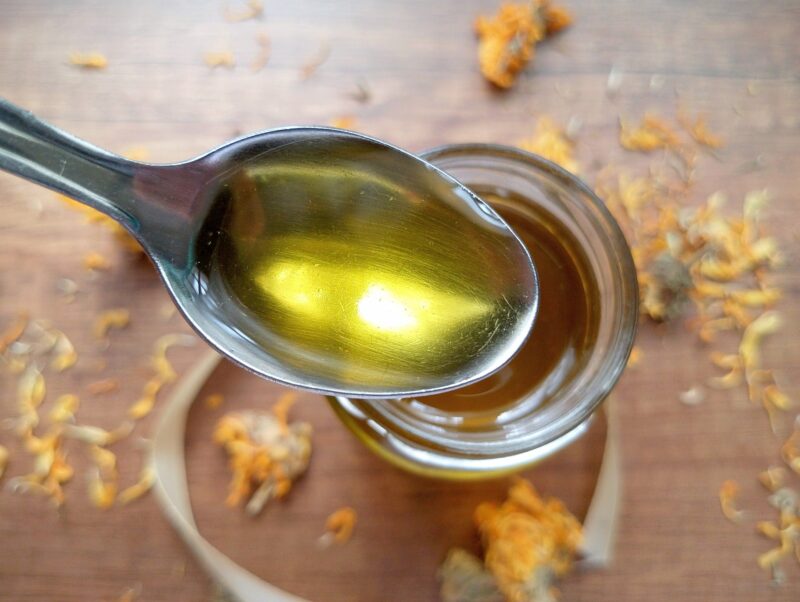
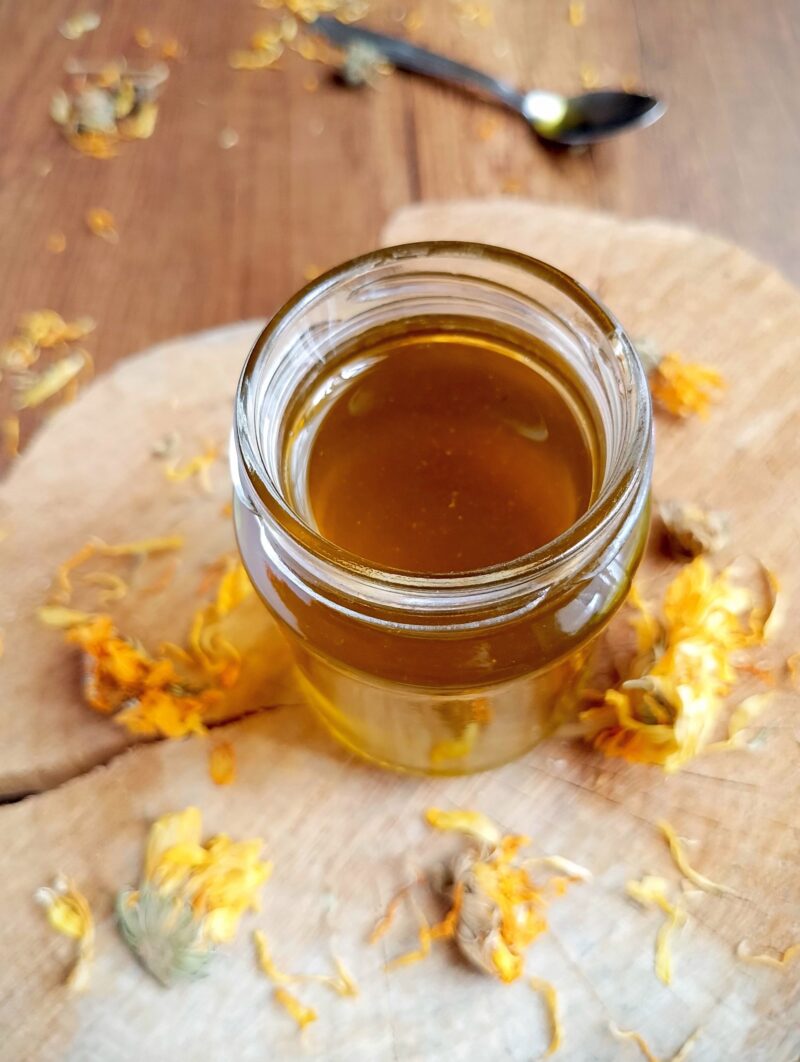
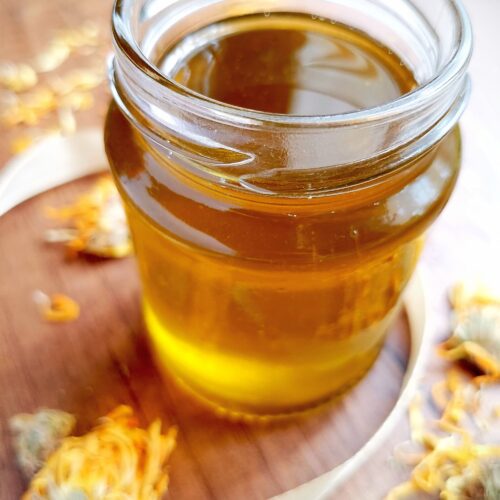
Step 6: Your infused calendula oil should have a beautiful golden color and is now ready to use in homemade balms, salves, lotions, or as a nourishing massage oil. For best results, store it in a tightly sealed jar in a cool, dry place, away from direct sunlight. Properly stored, calendula oil can stay fresh for 6–12 months, depending on the freshness of your carrier oil and storage conditions.
How to Tell When Calendula Oil Is Ready
You’ll know your calendula oil is ready when the oil has taken on a rich golden-yellow to deep amber color and carries a mild herbal scent. This typically happens after a few hours with the double boiler method I use in this tutorial, or after 2–6 weeks of slow infusion in a warm place. The infused oil should look clear—not cloudy—once fully strained.
Sun Infusion Option
- To use the sun infusion method, simply place your dried calendula flowers in a clean glass jar and fully cover them with your chosen carrier oil.
- Seal the jar tightly and set it in a warm, sunny windowsill. Give it a gentle shake every day or two to help the infusion along.
- Let it infuse for 2–6 weeks.
- Strain the infused oil through a fine mesh sieve or cheesecloth.
- Store it in a clean, airtight jar in a cool, dark place.
This is a slower method of making calendula oil, but it is more hands off than the double boiler method and it preserves more of the plant’s delicate properties without using heat.
How to Store Calendula Oil Properly
- Store your calendula oil in a clean, dry glass jar or a dark amber bottle to protect it from light, which can degrade the oil over time.
- If you’re using a clear jar, keep it in a cool, dark cupboard—this is what I usually do, since I tend to use regular canning jars for my infusions.
- Always store the oil in a cool, dark place, away from heat and moisture.
- When using the oil, be sure to use clean, dry hands or a clean, dry spoon to avoid introducing any contaminants into the jar. This helps keep your calendula oil fresh and safe to use for longer.
How to Use Calendula Oil
You can use your calendula-infused oil as the base oil in many homemade skincare recipes—simply swap it in wherever a recipe calls for a carrier oil. It’s one of my most-used infused oils because it’s so gentle, mild, and healing on the skin.
Calendula Salve
Combine your calendula oil with beeswax (or another natural wax) to create a firm, protective salve for cuts, dry skin, and minor irritations. This is by far my favorite way to use calendula oil. Some of my kids have sensitive skin, and calendula works beautifully for soothing rashes and irritation. It’s great applied after a swim in the pool or when they’ve had a slight sunburn in summer. Because it is very firm, you can carry this salve around in your bag for whenever you need it.
Calendula Balm
Similar to a salve, but usually a bit softer and richer—blend calendula oil with beeswax and optional butters or essential oils to create a nourishing, multipurpose skin balm.
Baby Balm
Use calendula oil as the main ingredient with a little beeswax to create a soothing, fragrance-free balm for delicate baby skin. It works especially well for diaper rash when combined with regular diaper-free time. In my experience, giving babies at least 30 minutes of diaper-free time once or twice a day can make a big difference in preventing and soothing irritation.
Lip Balm
Mix calendula oil with beeswax and a soft butter like shea or cocoa butter to make a moisturizing, protective lip balm. Calendula lip balm is my favorite balm to use in winter when cold air can leave my lips dry and cracked.
Herbal Cream
Use calendula oil in the oil phase of a cream by blending it with water (such as herbal tea or hydrosol) and an emulsifier to create a rich, hydrating lotion.
Body Butter
Whip calendula oil with solid butters like shea or cocoa butter (and a little coconut oil if you like) for a deeply nourishing, melt-on-contact body butter. This is especially helpful for dry skin or as a restorative treatment after swimming in chlorinated water.
Soap
Incorporate calendula oil into your soap recipes to add gentle, skin-soothing properties. It works well in both cold-process and hot-process soapmaking.
Common Mistakes When Making Calendula Oil
- Using fresh flowers: Fresh calendula contains moisture. This moisture can get trapped in the oil and create the perfect environment for mold and spoilage. Always use fully dried flowers to ensure a safe, long-lasting infusion.
- Not fully covering flowers: Make sure to submerge the flowers in oil at all times. Any flowers not covered in oil will simply not infuse properly.
- Overheating oil: Excessive heat can damage the delicate compounds in calendula and reduce its skin-healing benefits. Keep the temperature low and gentle to preserve its potency. When using the double boiler method, the oil should be very warm but not hot. You should be able to stick your finger into the oil without getting burnt.
Frequently Asked Questions
Final Thoughts
Now that you’ve learned how to make calendula oil, a whole world of balms, salves, body butters, and more is open to you. You can use the same method to infuse other flowers and herbs into oil, so once you understand the principles, you can create a variety of herbal oils for your different needs.
If you tried this recipe and loved it, come back and give it 5 stars!
And if you’d like to see more herbal recipes, real food inspiration, and practical homemaking tips, I’d love to have you join my newsletter. Each week, I share seasonal ideas, from scratch recipes, and traditional skills to help you create a more nourishing home.
Calendula Oil Recipes You Can Make
How to Make Calendula Oil
Equipment
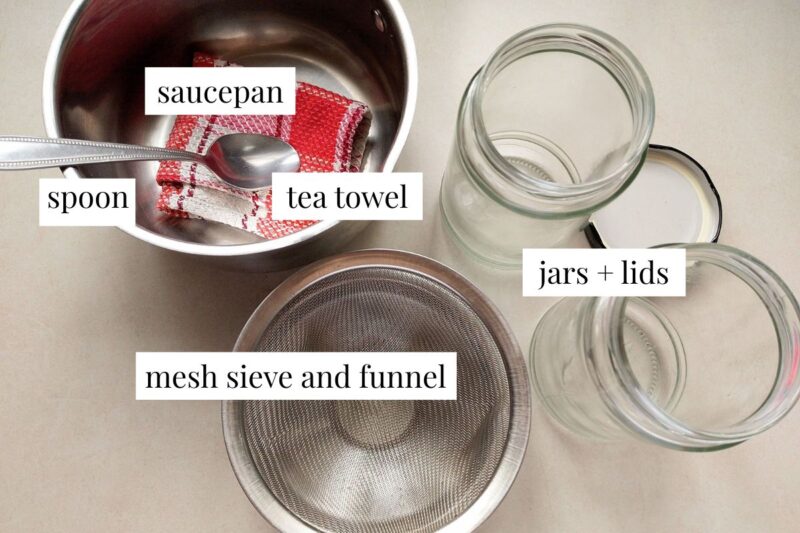
- 2 quart/liter glass jars with lids
- spoon
- small saucepan
- Tea towel
- fine mesh sieve
- Funnel
Ingredients
- 2 cups dried calendula flowers (packed)
- 2 ½ cups extra virgin olive oil (or another oil of your choice)
Instructions
- Place your dried calendula flowers in a clean, dry glass jar, filling it about two-thirds full.
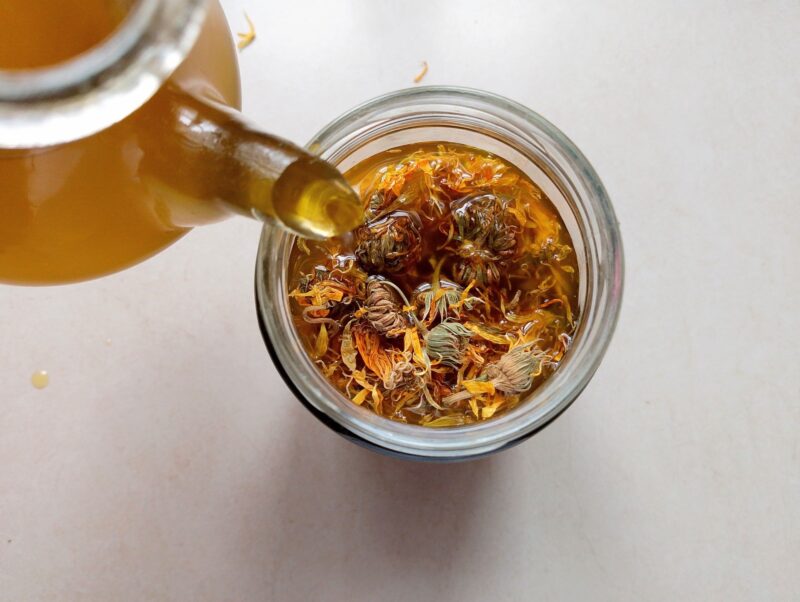
- Pour in enough carrier oil (such as extra virgin olive oil) to completely cover the flowers.
- Gently stir to release air bubbles and ensure all the flowers are coated in oil.
- Secure the lid and place the jar in a saucepan lined with a folded tea towel. Fill the pan with warm water so it reaches at least halfway up the jar (but not the neck).
- Heat on very low and let the oil infuse for 2–4 hours, keeping the oil warm but never hot.
- Remove from heat and allow to cool slightly, then strain the oil through a fine mesh sieve (lined with cheesecloth for a clearer oil) into a clean, dry jar.
- Let the flowers sit in the sieve for about 30 minutes to fully drain.
- Store your calendula oil in a tightly sealed jar in a cool, dark place, away from sunlight.
Notes
- Always use fully dried calendula flowers. Fresh flowers contain moisture, which can cause the oil to spoil.
- Make sure your jar, tools, and flowers are completely clean and dry before starting.
- You can also make this oil using a sun infusion method (by placing the jar on a warm windowsill for 2–6 weeks) instead of the double boiler method.
- Other carrier oils such as sweet almond oil, jojoba oil, or sunflower oil can be used instead of olive oil.
- For a clearer oil, strain through cheesecloth in addition to a fine mesh sieve.
- Store the finished oil in a cool, dark place to help extend its shelf life.
- Properly made and stored calendula oil will typically last 6–12 months, depending on the freshness of the carrier oil.